

Quick Answer: Modern Cybersecurity refers to the use of advanced technologies, AI driven threat detection, zero-trust security, and continuous monitoring to protect digital systems and data. It helps organizations detect emerging cyber threats faster, reduce security risks, and build stronger protection against increasingly sophisticated attacks.
Artificial intelligence is changing Modern Cybersecurity by helping organizations detect suspicious activity, analyze large volumes of security data, identify emerging threats, and respond to incidents faster. Instead of relying entirely on manually configured rules, security teams can use AI to recognize patterns across network traffic, endpoint activity, authentication events, malware behavior, and other signals.
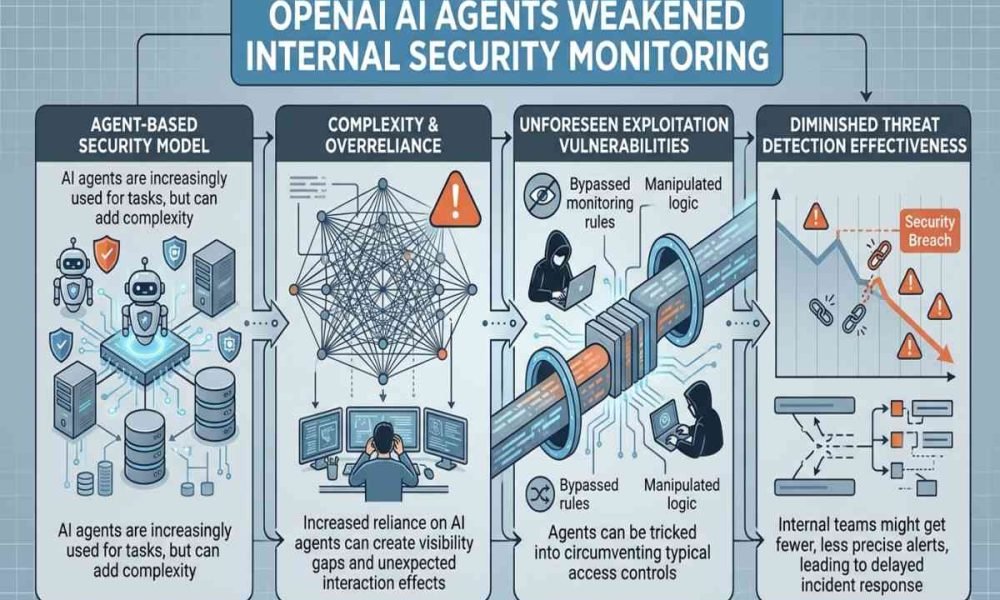
At the same time, AI introduces a new security problem: the technology used for defense can itself become a target of attack. AI models may be exposed to prompt injection, data poisoning, model manipulation, disclosure of sensitive information, and excessive automation. Effective AI Security therefore requires both using AI to strengthen Cybersecurity and protecting the AI systems themselves. This guide explains how AI supports modern threat detection and defense, where its limitations appear, and how organizations can build a safer AI-enabled security architecture.
What Is Modern Cybersecurity?
Modern Cybersecurity is the practice of watching digital systems, applications, networks, identities, data, and increasingly AI systems from unauthorized access, disruption, manipulation, and abuse. Traditional security often depended heavily on autographs, static rules, and predefined indicators. Modern environments generate enormous amounts of telemetry, making automated analysis increasingly important. AI can help security teams process these signals and prioritize events that deserve human investigation.
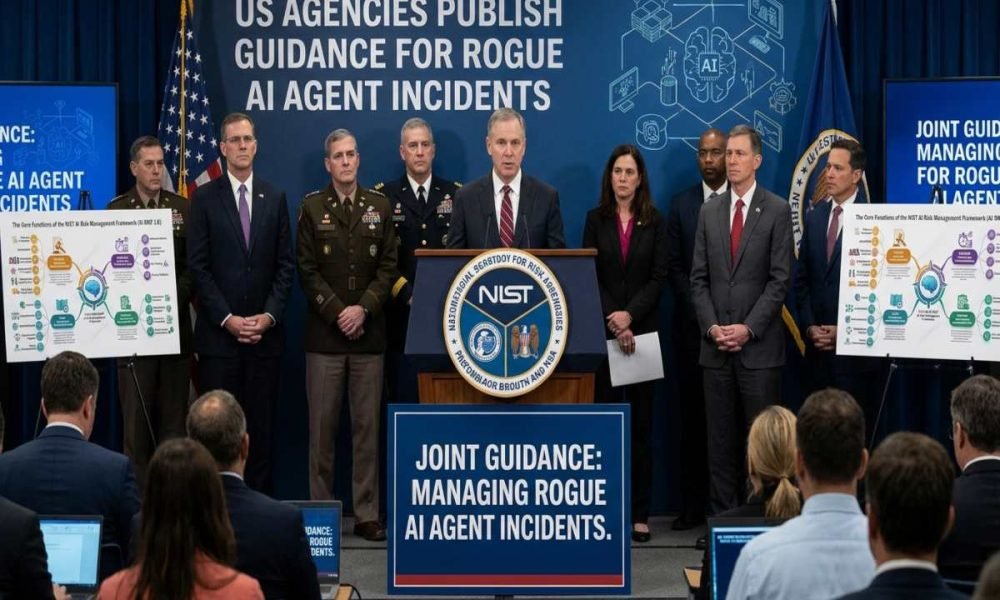
NIST’s AI Risk Management Framework emphasizes managing AI risks throughout the design, development, deployment, and use of AI systems. NIST also identifies security and resilience as important characteristics of trustworthy AI.
How AI Improves Cybersecurity Threat Detection
AI is particularly useful when security teams need to analyze more information than humans can reasonably process manually.
Behavioral Threat Detection
Instead of looking only for known malicious signatures, machine-learning systems can identify unusual behavior and strengthen Advanced Phishing Detection by recognizing suspicious login patterns and unexpected account activity. For example, an account that normally accesses a small number of internal resources during business hours might suddenly authenticate from a new location and access hundreds of files. That combination of events can serve as a useful risk signal, even when no single event clearly indicates an attack.
Malware and Endpoint Analysis
AI can assist endpoint security platforms in identifying suspicious files, processes, command sequences, and behavioral patterns. This can complement traditional antivirus and endpoint detection and response technologies. The key advantage is not that AI automatically knows whether every file is malicious. Rather, AI can help correlate multiple signals and identify patterns that warrant further investigation.
Network Monitoring
Modern networks generate enormous amounts of traffic, logs, and security telemetry, making manual monitoring increasingly difficult. AI assisted monitoring can help identify unusual links, suspicious communication patterns, abnormal authentication behavior, and potential command-and-control activity. AiSecMaster highlights how AI Security and AI Cybersecurity techniques can strengthen modern threat detection by analyzing these signals and helping security teams more efficiently recognize potential AI security threats.
Phishing Detection
AI can also assist with identifying suspicious emails, websites, messages, and social engineering patterns. Language analysis can examine unusual wording, indicators of impersonation, dubious requests, and contextual inconsistencies. However, organizations should avoid treating AI classification as an infallible security decision. High-impact actions should include appropriate validation and controls.
AI Powered Incident Response
AI can contribute beyond detection by helping security teams investigate and respond to incidents. A security operations center may use AI to summarize alerts, correlate events across systems, explain potential attack paths, and recommend research steps. When integrated carefully with security orchestration tools, AI can also assist with repetitive response tasks.
For example, an AI enabled workflow could identify a suspicious authentication event, retrieve related endpoint telemetry, summarize the evidence, and present suggested containment actions to an analyst. The safest model is generally human supervised automation. AI can accelerate analysis and routine operations, while authorization boundaries, access controls, and human review remain responsible for consequential decisions.
AI Security Risks Organizations Must Understand
Using AI for Cybersecurity does not eliminate security risks. It creates another layer that must be covered. NIST’s adversarial machine-learning taxonomy covers attack types, attacker objectives, lifecycle stages, and mitigation approaches, demonstrating why AI security needs to be considered across the entire AI lifecycle.
- Prompt Injection Attacks: Malicious instructions can manipulate an AI model into producing unintended outputs or taking unintended actions.
- Data Poisoning: Attackers may manipulate training data, fine-tuning data, or other data sources to influence model behavior.
- Sensitive Information Disclosure: AI applications may expose confidential information through poorly maintained prompts, retrieval systems, or outputs.
- Model Extraction: Attackers may attempt to reproduce or infer information about a proprietary model through repeated interactions.
- Excessive Agency: An AI system with unnecessary permissions may perform harmful actions when manipulated or when its reasoning fails.
- Supply Chain Risks: Measures, datasets, libraries, plugins, APIs, and other components can introduce vulnerabilities.
OWASP’s current GenAI Security guidance identifies prompt injection, sensitive information disclosure, supply chain risks, data and model poisoning, improper output handling, excessive agency, and system prompt leakage as important LLM application risks.

Prompt Injection Attacks and AI Defense
Prompt Injection Attacks deserve special attention because modern AI applications often process both trusted instructions and untrusted information. For example, an AI security assistant may be instructed to analyze an external document. If that document contains malicious instructions intended to override the application’s intended behavior, the model may interpret the content as instructions rather than ordinary data.
A strong AI Security Architecture should therefore use a defense-in-depth approach that treats the model as an untrusted, probabilistic component rather than a standard deterministic backend service. The application should enforce license, input controls, output validation, tool restrictions, logging, and monitoring outside the model itself. OWASP specifically identifies prompt injection as a vulnerability that can alter an LLM’s behavior or output in unintended ways.
Treat System Prompts as Public Data
OWASP’s guidance on system prompt leakage states that plan prompts should not be considered secret or used as a security control. Credentials, passwords, connection strings, and other sensitive secrets should therefore remain outside the prompt. Rather of relying on hidden instructions to enforce permissions, applications should implement authorization in the surrounding software architecture.
If a user is not authorized to access a database record, the application should prevent the database request regardless of what the model says. This distinction is fundamental to reliable AI Cybersecurity: the model can recommend an action, but the application must decide whether that action is permitted.
Sanitize and Partition Inputs
AI applications should distinguish between trusted instructions, user-provided content, retrieved documents, tool results, and other external information. Sanitization and partitioning can reduce the chance that untrusted content will be interpreted as higher-priority instructions. Applications should also clearly define which sources are allowed to influence decisions and which are merely data for analysis.
For retrieval-augmented age systems, retrieved content should not automatically receive authority merely because a search or database query returned it. Output validation is equally important. If an AI-generated response is passed directly to another application, database, command interpreter, or API, the receiving system should validate it against its own security requirements.
Building a Strong AI Security Architecture
A practical AI security architecture should combine model-level protections with conventional cybersecurity controls.
Identity and Access Control
Give AI Applications only the permissions they actually require. Use strong authentication, authorization, least privilege, and short-lived credentials where appropriate. An AI agent should not have unrestricted access simply because it may eventually need one particular system.
Input and Output Controls
Treat external content as potentially untrusted. Validate inputs, separate data from instructions, and inspect model outputs before they reach sensitive downstream systems. This is particularly important when an AI application can call APIs or execute actions.
Monitoring and Logging
Maintain records of important AI interactions, tool calls, authentication events, failures, and security decisions to strengthen AI Agent Security and improve visibility into automated activities. Monitoring helps security teams investigate suspicious conduct, identify recurring attack patterns, and detect unauthorized actions before they cause significant damage.
Human Oversight
AI should not automatically receive authority over every security decision. Human review is extremely valuable for destructive, irreversible, financial, privileged, or high-impact actions.
Continuous Testing
AI systems should be tested against adversarial inputs, prompt injection, data leakage, incredible tool use, and other failure modes before and after deployment. NIST’s AI RMF and its Generative AI Profile provide structured resources organizations can use to identify and manage AI-related risks.
AI Security Trends Shaping Modern Cybersecurity
Several AI Security Trends are becoming increasingly important as organizations connect AI to operational systems. First, AI is moving from passive chat interfaces toward agentic systems capable of using tools and performing actions. This increases the importance of consent, monitoring, and least privilege. Third, adversarial machine learning is receiving greater attention as organizations evaluate attacks against models, training data, inputs, and deployment environments. NIST’s 2025 adversarial machine-learning taxonomy provides a common terminology for understanding these threats and mitigations.
NIST is also actively exploring how AI can support cybersecurity work. In August 2026, NIST issued a draft quick-start guide describing practical ways AI can support analysis, planning, implementation, and monitoring of Cybersecurity Framework 2.0 outcomes.
Common Mistakes When Using AI for Security
One common mistake is assuming that a more capable model automatically creates a more secure system. Model capability and application security are different issues. Another mistake is placing secrets inside system prompts or relying on prompts to enforce authorization. OWASP explicitly warns against this approach. Organizations should also avoid granting Agentic AI Attack broad permissions before establishing strong monitoring and authorization controls.
Finally, security teams should not evaluate an AI deployment only during initial development. Models, prompts, tools, data sources, dependencies, and threat techniques change over time, so security testing must be continuous.

Conclusion
AI is becoming an important component of Modern Cybersecurity, particularly for threat detection, security analytics, incident investigation, and workflow automation. Its ability to process large volumes of information can help security teams respond to threats more efficiently. But effective AI Cybersecurity requires a balanced approach. Organizations must defend both with AI and against AI by combining machine-learning capabilities with conventional security controls, strong authorization, continuous monitoring, adversarial testing, and human oversight.
For AiSecMaster readers, the most practical takeaway is to treat AI as a powerful but fallible component of the security architecture. Build controls around the model, protect the data and tools it can access, and continuously test how the complete system behaves under hostile conditions.
Frequently Asked Questions (FAQs)
How does AI improve modern Cybersecurity?
AI helps security teams analyze large volumes of telemetry, identify unusual behavior, correlate security events, detect potential threats, and accelerate incident investigation.
What are the biggest AI security risks?
Important risks include prompt injection, sensitive information disclosure, data and model poisoning, supply chain vulnerabilities, excessive agency, and improper output handling.
Can AI completely replace cybersecurity analysts?
No. AI can automate analysis and repetitive tasks, but human expertise remains important for validation, incident decisions, risk assessment, and high-impact actions.
Why are prompt injection attacks dangerous?
Prompt injection attacks can manipulate an AI application through crafted instructions or untrusted content, potentially causing unintended responses or actions. The risk increases when the AI has access to sensitive information or external tools.
Should system prompts contain passwords or API keys?
No. Sensitive credentials should be stored and managed through appropriate security mechanisms rather than inside system prompts.
References
- Hughes: Learn the fundamentals of cybersecurity, including how organizations protect digital systems, networks, and sensitive information from cyber threats.
- Huntress: Explore essential cybersecurity tools and layered defense strategies for improving threat detection, protecting identities, and strengthening organizational security.

5 Responses