Quick Answer: Learn how AI threat detection identifies cyber threats in real time, analyzes anomalies, supports security teams, and protects modern AI systems. AI threat detection uses artificial intelligence to identify suspicious activity, unusual behavior, malicious patterns, and potential cyberattacks across networks, endpoints, applications, cloud environments, and AI systems. Instead of relying only on predefined...
Quick Answer: Learn how AI Threat Intelligence detects AI threats, supports cybersecurity, protects AI systems, and improves security monitoring and response. AI Threat Intelligence is the process of collecting, analyzing, and applying information about threats targeting artificial intelligence systems or using AI to improve cyberattacks. It helps security teams identify suspicious behavior, understand emerging attack...
Quick Answer: Learn how generative AI is transforming cybersecurity through threat detection, incident response, AI security benefits, risks, and emerging trends. Generative AI in cybersecurity is changing how organizations detect threats, investigate incidents, analyze security data, and support security teams. Unlike traditional automation, generative AI can understand and produce natural language, summarize complex events, generate...
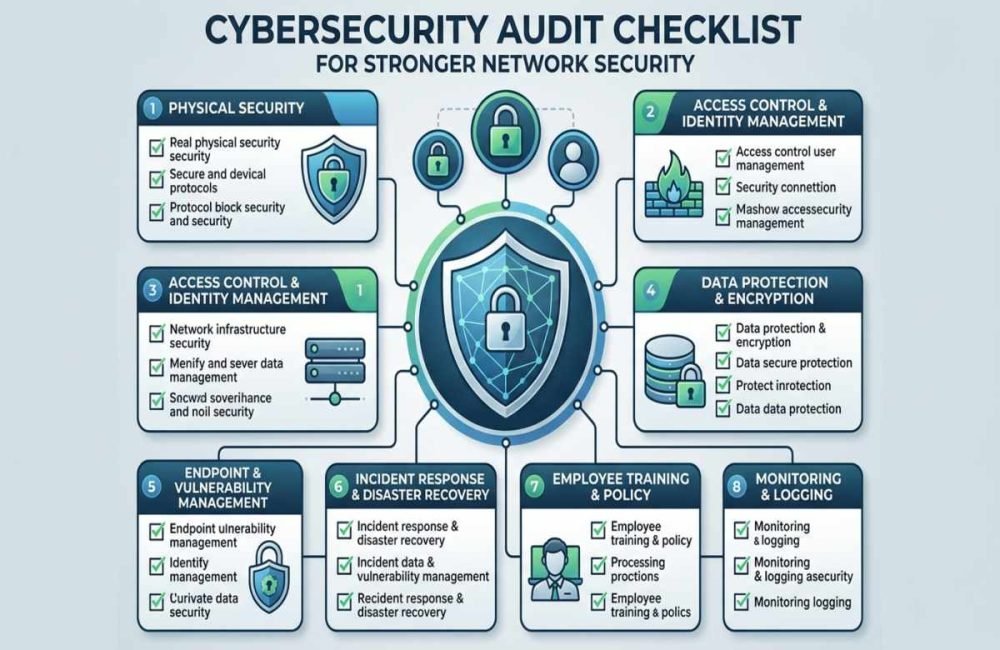
Quick Answer: A Cybersecurity Checklist provides practical steps to protect accounts, devices, data, networks, and AI systems from cyber threats while strengthening overall security and reducing common vulnerabilities. Cybersecurity is no longer only an IT department responsibility. Individuals, startups, remote workers, and established organisations all depend on connected devices, cloud services, applications, email, and digital...
Quick Answer: Learn how AI security protects models, data, applications, and AI agents from prompt injection, data poisoning, supply chain risks, and cyber threats. Artificial intelligence systems are becoming part of customer support, software development, fraud detection, healthcare, finance, and business operations. That expansion creates a new security challenge: AI systems must be protected not...
Quick Answer: AI vs Traditional Cybersecurity compares AI powered threat detection, behavioral analysis, and automation with traditional rule based security controls. AI adapts to emerging threats, while traditional tools like firewalls, antivirus, encryption, and authentication provide essential layered protection. Cybersecurity has changed significantly as businesses have moved their operations to digital platforms. Organizations now depend...
Quick Answer: Modern Cybersecurity refers to the use of advanced technologies, AI driven threat detection, zero-trust security, and continuous monitoring to protect digital systems and data. It helps organizations detect emerging cyber threats faster, reduce security risks, and build stronger protection against increasingly sophisticated attacks. Artificial intelligence is changing Modern Cybersecurity by helping organizations detect...
Quick Answer: Prompt injection attacks occur when attackers craft malicious instructions that manipulate an AI model into ignoring its intended rules or performing unintended actions. These attacks can lead to data exposure, unauthorized actions, unsafe outputs, and security risks in AI applications. Prompt injection attacks are a major security concern for ChatGPT and other generative...