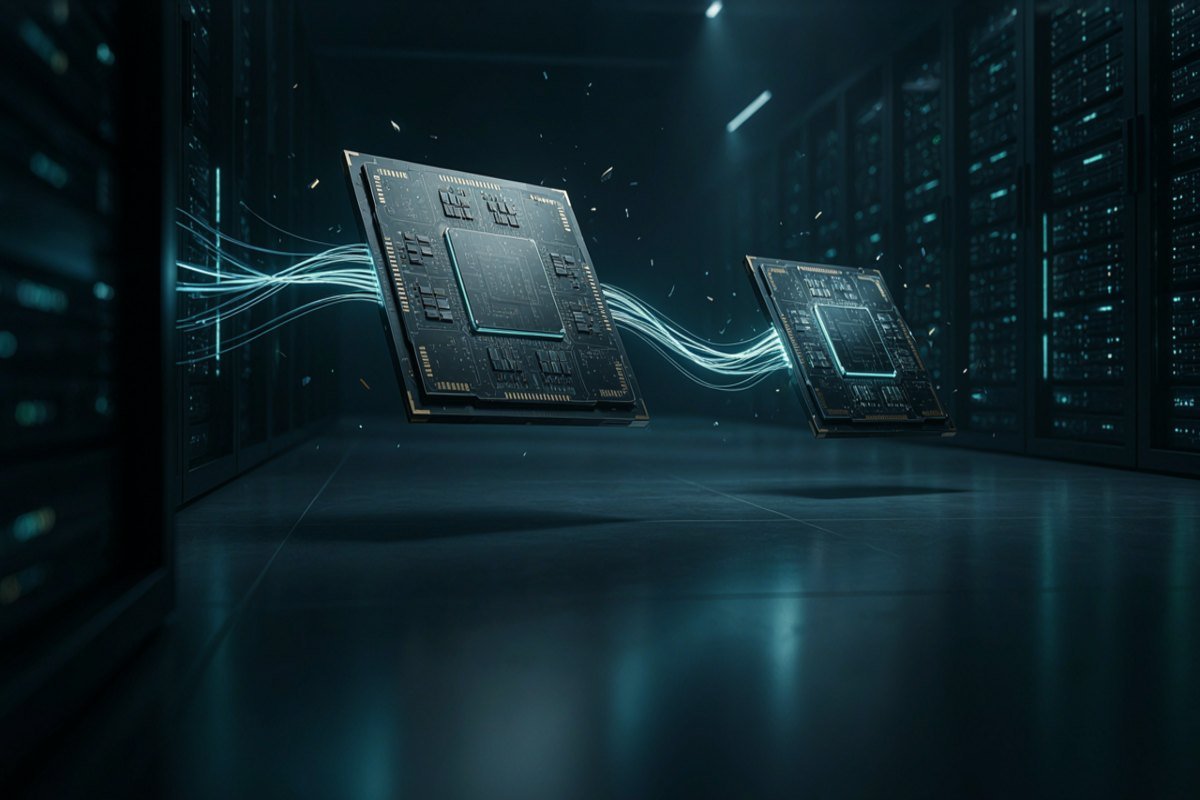
Quick Answer: Anthropic MatX Deal refers to Anthropic’s reported plan to acquire AI chip startup MatX for about $7 billion to accelerate custom AI hardware development, but the acquisition talks later ended.
The Anthropic MatX Deal became a major AI hardware story after Reuters reported that Anthropic had explored acquiring the AI chip startup MatX for roughly $7 billion. The discussions later stopped as an acquisition, while the two companies were reportedly considering a potential partnership instead.
The development matters because Anthropic is not only competing through Claude and AI models. It is also looking at the hardware and computing infrastructure required to train and run those models at scale. This article explains what happened, why Anthropic was interested in MatX, why the acquisition changed, and what the development means for AI security, AI cybersecurity, and the future of custom AI chips.
What Is the Anthropic MatX Deal?
The Anthropic MatX Deal refers to reported discussions in which Anthropic considered acquiring MatX, an AI chip startup founded by former Google engineers who worked on Tensor Processing Units (TPUs). Reuters reported that the proposed transaction could have been worth approximately $7 billion, but the acquisition talks were no longer active when Reuters reported the story on August 27, 2026.
The discussions reportedly shifted toward a possible partnership. Reuters also reported that MatX was seeking new funding at an approximately $4 billion valuation. Neither Anthropic MatX Agent publicly confirmed detailed terms explaining why the acquisition discussions ended. That distinction is important. The $7 billion figure should be described as a reported potential acquisition price, not as the amount Anthropic actually paid for MatX.
Who Is MatX?
MatX is an AI semiconductor startup focused on developing specialized computing technology for machine-learning workloads. Its founding team includes former Google TPU engineers, giving the company experience in designing hardware specifically for AI Applications.
Specialized AI chips differ from general-purpose processors because their architecture can be optimized around workloads commonly performed by machine-learning systems. Depending on the design, this can potentially improve throughput, efficiency, remembering utilization, or performance for particular AI workloads.
Why Does Anthropic Want Custom AI Chips?
The simplest reason is control over computing infrastructure. Training and serving large AI models require substantial compute resources, and hardware availability, performance, energy consumption, and cost can directly affect an AI company’s ability to scale. Reuters reported that Anthropic AI has been accelerating its in-house chip development while also exploring multiple chip startups. The broader strategy is intended to strengthen its access to computing resources and reduce reliance on external hardware providers such as Nvidia.
From an AiSecMaster perspective, this approach also highlights the importance of AI Security across hardware, software, and cloud infrastructure, as organizations need to balance performance, flexibility, and security when building modern AI systems.
Reducing Dependence on External Hardware
Nvidia remains one of the most important suppliers of AI accelerators, but relying heavily on an external hardware ecosystem can create strategic challenges. Supply availability, pricing, manufacturing capacity, energy requirements, and access to future generations of processors can all influence AI infrastructure planning.
Custom chips give an AI company another option. Instead of designing hardware for every possible computing task, engineers can optimize processors around the specific requirements of their models and workloads. This approach can potentially improve efficiency, but it also introduces substantial engineering challenges. Hardware design, semiconductor manufacturing, compiler development, software compatibility, memory systems, networking, testing, and deployment must all work together.
Why Did the $7 Billion Anthropic MatX Deal Change?
The exact reason the Anthropic MatX Deal changed has not been publicly confirmed. Reuters reported that the acquisition discussions were no longer active and that a third source described them as evolving into a potential partnership. Reuters could not determine why the acquisition talks ended. Therefore, explanations such as disagreements over valuation, integration, financing, intellectual property, or corporate strategy should not be presented as facts.
A partnership can sometimes provide a different balance. Anthropic AI could potentially gain access to MatX’s semiconductor expertise while avoiding the full financial and organizational commitment of an acquisition. MatX could also retain greater independence while working with Anthropic on specific hardware objectives.
What Would the Acquisition Have Given Anthropic?
A completed acquisition of Anthropic MatX could have brought specialized semiconductor talent, engineering expertise, and experience in AI accelerator architecture under Anthropic’s direct control. MatX’s connection to former Google TPU engineers is particularly relevant because TPUs demonstrate how hardware can be designed around machine-learning workloads rather than treating AI as a generic computing problem.
- Specialized expertise: Access to engineers experienced in AI accelerator design.
- Hardware optimization: Greater ability to coordinate chips with Anthropic’s AI workloads.
- Infrastructure control: More influence over the long-term computing roadmap.
- Supply diversification: Another path beyond dependence on third-party accelerators.
- Software hardware integration: Potentially tighter coordination between models, compilers, chips, and infrastructure.
However, these are potential benefits of an acquisition, not confirmed outcomes. Because the purchase did not proceed, it would be inaccurate to claim that Anthropic obtained MatX’s Internet Technology or engineering team through the deal.
What Does the MatX Deal Mean for AI Security?
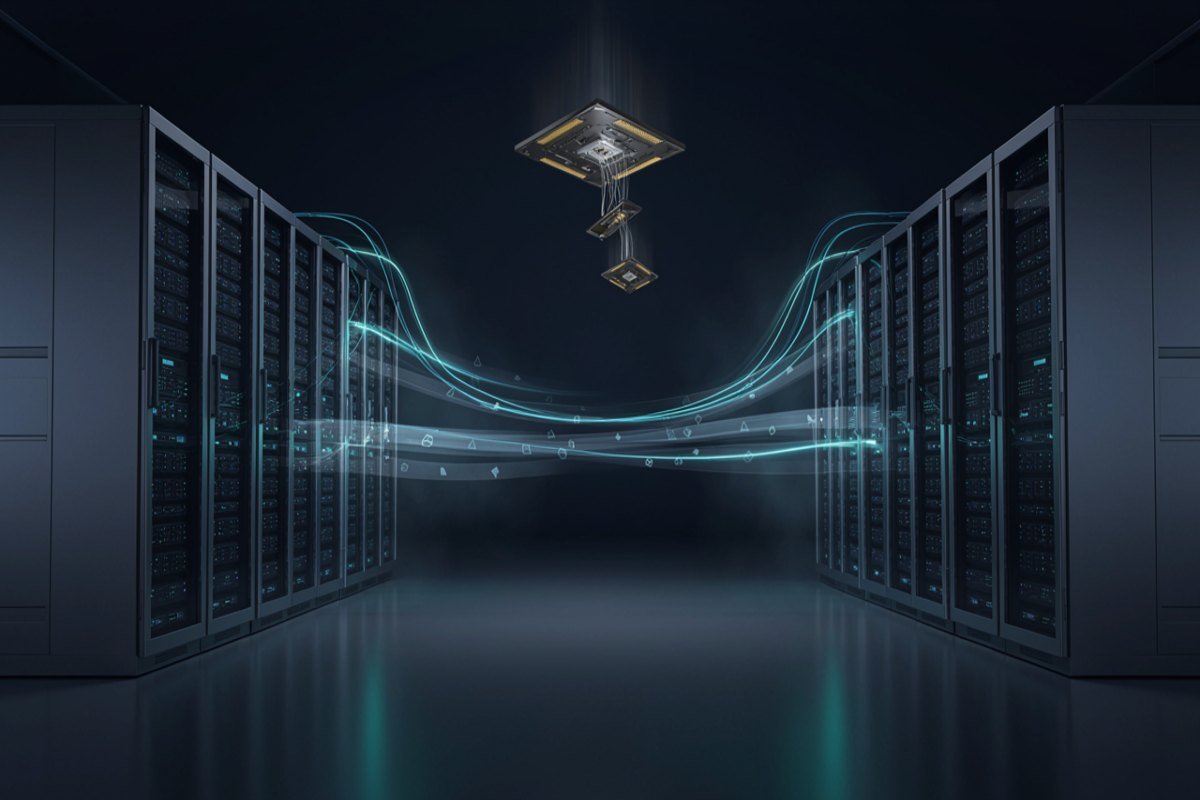
The story is also relevant to AI Security because modern AI systems depend on complex technology supply chains. A production AI platform may involve processors, firmware, cloud infrastructure, operating systems, model-serving software, APIs, networking equipment, data centers, and third-party services.
This creates a broader challenge for AI Security Architecture. Security teams need to consider not only whether an AI model is secure, but also whether the infrastructure supporting that model can be trusted, monitored, updated, and recovered when something goes wrong. This is where AI supply chain security becomes important for organizations building or deploying AI systems.
Treat System Prompts as Public Data
Custom AI hardware does not remove application-level AI threats. An AI system can still be exposed to attacks such as Prompt Injection Attacks, malicious instructions, data poisoning, model abuse, and unauthorized tool use.
One practical security principle is to treat system prompts as potentially discoverable rather than relying on secrecy as a security boundary. OWASP recommends avoiding exposure of raw system prompts and separating user input from system instructions using structured templates or delimiters. A strong AI security design should therefore assume that attackers may learn something about an application’s instructions. Sensitive credentials, authorization decisions, and security-critical controls should not depend solely on keeping a prompt secret.
Sanitize and Partition Inputs
AI applications should also separate trusted instructions from untrusted content. User messages, retrieved documents, web pages, emails, uploaded files, and external data can contain instructions that attempt to manipulate an AI Model.
OWASP recommends validating and sanitizing inputs before they reach an LLM and using defenses against prompt-injection techniques. A useful security philosophy is a defense-in-depth approach that treats the model as an untrusted, probabilistic component rather than a standard deterministic backend service.
What Does the Anthropic MatX Deal Mean for AI Cybersecurity?
The Anthropic MatX story illustrates a broader trend in AI Cybersecurity. AI companies increasingly need to secure the complete AI technology stack rather than focusing only on model behavior.
This creates an intersection between AI Security Architecture and semiconductor infrastructure. Organizations deploying AI at scale should evaluate security throughout the lifecycle, from hardware procurement and model development to deployment, monitoring, updates, and retirement. For AiSecMaster, this is an important connection between AI hardware news and practical security. Readers following AI Security Trends should understand that infrastructure decisions can influence both performance and security resilience.
What Happens Next for Anthropic and MatX?
The immediate outcome is uncertain. Reuters reported that the acquisition talks had ended while discussions could move toward a partnership. MatX was also reportedly seeking additional funding, suggesting that the company continues to pursue an independent path.
For Anthropic, the larger strategy appears clearer than the transaction itself: custom hardware remains strategically important. The company can continue developing internal silicon expertise while using processors and computing capacity from external partners. The MatX situation therefore should not be interpreted simply as a failed $7 billion acquisition. It is better understood as one example of how AI companies are experimenting with different ways to secure specialized semiconductor expertise.
What Can Businesses Learn From the MatX Story?
Businesses do not need to design their own AI chips to learn from this development. The key lesson is that AI infrastructure decisions should be evaluated as part of a larger technology and security strategy. Organizations adopting AI should understand where their models run, which hardware and cloud providers support them, what third-party software they depend on, and how sensitive data moves through the system.
They should also build security controls around the model rather than assuming a capable model will automatically behave securely. This includes input validation, access control, monitoring, data protection, threat modeling, and protections against prompt injection. For additional security planning, an internal link to AiSecMaster’s guide on AI Supply Chain Security would fit naturally here and help readers better understand supplier and infrastructure risks.
Conclusion
The Anthropic MatX Deal is significant not because Anthropic completed a $7 billion acquisition, but because the discussions reveal how strategically important AI hardware has become. Anthropic appears to be pursuing greater control and flexibility around custom silicon while continuing to rely on a broader ecosystem of computing providers.
For organizations building AI systems, the lesson is equally important: performance and security must be considered across the entire technology stack. As AI Security Trends continue to evolve, companies should combine hardware and supply-chain resilience with application-layer protections such as input validation, access controls, threat modeling, and defenses against Prompt Injection Attacks.
Frequently Asked Questions (FAQs)
Did Anthropic buy MatX for $7 billion?
No. Reuters reported that Anthropic had explored acquiring MatX for approximately $7 billion, but the acquisition discussions later ended. The discussions were reportedly shifting toward a possible partnership.
What is MatX?
MatX is an AI-chip startup founded by former Google TPU engineers. The company focuses on specialized semiconductor technology for AI workloads.
Why is Anthropic interested in AI chips?
Custom AI chips could give Anthropic greater control over computing infrastructure and allow hardware to be optimized for specific AI workloads. They could also reduce reliance on external accelerator suppliers.
Why did the Anthropic MatX Deal fail?
The specific reason has not been publicly confirmed. Reuters reported that the acquisition talks were no longer active but did not establish why they ended. Any claims about valuation or other causes remain speculation.
Could Anthropic and MatX still work together?
Possibly. Reuters reported that discussions had evolved toward a potential partnership, although detailed terms had not been publicly confirmed.
Does custom AI hardware improve security?
Not automatically. Custom hardware can increase control over infrastructure, but AI security still requires protections across hardware, software, models, data, identities, APIs, and third-party suppliers.
References
- Reuters: Anthropic Planned, Then Abandoned $7 Billion Purchase of MatX Published August 27, 2026. Read about Anthropic’s reported acquisition discussions with AI chip startup MatX and its efforts to develop custom AI hardware.
- Dealroom: Anthropic Drops $7B MatX Buyout, Pivots to Chip Partnership Published August 28, 2026. Explore the reported shift from acquisition talks toward a potential partnership and Anthropic’s strategy for custom chip development.