

Quick Answer: Learn how AI Threat Intelligence detects AI threats, supports cybersecurity, protects AI systems, and improves security monitoring and response.
AI Threat Intelligence is the process of collecting, analyzing, and applying information about threats targeting artificial intelligence systems or using AI to improve cyberattacks. It helps security teams identify suspicious behavior, understand emerging attack methods, prioritize risks, and respond before an incident causes serious damage.
For organizations using Generative AI, machine learning models, AI agents, APIs, or automated decision systems, threat intelligence provides an important layer of AI Security. This guide explains how AI threat intelligence works, the threats it can identify, practical implementation strategies, and its role in modern cybersecurity programs.
What Is AI Threat Intelligence?
AI Threat Intelligence combines traditional cyber threat intelligence with security knowledge specifically related to artificial intelligence. It focuses on threats against AI models, applications, data, APIs, infrastructure, users, and connected systems. Traditional threat intelligence may track malicious domains, malware, vulnerabilities, or assailant infrastructure. AI-focused intelligence expands that view to include threats such as prompt injection, data poisoning, adversarial manipulation, model theft, malicious AI-generated content, and attacks against AI agents.
The objective is not simply to collect more security data. The real value comes from turning security observations into actionable decisions, such as blocking suspicious proposals, investigating abnormal model behavior, restricting an AI agent’s permissions, or updating defensive controls.
Why AI Threat Intelligence Matters
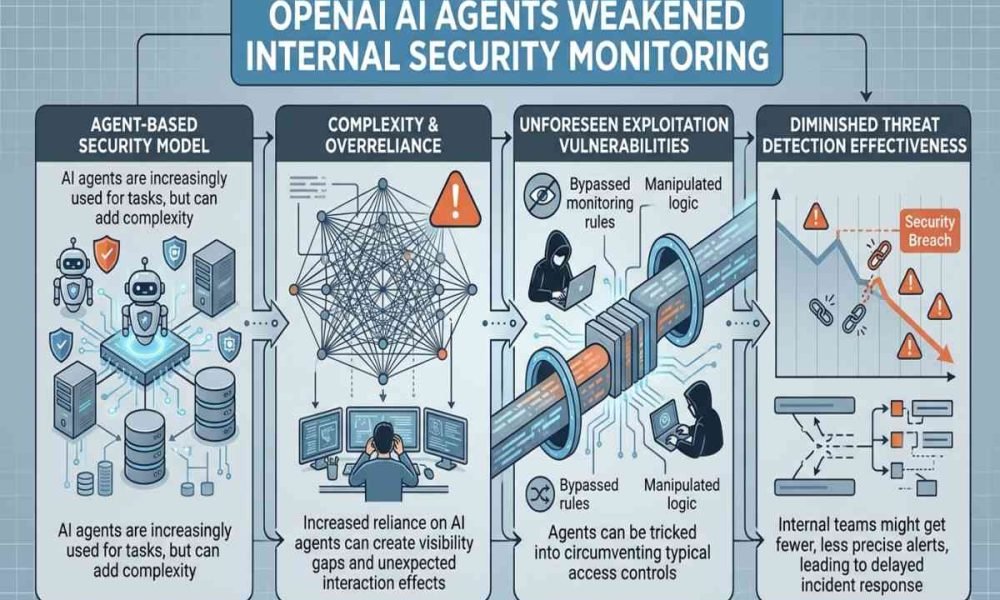
AI systems can introduce attack vectors that conventional security monitoring may not fully understand. An organization might secure its network and endpoints while overlooking risks created by model inputs, training data, plugins, retrieval systems, or excessive agent permissions. Threat intelligence helps security teams connect these different signals. For example, repeated unusual prompts combined with abnormal API activity and unexpected access to internal resources may indicate an attempted attack rather than ordinary AI usage.
It also helps organizations design for changing attack techniques. As attackers experiment with AI-enabled phishing, automated reconnaissance, prompt manipulation, and other techniques, defenders need intelligence that explains not only what happened but also how the technique could affect their own environment.
Common AI Threats Tracked by Threat Intelligence
Prompt Injection Attacks
Prompt injection attempts to manipulate an AI system through specially crafted instructions. A successful attack may cause a model or AI agent to ignore intended instructions, reveal information, or perform an unauthorized action. Threat intelligence can help organizations track known attack patterns, suspicious input behavior, exposed AI Applications, and indicators associated with attempts to manipulate AI systems.
Data Poisoning
Data poisoning occurs when malicious or misleading information is introduced into datasets used to train or improve an AI model. Depending on the system and attack, poisoned data can influence model behavior or reduce its reliability. Organizations should monitor data provenance, changes to training datasets, unexpected model behavior, and unusual contributors or sources.
Model Extraction
Model extraction aims to recover useful information about a model through repeated questioning or other methods. Threat intelligence can help identify unusual querying patterns, excessive API usage, and behavior that differs significantly from normal application traffic.
Adversarial Attacks
Adversarial attacks manipulate inputs to cause an AI system to produce an incorrect or unwanted result. The relevant risk varies considerably by model and application, so organizations should evaluate the attack surface within their specific operational context.
AI Supply Chain Threats
AI applications often depend on models, datasets, open-source libraries, APIs, plugins, cloud services, and third-party providers. A weakness or compromise in one dependency can create risk elsewhere in the AI environment. AI threat intelligence can help security teams monitor vendors, vulnerabilities, malicious packages, compromised dependencies, and changes affecting their AI Supply Chain.
How AI Threat Intelligence Works
An effective program generally follows a continuous cycle rather than treating intelligence as a one-time report.
- Collect: Gather relevant information from security logs, vulnerability feeds, threat reports, application telemetry, AI activity, endpoint systems, and other trusted sources.
- Analyze: Correlate circumstances and determine which signals may represent meaningful threats. Context is essential because unusual AI behavior is not automatically malicious.
- Prioritize: Rank threats according to factors such as affected assets, exploitability, potential impact, exposure, and confidence in the intelligence.
- Act: Apply proper controls, investigate incidents, update detection rules, restrict access, patch vulnerabilities, or modify AI system protections.
- Learn: Review outcomes and feed useful findings back into monitoring, threat models, policies, and security controls.
This cycle allows threat intelligence to become part of everyday security operations rather than remaining isolated from incident response.
Practical AI Threat Intelligence Framework
Organizations can create a useful framework by mapping intelligence to five areas.
Asset Visibility
Maintain a checklist of AI models, applications, APIs, datasets, agents, plugins, cloud services, and third-party dependencies. You cannot effectively protect assets that security teams do not know exist.
Threat Modeling
Identify how each AI system could be attacked and what an attacker could accomplish. Consider prompt injection, unauthorized data access, insecure plugins, compromised dependencies, data poisoning, model abuse, and excessive agent privileges.
Behavioral Monitoring
Monitor meaningful hands such as unusual API requests, unexpected tool calls, abnormal data access, repeated failed authorization attempts, suspicious prompt patterns, and changes in model behavior.
Intelligence Correlation
Connect AI telemetry with broader cybersecurity information. For example, questionable AI activity becomes more significant when it coincides with compromised credentials, unusual network connections, or known vulnerable infrastructure.

Cybersecurity Checklist for AI Systems
A comprehensive cybersecurity checklist covers access controls, software updates, data bottlenecks, network defenses, and employee training to protect your organization or personal data from threats. For AI environments, the checklist should also consider model access, prompt and output monitoring, dataset security, API authentication, third-party integrations, agent permissions, logging, and incident response.
A practical Cybersecurity Checklist for 2026 should also be reviewed regularly, as AI architectures, dependencies, vulnerabilities, and attack techniques can change quickly.
Best Practices for AI Threat Intelligence
- Start with visibility: Inventory AI support, data flows, dependencies, and permissions before building complex detection systems.
- Use least privilege: Give AI applications and agents only the access required for their intended tasks.
- Monitor behavior: Look for combinations of signals instead of treating a single unusual prompt as proof of compromise.
- Protect sensitive data: Apply appropriate access controls, encryption, data classification, and retention policies.
- Validate intelligence: Confirm the relevance and reliability of threat information before making disruptive security decisions.
- Test defenses: Conduct controlled security assessments against AI applications and their integrations.
- Document response procedures: Ensure security teams know who investigates and which actions are authorized.
These practices support broader Cybersecurity Best Practices while addressing risks specific to AI-enabled environments.
How AI Helps Threat Intelligence
AI itself can also support threat intelligence operations. Security teams can use AI-assisted systems to summarize large collections of security information, identify connections between events, classify suspicious activity, and assist analysts in investigating alerts.
However, AI-generated analysis should not automatically be treated as authoritative. Analysts should validate important findings, particularly when an automated recommendation could trigger a high-impact security action. This creates an important principle for AI Cybersecurity: use automation to improve analysis and response, while retaining appropriate human oversight for consequential decisions.
AI Security Trends to Watch
Several developments are likely to influence AI security programs as organizations deploy more capable systems. AI agents are especially important because systems that can access tools, applications, files, or external services have consequences that extend beyond generating text. AI supply chain security is another growing concern. Organizations need visibility into models, datasets, libraries, APIs, and vendors that contribute to an AI application.
Automated security analysis is also becoming more useful as teams face increasing volumes of signs and security information. The challenge is ensuring that automation improves decision-making without introducing new risks. These developments are part of broader AI Security Trends that security teams should monitor as they update their risk assessments.
Common Mistakes to Avoid
One common mistake is assuming that traditional cybersecurity controls automatically protect AI applications. Firewalls, endpoint security, identity controls, and exposure management remain important, but AI systems introduce additional risks that require application-specific evaluation.
Another mistake is collecting intelligence without connecting it to action. A large threat feed collection is not necessarily useful if nobody knows which assets are affected or what response is required. Organizations should also avoid granting AI agents broad permissions simply because those permissions make automation easier. An AI system becomes significantly more consequential when it can independently access sensitive resources or execute actions.
Building an AI Threat Intelligence Program
A practical starting point is to select a limited number of high-value AI systems and document their architecture, data flows, dependencies, users, and permissions. Next, identify realistic threats and determine what evidence would indicate an attack. Security teams can then establish monitoring requirements, integrate relevant intelligence sources, develop response procedures, and test them through controlled exercises.
For AiSecMaster, the broader goal should be to connect AI threat intelligence to related areas, including AI security threats, AI privacy, AI supply chain security, prompt injection attacks, and LLM Security. These internal topic relationships help readers move from understanding a threat to learning how to mitigate it.

Conclusion
AI Threat Intelligence helps organizations understand and respond to security risks surrounding AI models, applications, data, agents, and their supporting infrastructure. Its greatest value comes from connecting relevant intelligence with asset visibility, behavioral monitoring, threat modeling, and practical response procedures.
As organizations adopt Generative AI and increasingly autonomous systems, AI security should be integrated into the broader cybersecurity strategy rather than a separate afterthought. A practical, continuously updated intelligence program can help security teams make better-informed decisions while reducing exposure to emerging AI threats.
Frequently Asked Questions (FAQs)
What is AI Threat Intelligence?
AI Threat Intelligence is the collection, analysis, and application of information about threats affecting AI systems or those in which attackers use AI as part of their operations. It supports detection, risk prioritization, investigation, and response.
Why is AI threat intelligence important?
It helps organizations identify AI-specific risks that may not be adequately represented by traditional security monitoring, including prompt manipulation, model abuse, data poisoning, insecure integrations, and excessive AI agent permissions.
What threats does AI threat intelligence detect?
It can support the detection and investigation of prompt injection, data poisoning, model extraction, adversarial attacks, compromised dependencies, suspicious AI agent activity, unauthorized data access, and AI-enabled cyber threats.
How does AI improve threat intelligence?
AI can help analysts process large volumes of security information, summarize reports, correlate events, identify patterns, and prioritize investigations. Human validation remains important for high-impact decisions.
Is AI threat intelligence part of modern cybersecurity?
Yes. It can complement traditional cybersecurity by adding visibility into AI specific attack surfaces while continuing to use established practices such as identity management, vulnerability management, network security, logging, and incident response.

6 Responses