

Quick Answer: Learn how AI threat detection identifies cyber threats in real time, analyzes anomalies, supports security teams, and protects modern AI systems.
AI threat detection uses artificial intelligence to identify suspicious activity, unusual behavior, malicious patterns, and potential cyberattacks across networks, endpoints, applications, cloud environments, and AI systems. Instead of relying only on predefined signatures or manual investigation, AI can analyze large volumes of security data, recognize behavioral anomalies, correlate related events, and help security teams respond faster.
For organizations in the USA, this matters because modern environments generate enormous amounts of security telemetry. AI can help security operations teams prioritize meaningful signals, investigate suspicious activity, and detect threats that may not match known attack signatures. However, AI is not a replacement for security professionals; its effectiveness depends on reliable data, appropriate controls, human oversight, and sound cybersecurity practices.
AI Threat Detection at a Glance
| Area | How AI Helps |
|---|---|
| Detection | Identifies abnormal behavior and suspicious patterns. |
| Analysis | Correlates logs, network events, endpoint activity, and security alerts. |
| Threat Intelligence | Connects indicators and behaviors with known cybersecurity risks. |
| Response | Helps prioritize alerts and recommend appropriate investigation steps. |
| AI Security | Monitors AI applications, models, prompts, and data for unusual activity. |
AI threat detection should therefore be viewed as an intelligent layer within a broader security program rather than as a standalone defense.
What Is AI Threat Detection?
AI threat detection is the use of machine learning, behavioral analytics, statistical techniques, and increasingly generative AI to identify potentially malicious activity. Traditional security tools often compare activity against known signatures, rules, or indicators, while AI-based systems can also learn patterns associated with normal and abnormal behavior.
For example, an employee who normally signs in from one region during business hours might suddenly authenticate from an unusual location, access unfamiliar resources, and download an unusually large amount of data. No single event necessarily proves compromise, but an AI system can correlate these signals and raise the risk level. The approach is closely related to AI Threat Intelligence, in which security information is collected, analyzed, enriched, and used to understand potential adversaries and their attack techniques.
How Does AI Detect Cyber Threats in Real Time?
AI threat detection generally works by collecting security telemetry, establishing behavioral patterns, identifying anomalies, correlating events, and assigning risk. The exact process varies between security platforms, but the underlying concept is similar.
Collecting Security Data
AI security systems can process information from network traffic, endpoint activity, authentication records, cloud services, applications, firewalls, identity systems, and security logs. The quality and coverage of this telemetry directly influence detection quality.
Establishing Normal Behavior
Machine-learning models can identify patterns that represent expected behavior. These patterns may include normal login times, typical data transfers, application usage, network connections, and user activity. A baseline does not mean that every unusual action is malicious. Instead, it provides context for determining which deviations deserve investigation.
Detecting Anomalies
AI can flag activity that differs significantly from expected behavior. Examples include unusual authentication patterns, unexpected process execution, abnormal network communication, or sudden changes in data-access behavior. Anomaly detection is particularly useful for previously unknown threats because the system does not necessarily need a signature for the exact attack.
Correlating Multiple Signals
One suspicious event can produce a false positive. Several related events may tell a different story. AI can correlate identity events, endpoint telemetry, network activity, and other signals to identify a broader attack sequence. This can help security analysts understand whether apparently separate alerts may belong to the same incident.
Risk Scoring and Prioritization
Security teams cannot investigate every alert with equal attention. AI can help rank alerts based on factors such as unusual behavior, asset importance, account privileges, attack indicators, and relationships among events. This allows analysts to concentrate first on activity that appears most consequential.
AI Threat Detection vs. Traditional Detection
Traditional cybersecurity controls remain important, but AI can add behavioral and analytical capabilities to modern threat detection.
| Capability | Traditional Detection | AI-Based Detection |
|---|---|---|
| Rules | Strong reliance on predefined rules | Can combine rules with learned patterns |
| Known Malware | Effective with signatures and indicators | Can add behavioral analysis |
| Unknown Behavior | Often difficult to identify | Can detect anomalies and unusual activity |
| Alert Correlation | Often manually configured | Can automate relationships across multiple signals |
| Analyst Support | Requires substantial manual review | Can summarize and prioritize investigations |
| Adaptability | Rules require regular maintenance | Models can adapt when appropriately trained and monitored |
The best approach is usually layered security. AI should complement firewalls, endpoint protection, identity controls, vulnerability management, secure configuration, and human investigation rather than replace them.
What Threats Can AI Detect?
AI can support detection across many attack categories, including phishing, malware, credential abuse, insider threats, suspicious network activity, account compromise, and unusual data access. It can also support AI Cybersecurity by monitoring AI-enabled applications and their surrounding infrastructure. As organizations deploy large language models and AI agents, the attack surface increasingly includes prompts, model interactions, connected tools, retrieval systems, data sources, and application permissions.
For generative AI systems, security teams should consider threats such as prompt injection, sensitive information disclosure, supply-chain weaknesses, data and model poisoning, and excessive agency. OWASP identifies prompt injection as a major LLM security risk, noting that malicious inputs can alter the model’s intended behavior.

How Generative AI Supports Threat Detection
Generative AI can assist security teams by turning complicated security information into understandable explanations. Instead of simply reporting that an event is suspicious, an AI assistant can help summarize what happened, identify related alerts, explain technical terminology, and organize investigation findings.
For example, an analyst investigating a suspicious login could use an AI assistant to summarize authentication events, endpoint activity, and related alerts before deciding what evidence requires deeper examination. Generative AI should still operate within strict security boundaries. Sensitive logs and incident information require appropriate access controls, data protection, and governance.
AI Threat Detection for AI Systems
AI systems create a security challenge because defenders must protect both conventional infrastructure and AI-specific components. NIST’s AI Risk Management Framework emphasizes trustworthy AI characteristics including security, resilience, privacy, accountability, and transparency. Its framework organizes risk-management activities around Govern, Map, Measure, and Manage.
AI systems can also face threats during training, deployment, and inference. OWASP’s AI/ML security guidance highlights risks such as data poisoning, adversarial inputs, model theft, and operational abuse. Data poisoning is particularly important because manipulated training, fine-tuning, or embedding data can introduce vulnerabilities, backdoors, or unwanted behavior. This means an effective AI Security Master requires monitoring the complete lifecycle rather than focusing only on the model’s final output.
Benefits and Limitations of AI Threat Detection
AI can process security information at a scale that would be difficult for human analysts to handle manually. It can identify relationships across events, reduce repetitive investigation work, and provide additional context for suspicious activity. However, AI systems can also produce false positives, miss sophisticated attacks, or behave poorly when trained on incomplete or biased data. Attackers may deliberately manipulate inputs or exploit weaknesses in detection models.
Organizations should therefore validate AI-generated findings, monitor model performance, protect training and operational data, and maintain human decision-making for important security actions.
AI Threat Detection Best Practices
A practical implementation should begin with visibility and strong fundamentals rather than immediately deploying the most sophisticated model.
- Establish reliable telemetry from identity, endpoints, networks, applications, and cloud systems.
- Define meaningful behavioral baselines and regularly review detection performance.
- Combine AI analytics with signatures, rules, threat intelligence, and conventional security controls.
- Keep humans involved when alerts could trigger disruptive or high-impact actions.
- Test detection systems against adversarial behavior and realistic attack scenarios.
- Protect AI models, training data, prompts, logs, APIs, and connected systems.
- Measure false positives, false negatives, investigation time, and analyst outcomes.
- Review detection rules and models as infrastructure, threats, and business processes change.
A comprehensive cybersecurity checklist covers access controls, software updates, data backups, network defenses, and employee training to protect your organization or personal data from threats.
AI Security Trends to Watch
Modern cybersecurity is moving toward security systems that combine behavioral analytics, automation, threat intelligence, and AI-assisted investigation. At the same time, defenders must secure AI itself. One important trend is the convergence of AI Security and conventional cybersecurity. Organizations increasingly need visibility into both traditional infrastructure and AI applications, rather than treating AI as an isolated technology.
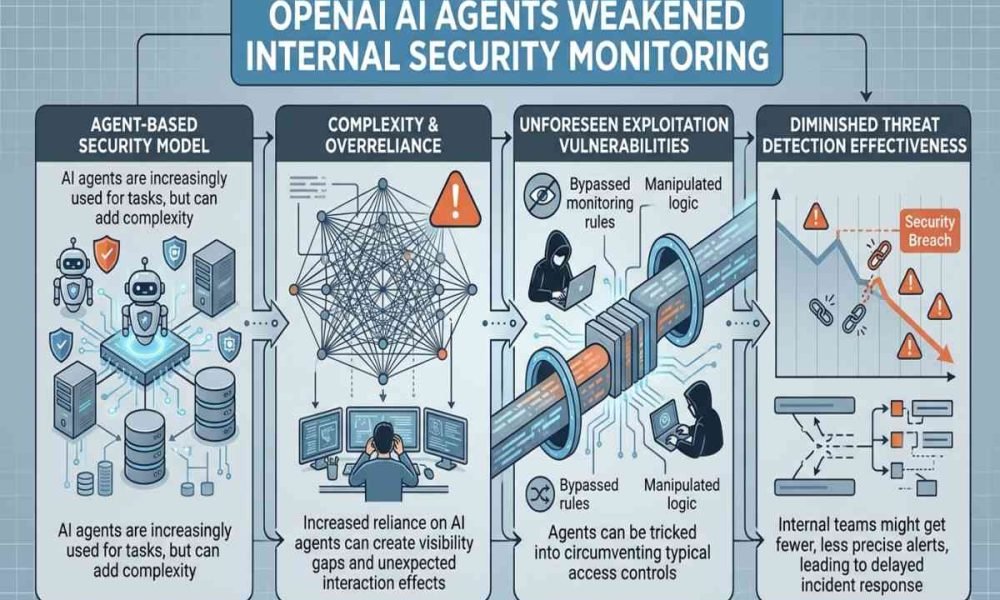
Security teams should also expect more attention on AI agents. An AI system with permission to call tools, access data, or perform actions can pose security consequences that differ from those of a simple chatbot. OWASP’s current LLM risk guidance specifically identifies excessive agency as a risk.
Cybersecurity Checklist 2026 for AI Threat Detection
Organizations building a Cybersecurity Checklist 2026 can use the following practical priorities to strengthen AI threat detection and overall security readiness.
| Priority | Recommended Action |
|---|---|
| Visibility | Inventory AI systems, endpoints, identities, applications, and data. |
| Access | Apply least privilege and strong authentication controls. |
| Monitoring | Centralize important security telemetry for continuous monitoring. |
| Detection | Combine behavioral analytics with established security controls. |
| AI Security | Monitor prompts, models, data, APIs, and AI agents for suspicious activity. |
| Response | Define clear escalation paths and incident-response procedures. |
| Testing | Conduct adversarial testing and regularly validate detection capabilities. |
| Governance | Review AI security risks throughout the system lifecycle. |
These measures align with the broader principle that cybersecurity and AI risk management should be continuous rather than treated as one-time projects. NIST notes that cybersecurity and privacy considerations apply across the design, development, deployment, evaluation, and use of AI systems.
Common Mistakes to Avoid
A common mistake is assuming that an AI detector is automatically accurate. Detection quality depends on telemetry, model design, thresholds, environmental context, and continuous validation. Another mistake is treating every anomaly as an attack. Unusual behavior can have legitimate explanations, so analysts need contextual information before taking action.
Finally, do not ignore traditional Cybersecurity Best Practices. Strong identity controls, patch management, segmentation, backups, secure configurations, and employee awareness remain essential even when advanced AI detection is deployed.

Conclusion
AI Threat Detection gives cybersecurity teams a powerful way to analyze behavior, correlate security events, identify anomalies, and prioritize potential incidents. Its greatest value comes from combining machine intelligence with reliable telemetry, established security controls, threat intelligence, and experienced human judgment.
As AI becomes part of business applications and security operations, organizations must secure both their traditional infrastructure and AI systems. For AiSecMaster readers, the practical goal is not simply to deploy AI, but to build a measurable, continuously tested security program in which AI improves visibility and response without becoming an unchecked source of risk.
Frequently Asked Questions (FAQs)
What is AI threat detection?
AI threat detection uses artificial intelligence and behavioral analysis to identify suspicious activity, anomalies, and potential cyberattacks. It can process large security datasets and help analysts prioritize investigations.
Can AI detect unknown cyber threats?
AI can help identify previously unseen threats by recognizing abnormal behavior rather than relying exclusively on known signatures. However, anomaly detection can produce false positives and should be validated by security teams.
Is AI threat detection better than traditional cybersecurity?
AI is not universally better. It provides additional analytical and behavioral capabilities, while traditional controls remain essential for prevention, detection, and response. A layered security strategy is generally more effective than relying on one technology.
Can AI detect phishing attacks?
AI can analyze message characteristics, links, sender behavior, language patterns, and other signals to help identify suspicious phishing activity. Detection should be combined with email security controls and user awareness.
How does AI help security analysts?
AI can summarize alerts, correlate events, explain suspicious activity, prioritize investigations, and reduce repetitive analysis. Analysts should remain responsible for important investigative and response decisions.
Can AI systems themselves be attacked?
Yes. AI applications can face threats, including prompt injection, data poisoning, sensitive information disclosure, supply chain risks, and excessive agency. OWASP documents these and other risks in its GenAI security guidance.
What is the role of AI threat intelligence?
AI threat intelligence helps security teams collect, analyze, correlate, and interpret information about potential threats. It can provide context to help determine whether an alert represents a meaningful risk.

3 Responses