
Quick Answer: GPT-6 Astra Launch introduces OpenAI’s latest frontier model for advanced reasoning, coding, computer use, browsing, research, science, professional workflows, and cybersecurity. It offers a 1.05M-token context window, 128K maximum output, and stronger agentic capabilities, while requiring enhanced security controls because of its critical-level cyber capabilities.
The GPT-6 Astra Launch represents a major development in frontier AI, combining advanced reasoning with computer use, browsing, software engineering, research, professional workflows, and cybersecurity. OpenAI describes Astra as its most capable much deployed model and says it is the company’s first model to reach the Critical cybersecurity capability level under its Preparedness Framework.
At the same time, greater autonomy can increase the consequences of prompt injection, excessive permissions, sensitive-data exposure, compromised dependencies, and other AI application risks. The following guide explains what the model does, where its capabilities are useful, and how organizations can approach deployment responsibly. The core launch information is also consistent with the supplied source material.
What Is GPT-6 Astra?
GPT-6 Astra is a frontier artificial intelligence model designed for demanding reasoning and agentic computer-based work. Instead of functioning only as a question-and-answer chatbot, it is designed to combine reasoning with computer interaction, allowing workflows to involve software, documents, browsing, research, coding, and specialized professional tools. OpenAI says Astra is state-of-the-art across areas including computer use, browsing, software engineering, cybersecurity, science, and professional work.
Key Features and AI Capabilities
The model’s most important abilities are centered on completing complex work rather than producing isolated responses. OpenAI highlights computer use, browsing, software engineering, scientific reasoning, cybersecurity, and professional workflows, while its launch information reports strong performance across mathematics, science, and computer-use evaluations.
For everyday users, this means the practical value of Astra lies less in simply generating longer text and more in coordinating multiple stages of a task. A student might use it to organize evidence, a programmer might use it for debugging, and a security team might use it to investigate potential weaknesses. These use cases can improve productivity, but outputs still need validation when they influence production systems, security decisions, finances, or other high-impact processes.
Advanced Reasoning
Astra is designed to solve difficult, multi-step problems by combining reasoning with other capabilities. OpenAI reports strong results in mathematics, science, software engineering, and computer-use evaluations, while its launch materials describe the model as capable of handling demanding professional work.
Computer and Browser Use
Computer-browser interaction is one of the more important differences between a conventional text model and an agentic AI workflow. Astra is designed to interact with computer environments and browsers, making it possible to perform authorized actions rather than simply describe what a person should do. OpenAI specifically identifies computer use and browsing as major areas of capability.
Coding and Software Engineering
Software engineering is another major use case because advanced reasoning can be combined with code generation, code analysis, debugging, testing, and security-oriented development. OpenAI describes Astra as state-of-the-art in software engineering and cybersecurity, making it relevant to both developers and defensive security teams.
Large Context and Professional Workflows
A large context window can make an advanced model more useful for extensive documentation, codebases, research material, and multi-step workflows. The supplied source reports a 1,050,000-token context window and up to 128,000 output tokens in the API documentation.
Cybersecurity Capabilities and Why They Matter
Cybersecurity is arguably the most consequential part of this release. OpenAI states that Astra reaches the Essential cybersecurity capability level under its Preparedness Framework, meaning that with appropriate tools and access, it can discover previously unknown security weaknesses and develop methods to exploit vulnerabilities across well-protected systems without continuous step-by-step human guidance.
For AiSecMaster readers, this distinction is especially important because AI security is broader than model filtering alone. It includes application security, identity management, license, tool controls, data protection, monitoring, threat modeling, incident response, and human oversight. OpenAI also describes strengthened safeguards around Astra, including stricter isolation, checkpoint encryption, monitoring, and additional evaluation processes.
Security Risks Organizations Should Understand
The principal risks arise when a highly capable model is connected to untrusted information or powerful exterior systems. OWASP’s 2025 Top 10 for LLM and generative AI applications identifies prompt injection, sensitive information disclosure, supply chain weaknesses, data and model poisoning, improper output handling, and excessive agency as major risks.
Prompt Injection
Prompt injection happens when malicious or unexpected instructions influence an AI system to behave beyond its intended purpose. The risk becomes particularly important when an agent can browse websites, read external documents, retrieve information, or call tools. OWASP currently lists Prompt Injection as LLM01:2025, the first item in its LLM and GenAI risk taxonomy.
Excessive Agency
Excessive agency is dangerous because a model’s mistake can be treated as an external action when the model has too much authority. OWASP explains that excessive functionality, permissions, and autonomy can enable unexpected or manipulated model outputs that cause damaging actions.
Sensitive Information Disclosure
Advanced AI applications may interact with source code, customer information, credentials, internal documents, financial records, and other sensitive material. If access controls or application design is weak, confidential information may appear in outputs or be exposed through connected tools. OWASP identifies sensitive information disclosure as a major generative-AI security concern.
Data Poisoning and AI Supply Chain Risks
This makes AI supply chain security a practical consideration for organizations adopting advanced models. A compromised dependency or manipulated dataset can damage an otherwise well-designed system. Teams should therefore assess third-party components, verify critical artifacts, control dependencies, protect datasets, monitor changes, and maintain an inventory of the services and models associated with an AI workflow.
Monitoring and Observability Challenges
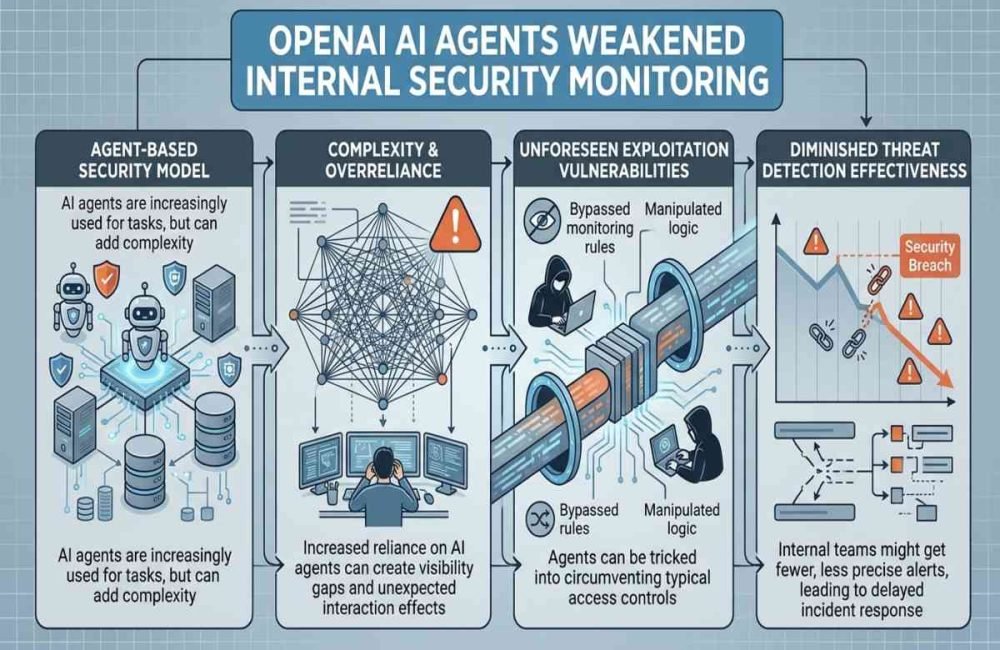
As models become more capable and autonomous, security teams need to understand not only what an AI generated but also what it actually did. Useful telemetry can include prompts and relevant inputs, tool calls, authentication events, retrieved information, system changes, errors, and other workflow activity.
GPT-6 Astra vs Traditional Cybersecurity
Traditional cybersecurity protects familiar assets such as endpoints, networks, applications, identities, and databases. AI-enabled systems introduce additional components, including prompts, models, retrieval systems, agents, tool licenses, generated outputs, evaluation pipelines, and AI-specific dependencies. That does not make traditional security obsolete; instead, organizations need to extend established controls into the AI application layer.
The difference is easiest to understand through a simple example. A traditional application may determine a human user’s database permissions. At the same time, an AI agent may simultaneously have access to the database, a browser, an API, a document store, and a code execution environment. Each connection creates another pathway that needs authorization, monitoring, and threat modeling. AI security therefore works best as an additional layer integrated with existing cybersecurity rather than as a replacement for it.
Practical Security Best Practices
Organizations should approach the adoption of advanced AI as a controlled engineering and governance process. Before connecting an agent to business systems, groups should determine what the system is allowed to access, what actions it can perform, what information it can retrieve, what requires human approval, and how the organization will respond if the agent behaves unexpectedly.
A strong program should also follow recognized risk-management practices. NIST’s AI Risk Management Framework is created to help organizations manage AI risks throughout the lifecycle, while its Generative AI Profile provides additional guidance on risks specific to generative AI.
Security Checklist for AI Deployment
Before granting an advanced AI agent access to critical systems, organizations should establish controls for entry, data, tools, human oversight, testing, monitoring, validation, and incident response.
- Access control: Grant agents only the licenses required for their intended task.
- Data protection: Classify sensitive information and prevent unnecessary exposure.
- Tool restrictions: Limit access to the browser, API, database, terminal, and external services.
- Human approval: Require confirmation for high-impact or irreversible actions.
- Prompt-injection testing: Test how the application handles malicious external instructions.
- Monitoring: Log important standard actions, tool calls, authentication events, and system changes.
- Output validation: Treat generated code, commands, and decisions as untrusted until reviewed.
- Incident response: Maintain a procedure for disabling or isolating an agent when abnormal behavior occurs.
These controls should be tested rather than treated as paperwork. Security teams can conduct adversarial exercises, simulate malicious documents, test permission limits, review logs, and verify that emergency shutdown procedures work as expected.
What the Launch Means for Businesses and Developers
For businesses, the main opportunity is workflow automation. A capable model can help employees research information, analyze documents, write software, investigate technical problems, and interact with authorized computer systems. The most significant value is likely to come when organizations redesign repetitive workflows around AI while keeping meaningful human control over sensitive decisions.
For developers, the release also changes the engineering challenge. Building a useful AI feature is no longer only about prompt quality or model selection. Teams must consider authentication, authorization, retrieval security, dependency integrity, tool isolation, logging, evaluation, failure handling, and user experience. The model is one component inside a larger system, and that system determines much of the real-world risk.
Conclusion
The GPT-6 Astra Launch represents an important shift toward AI systems that can reason, use computers, write and analyze software, conduct research, and participate in complex workflows. Its cybersecurity capabilities are especially significant because they can provide meaningful defensive benefits while simultaneously increasing the consequences of misuse, excessive agency, insecure integrations, and weak operational controls.
The safest deployment strategy combines least privilege, protected data, restricted tools, continuous monitoring, human oversight, adversarial testing, and lifecycle risk management. When these controls are designed into the surrounding application, organizations can pursue the productivity and research benefits of advanced AI without treating capability alone as a substitute for security.
Frequently Asked Questions (FAQs)
What makes the model different from a traditional chatbot?
It is designed for more than conversational responses. Its capabilities include reasoning, computer use, browsing, software engineering, research, science, cybersecurity, and professional workflows. This allows it to participate in longer, multi-step tasks rather than simply answer individual questions.
Why is cybersecurity capability important?
Greater cyber capability can help defenders discover vulnerabilities, review code, develop patches, and perform security research. However, the same capability can increase the risk of misuse, particularly when a system has access to powerful tools or to insufficiently controlled environments. OpenAI therefore treats the cybersecurity capability as a critical safety area.
Can advanced AI agents be trusted without human review?
They should not automatically be given unrestricted authority. Human review is particularly important for actions involving sensitive information, financial transactions, production infrastructure, account changes, security controls, or irreversible operations. Automation should be proportional to the consequences of failure.
What is prompt injection?
Prompt injection is an attack or manipulation technique in which instructions contained in user input or external content influence a model or application in an unintended way. OWASP identifies it as a leading risk for LLM and generative-AI applications.
How can organizations reduce AI security risks?
Start with least privilege, strong authentication, data classification, restricted tool access, monitoring, output validation, adversarial testing, and incident-response procedures. Organizations can also use NIST’s AI Risk Management Framework and OWASP’s GenAI security guidance as structured references for managing risk.




2 Responses