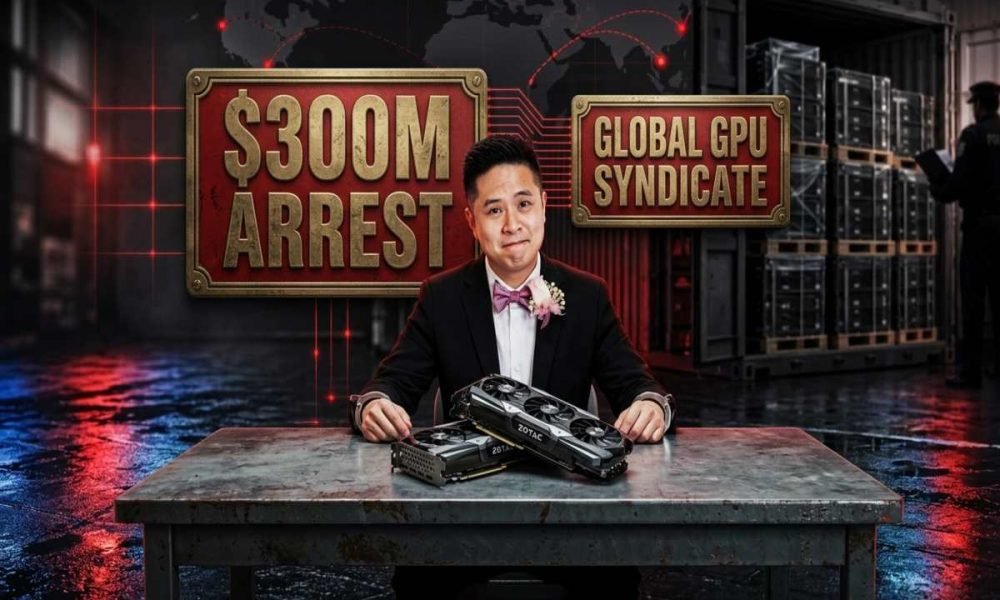
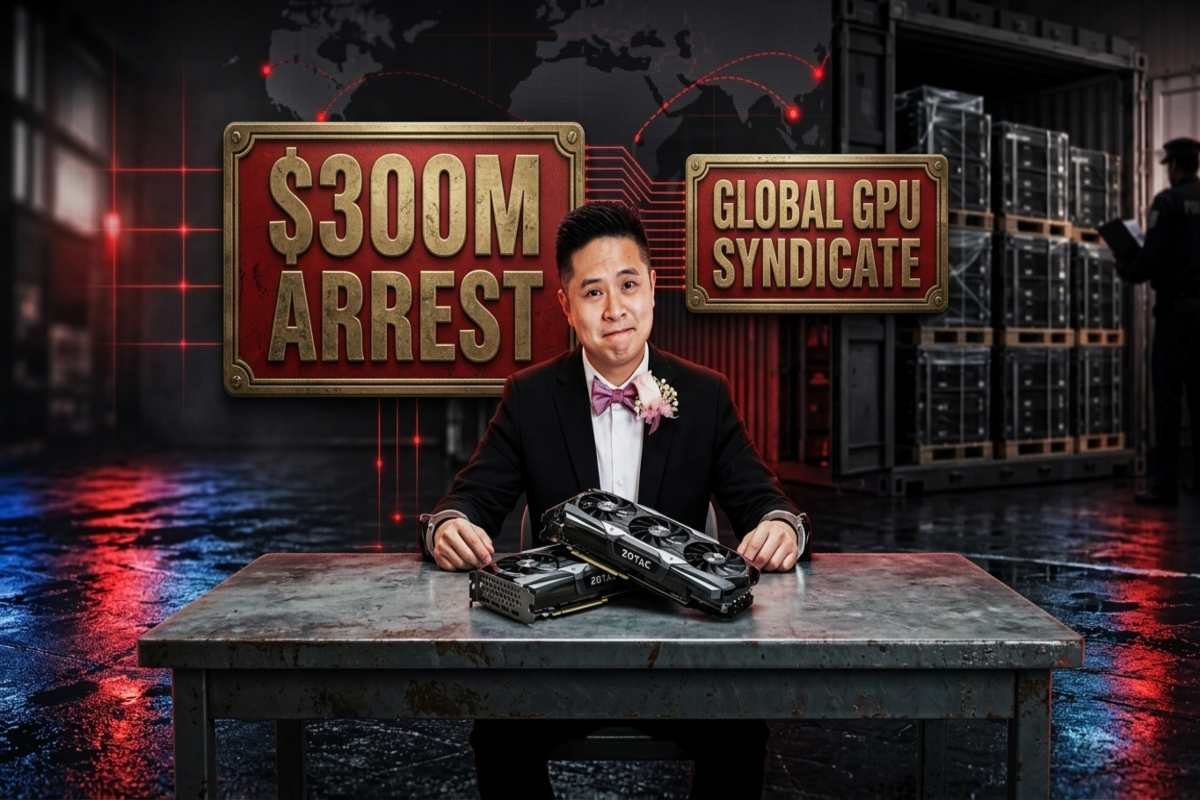
A California technology company owner has been arrested in the United States over allegations that he helped smuggle more than $300 million worth of export controlled computer servers containing U.S. manufactured GPUs to China. Federal prosecutors say the alleged scheme involved false paperwork and routing shipments through third countries to bypass U.S. export restrictions.
The case highlights how advanced computing hardware has become a major AI Security concern. High end GPUs support artificial intelligence development, large scale computing, and other sensitive applications, making unauthorized transfers a potential technology security and national security issue.
At a Glance
- Defendant: Greg Lui, 38, also known as Yiu Kong Lui
- Company: Earthmade Computer Inc.
- Location: City of Industry, California
- Alleged value: More than $300 million in computer servers
- Destination: China
- Charges: Export control conspiracy, outbound smuggling, and money laundering conspiracy
- Indictment: Returned September 29, 2026
- Arrest: October 1, 2026
What Happened in the Alleged GPU Smuggling Scheme?
According to the U.S. Department of Justice, Lui owned Earthmade Computer Inc., a closely held technology company based in the City of Industry. Prosecutors allege that between 2023 and 2024, Lui and unidentified co conspirators purchased high end computer servers containing export controlled GPUs and arranged for them to reach Chinese buyers without the required U.S. licenses.
The alleged method relied on third country transshipment. Instead of sending the restricted equipment directly to China, prosecutors say shipments were sent to countries including Malaysia and Singapore before being re exported to China. Federal prosecutors also allege that false documentation was provided to U.S. manufacturers to make permissible destinations and end users appear to be involved. The indictment further alleges that dummy servers and other methods were used to obscure the actual destination of restricted technology.
How Much Technology Was Involved?
The Justice Department says the alleged scheme involved more than $300 million in export controlled computer servers. Prosecutors also state that Earthmade received more than $176 million from two Malaysia based shipment companies between January and October 2024.
One example in the indictment involves a January 2024 order for 27 servers valued at approximately $7.614 million. According to prosecutors, the servers were shipped from Los Angeles to Kuala Lumpur, while later communications indicated that the equipment was ultimately transferred to a China based buyer.
Why GPUs Matter for AI Security
Modern GPUs provide the computational capacity required for demanding AI workloads, including model training and other high performance computing tasks. Because advanced computing infrastructure can have both commercial and strategic applications, governments can impose export controls on specific technologies and destinations. From an ai security perspective, unauthorized access to advanced computing hardware can create risks beyond ordinary data theft. Computing resources can support Generative AI, large scale model development, scientific computing, automation, and other capabilities.
This also connects with broader cloud security and cloud application security concerns. Organizations increasingly combine specialized hardware, cloud infrastructure, AI models, and software supply chains. Security teams therefore need visibility across hardware procurement, vendors, shipping partners, identities, access permissions, and data flows.
What Are the Charges Against Lui?
Federal prosecutors charged Lui with three offenses: conspiracy to violate the Export Control Reform Act and Export Administration Regulations, outbound smuggling, and conspiracy to commit money laundering. The Justice Department says the maximum statutory penalties include up to 20 years for the export control conspiracy, 10 years for outbound smuggling, and 20 years for money laundering conspiracy.
However, these are allegations, not convictions. The Justice Department explicitly states that an indictment is only an allegation and that defendants are presumed innocent unless proven guilty beyond a reasonable doubt.
What This Means for AI Supply Chain Security
Security programs should not focus exclusively on software vulnerabilities or traditional AI Threat Detection. The case demonstrates why organizations handling advanced AI infrastructure need stronger supply chain controls.
- Verify end users and destinations before approving sensitive technology shipments.
- Maintain complete supply chain records for high value computing equipment.
- Monitor unusual routing patterns, especially unexpected third country transfers.
- Validate export licenses against the actual destination and end user.
- Audit vendors and freight partners involved in sensitive technology movement.
- Investigate documentation inconsistencies before equipment leaves controlled facilities.
These controls can also complement defenses against emerging risks such as an agentic ai attack, where autonomous AI systems could potentially interact with procurement, logistics, or cloud environments.
What Happens Next?
The case is being investigated by the U.S. Department of Commerce’s Bureau of Industry and Security Office of Export Enforcement, the Defense Criminal Investigative Service, and the FBI. Lui was expected to make his initial federal court appearance in Los Angeles on October 2, 2026. For readers following AI infrastructure security, the case is a useful reminder that protecting advanced AI systems begins before software deployment. Hardware sourcing, export compliance, third party relationships, and physical logistics can all become part of the security boundary.
AiSecMaster: The alleged $300 million GPU smuggling case shows how AI security increasingly extends into the technology supply chain. Organizations should treat advanced computing hardware, vendors, shipment routes, and regulatory compliance as connected security considerations rather than isolated business processes.