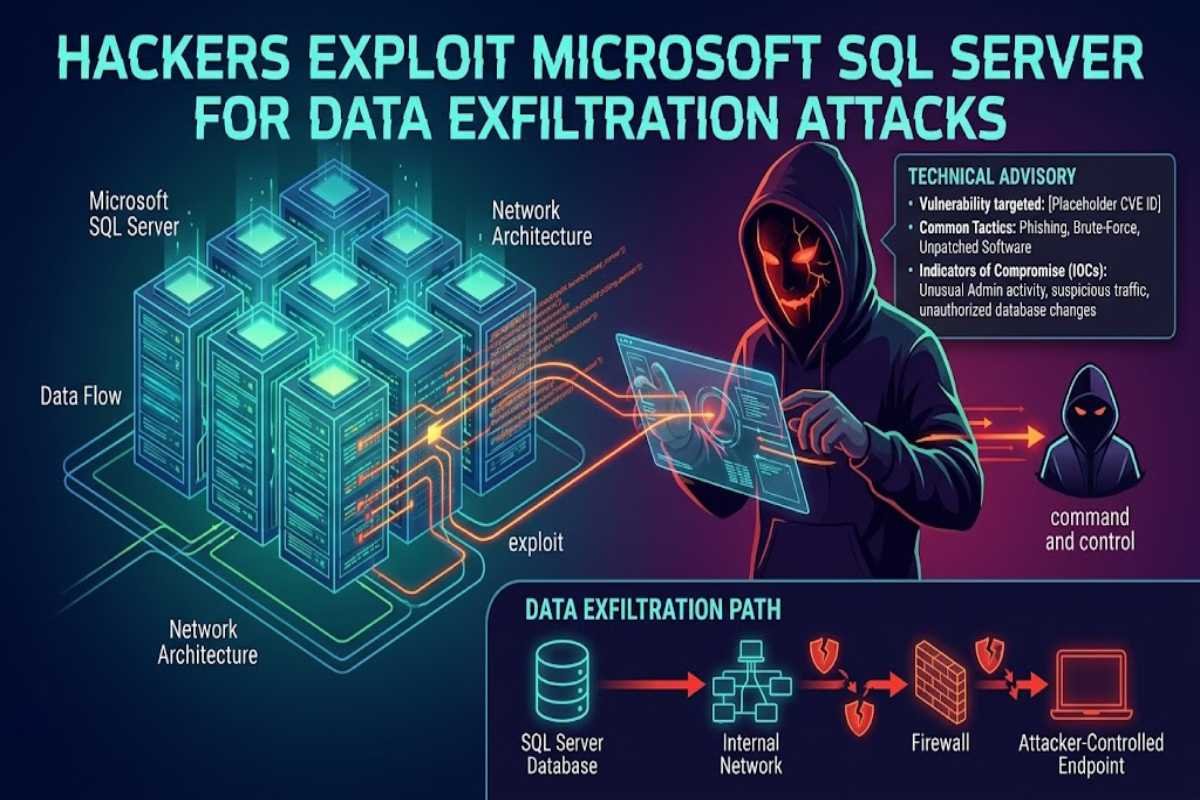
Attackers are increasingly abusing legitimate Microsoft SQL Server capabilities after gaining access to database environments. Recent reporting describes threat activity in which SQL Server was used for command execution and data exfiltration, turning a database connection into a channel for controlling systems and moving stolen information.
A compromised SQL Server can become an attacker-controlled execution point when excessive privileges or dangerous features are available. One important example is xp_cmdshell, which allows SQL Server to execute operating system commands. Microsoft documents that this feature is disabled by default, but an attacker with sufficient privileges may attempt to enable and abuse it.
How Attackers Abuse Microsoft SQL Server
The attack generally begins after an attacker obtains access to a SQL Server account, application, or server. The initial compromise can occur through several routes, including stolen credentials, vulnerable public-facing applications, or SQL injection.
Once attackers gain sufficient database privileges, they may enumerate databases, tables, permissions, network settings, and other system information. Microsoft has previously documented attacks where threat actors used SQL injection to obtain SQL Server access and then enabled xp_cmdshell to execute Windows commands.
Why XP_Cmdshell Matters
XP_Cmdsheel is an extended stored procedure that allows commands to be executed through the Windows command shell. While it has legitimate administrative uses, leaving it enabled unnecessarily can increase the consequences of a compromised privileged SQL account.
Attackers can potentially use the SQL Server process to launch operating-system commands, download tools, inspect the host, or prepare data for removal. Security monitoring should therefore pay attention to unusual child processes originating from sqlservr.exe.
How Data Exfiltration Can Happen
After identifying valuable information, attackers may collect database records, credentials, configuration information, or files accessible from the compromised host. MITRE ATT&CK recognizes databases as information repositories that adversaries may target for collection and subsequent command-and-control or exfiltration activity. The risk is not limited to traditional databases. Research published in 2026 demonstrated that newer SQL Server capabilities can potentially provide additional channels for data movement and command-and-control when an attacker already has highly privileged access.
This makes database security part of a broader AI Security and cybersecurity discussion. As organizations connect databases with AI applications, agents, APIs, and automation systems, a compromised database can potentially become one component of a larger attack chain.
Warning Signs Security Teams Should Monitor
- Unexpected sqlservr.exe child processes.
- Unusual use of xp_cmdshell.
- SQL accounts performing administrative actions outside normal patterns.
- Large or unusual database extraction activity.
- SQL Server connections to unexpected external destinations.
- PowerShell or command-shell activity originating from database servers.
- New scheduled tasks, services, or files created by SQL Server processes.
- Sudden changes to SQL Server security or network configuration.
Microsoft has previously recommended hunting for suspicious processes launched by SQL Server and monitoring commands associated with post-compromise activity.
How to Protect Microsoft SQL Server
The first step is to minimize unnecessary privileges. Database accounts should receive only the permissions required for their specific workload, while administrative accounts should be tightly controlled and monitored. Organizations should also review whether xp_cmdshell is required. If it is not necessary, keeping it disabled reduces one potential avenue for operating-system command execution.
- Restrict SQL Server exposure to trusted networks.
- Use strong, unique credentials and protect privileged accounts.
- Monitor SQL Server administrative changes.
- Enable appropriate database and Windows logging.
- Investigate unusual process creation from sqlservr.exe.
- Monitor large database reads and unusual outbound connections.
- Keep SQL Server and the underlying operating system updated.
- Segment database servers from unnecessary network access.
Security teams can also connect these controls with broader AI threat detection strategies when SQL databases support AI applications or automated agents.
Could AI Make SQL Server Attacks More Complex
AI is not required for this attack technique, but modern AI-enabled environments create additional attack paths. An Agentic AI Attack could involve an AI agent being manipulated into accessing databases or executing unauthorized actions if permissions and controls are poorly designed.
Similarly, an AI attack against an application connected to SQL Server could potentially become more serious if compromised workflows provide access to sensitive database information. This is why AI systems should be assessed together with their underlying databases, APIs, identities, and infrastructure.
What Businesses Should Do After Suspected SQL Server Abuse
If suspicious SQL Server activity is detected, security teams should preserve relevant logs before making significant changes. Investigators should review database authentication, administrative changes, process creation, outbound connections, PowerShell activity, and unusual data-access patterns.
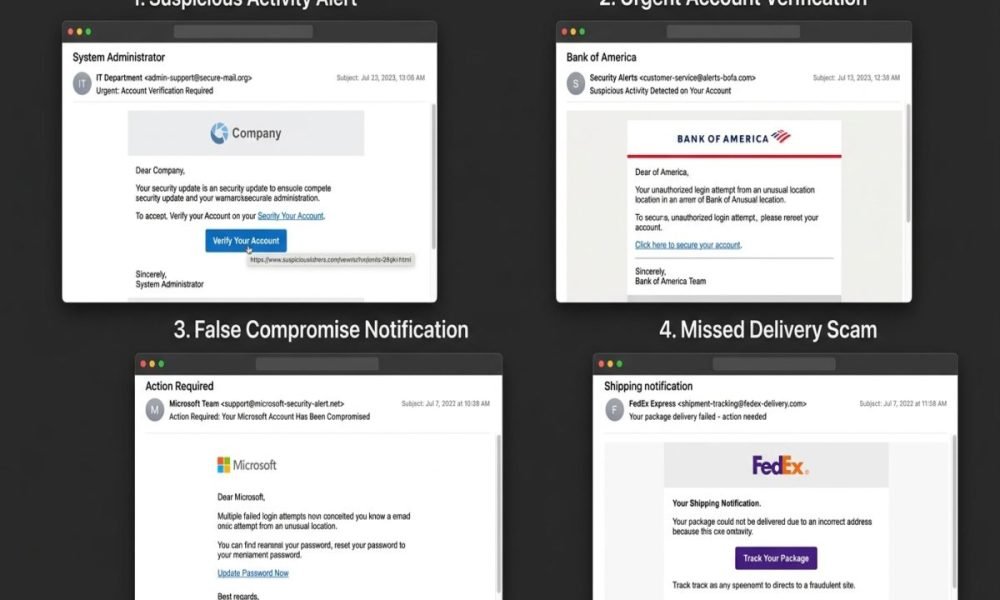
Teams should also determine which accounts were exposed and whether those credentials could provide access to other systems. If sensitive information may have been removed, the organization should establish what data was accessed and follow applicable incident-response and notification requirements. For related social-engineering risks, reviewing Phishing Email Examples can also help security teams understand how attackers may obtain the credentials that provide the initial foothold.
Final Takeaway
Microsoft SQL Server is designed to perform powerful database and administrative functions, but those same capabilities can become useful to attackers after compromise. Recent and earlier investigations show that threat actors can abuse SQL Server for command execution, system discovery, persistence, and data exfiltration.
For AiSecMaster and the broader Security Master approach to practical cybersecurity, the key lesson is straightforward: protect database identities, minimize privileges, monitor SQL Server process activity, and treat unusual data extraction as a potential security signal rather than simply a performance issue.