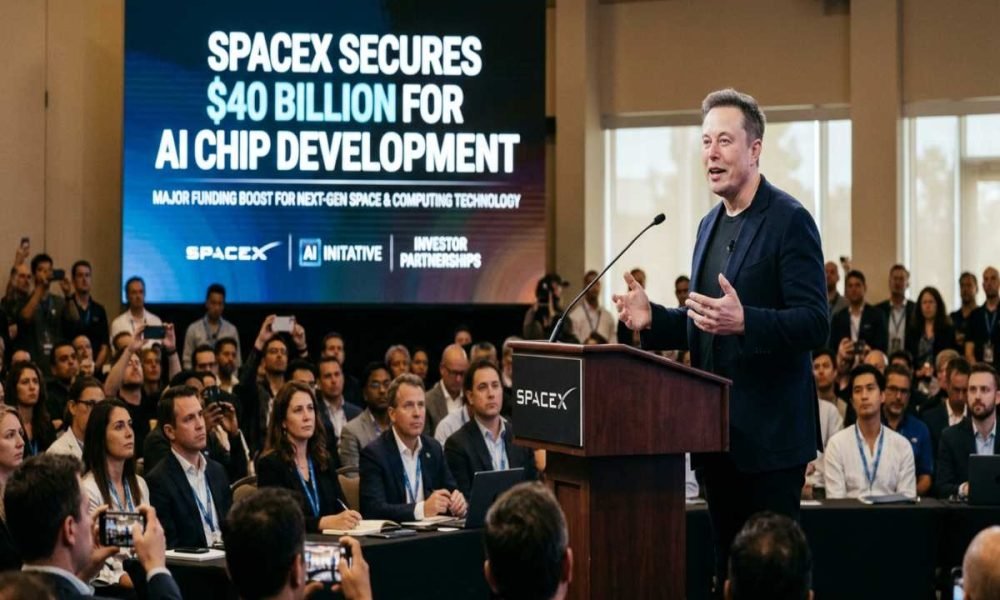
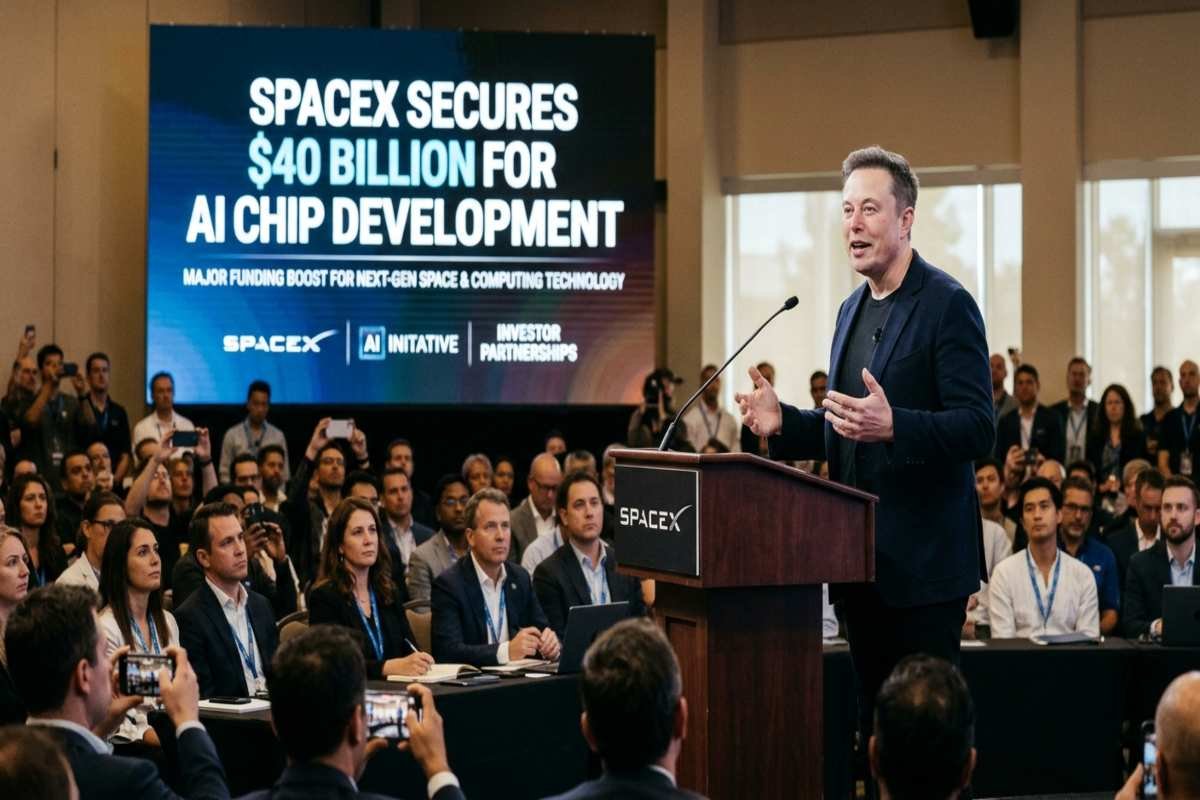
SpaceX has secured $40 billion in debt financing to purchase graphics processing units (GPUs), according to CEO Elon Musk, highlighting the growing financial demands of artificial intelligence infrastructure. On October 25, 2026, Musk also warned that many specialized AI cloud providers could face business failures or consolidation as access to financing becomes more difficult.
The announcement underscores two major developments in the AI industry: the race to secure advanced computing hardware and the financial risks facing companies that depend heavily on AI data centers.
Why Is SpaceX Borrowing $40 Billion for AI GPUs?
SpaceX plans to use the financing primarily for GPU purchases, with deliveries expected during the first and second quarters of 2027, according to Musk’s post on X. GPUs are specialized processors that power AI training, inference, and other computationally intensive workloads. The financing reflects the substantial investment required to expand AI computing capacity. As demand for advanced AI systems grows, companies must secure processors, data center infrastructure, electricity, and networking equipment to support increasingly demanding workloads.
Musk attributed SpaceX’s ability to secure financing to its investment-grade credit status and revenue from Starlink satellite internet and rocket launches. These businesses provide revenue streams beyond AI infrastructure, potentially strengthening the company’s position with lenders. However, details about the financing terms, including its final pricing and lender arrangements, were not fully disclosed in Musk’s announcement. Reuters reported on the financing on October 25, 2026.
What Is a Neocloud Company?
A neocloud is a specialized cloud computing provider that supplies computing resources, particularly GPUs, for artificial intelligence workloads. Unlike traditional cloud platforms serving a broad range of business applications, many neocloud companies concentrate on AI infrastructure and high-performance computing. Companies such as CoreWeave and Nebius operate in this market, providing computing capacity to organizations developing or running AI systems.
The business model offers an opportunity to meet rising demand for AI computing. However, building data centers and purchasing expensive processors requires substantial upfront capital. Providers must generate sufficient revenue to cover infrastructure costs, financing expenses, and ongoing operations. This creates a financial challenge when borrowing becomes more expensive or customers do not generate enough demand to justify continued expansion.
Why Does Musk Predict a Neocloud Industry Shakeout?
Musk warned that more than 200 specialized AI cloud providers could face significant failures and consolidation. He argued that debt markets have become increasingly restrictive toward companies without substantial revenue independent of AI data centers.
His prediction highlights a potential divide between companies with diversified income and businesses that depend primarily on AI infrastructure demand.
- High Capital Expenditure: Purchasing GPUs and constructing data centers require major upfront investments.
- Financing Challenges: Higher borrowing costs or limited access to credit can weaken companies that rely on debt.
- Uncertain Demand: AI computing demand may not grow quickly enough to justify every planned infrastructure project.
- Intense Competition: Providers must compete on computing performance, pricing, reliability, and access to advanced hardware.
Nevertheless, Musk’s comments represent his assessment of the market, not confirmation that particular neocloud companies will fail. The timing and scale of any industry consolidation remain uncertain.
How Does SpaceX’s AI Investment Affect the Technology Industry?
SpaceX’s financing demonstrates how AI development increasingly depends on access to physical infrastructure rather than software innovation alone. Advanced AI systems require specialized chips, data center capacity, reliable electricity, and substantial financial resources. Companies that secure these resources may gain an advantage, while businesses with weaker financing or limited customer revenue could face greater pressure.
SpaceX’s existing Starlink and launch businesses may help it manage these investments differently from providers whose revenue primarily comes from renting computing capacity. The development also raises questions about the long-term sustainability of AI infrastructure spending. If computing demand continues to expand, large investments could support future growth. If demand or pricing falls short of expectations, debt-heavy operators may struggle to recover their costs.
For businesses adopting AI, the potential shakeout makes supplier evaluation increasingly important. Organizations should assess provider reliability, contractual protections, data security, service continuity, and the availability of alternative computing options.
What Should Businesses Watch Next?
Businesses and technology investors should monitor several indicators as the AI infrastructure market develops:
- GPU Delivery Schedules: Whether infrastructure investments translate into usable computing capacity.
- Financing Conditions: Whether specialized providers can obtain affordable capital.
- Customer Demand: Whether AI workloads generate enough revenue to support infrastructure expansion.
- Industry Consolidation: Whether mergers, acquisitions, or business failures reduce the number of providers.
- Infrastructure Security: Whether expanding AI systems receive adequate protection against cyberattacks, unauthorized access, and data exposure.
These factors can help organizations distinguish sustainable AI infrastructure growth from investment driven by overly optimistic assumptions.
For readers exploring related risks, AI Security Master also covers AI security threats, including the importance of protecting AI systems, sensitive information, and supporting infrastructure.