
Quick Answer: Autonomous AI agents are AI systems that can independently plan tasks, use tools, access data, and take actions with limited human intervention. Their main security risks include prompt injection, excessive permissions, data leakage, and unauthorized tool use. Safe deployment requires least privilege access, sandboxing, monitoring, validation, and human approval for high-risk actions.
Autonomous AI Agents are AI systems that can plan tasks, use tools, access information, and take actions with limited human intervention. Unlike a basic chatbot that mainly generates responses, an autonomous agent can interact with APIs, applications, files, databases, and other systems. That capability creates new Agent Security Risks, especially when an agent has broad permissions or receives untrusted instructions.
What Are Autonomous AI Agents?
An autonomous AI agent is an AI-powered system designed to pursue a goal through multiple steps rather than producing only a single response. It may interpret an objective, create a plan, select tools, execute actions, evaluate results, and continue until the task is complete. For example, a support agent might read a customer request, search a knowledge base, check an account, create a ticket, and send a response. Every additional tool or permission increases the potential attack surface.
The key security difference is agency. An AI model can generate harmful text, but an agent connected to real systems may also perform harmful operations. OWASP identifies excessive functionality, excessive permissions, and excessive autonomy as major causes of excessive agency.
Why Autonomous AI Agent Security Matters
Traditional application security protects code, identities, networks, and data. Autonomous AI Agent Security must also consider probabilistic model behavior, untrusted context, tool selection, memory, and multi-step decision-making. An attacker does not necessarily need to compromise the underlying model. A carefully crafted instruction in an email, document, website, or retrieved source can influence an agent’s behavior. OWASP specifically identifies direct and indirect prompt injection, tool abuse, data exfiltration, memory poisoning, goal hijacking, and excessive autonomy as important agent-related risks.
The practical question is therefore not only, “Can the agent complete this task?” It is also, “Which actions should the agent be allowed to perform, with which identity, against which resources, and for how long?”
Major Agent Security Risks
Prompt Injection
Prompt Injection occurs when an attacker places instructions into content consumed by an AI system. With an autonomous agent, the consequences can extend beyond an incorrect answer because the agent may interpret the malicious instruction and invoke a tool.
Indirect prompt injection is especially important because the malicious content may come from a webpage, document, email, or external tool result rather than directly from the user. Microsoft recommends defense-in-depth controls such as prompt analysis, plan drift detection, tool chain analysis, information flow controls, and least privilege.
Excessive Permissions
Giving an agent more access than it needs can dramatically increase the impact of compromise or misbehavior. An agent intended to read files should not automatically receive permissions to delete them, change access controls, or execute arbitrary commands.
Microsoft’s current guidance recommends treating agents as first-class principals with explicit identities, roles, scopes, tool restrictions, and auditable actions.
Data Leakage
Agents often work with business documents, customer information, credentials, internal communications, and databases. Sensitive Data Leakage can be exposed through tool calls, generated responses, logs, or unintended workflows.
Data access should therefore be limited according to the specific task, and sensitive information should not automatically become available simply because the underlying user has broad access.
Tool and API Abuse
Tools transform AI Model Security into an operational system. A vulnerable or overpowered tool can allow unintended file changes, external communication, database modification, or other high-impact actions.
A useful rule is simple: provide the agent with the smallest toolset necessary for its job. OWASP recommends limiting agents to the minimum required functions and using scoped permissions for sensitive operations.
Memory and Goal Hijacking
Persistent memory can improve agent performance, but malicious or incorrect information stored in memory may influence future decisions. Attackers may also attempt to redirect an agent away from its intended objective. Memory should therefore be treated as a security boundary, not merely as a convenience feature.

How to Deploy Autonomous AI Agents Safely
Apply Least Privilege
Start with the minimum permissions required for the agent’s defined task. Use separate identities, narrowly scoped roles, read-only access where possible, and short-lived permissions for elevated actions.
Microsoft recommends task-scoped access, explicit tool allowlists, downstream authorization checks, and fast revocation mechanisms.
Add Human Approval for High Risk Actions
Not every action should be fully autonomous. Require human approval before operations such as deleting important data, changing permissions, transferring funds, publishing externally, or making other irreversible decisions.
This creates a practical safety boundary without removing automation from lower risk tasks. Microsoft’s autonomous agent security guidance recommends deterministic human oversight for high-impact decisions.
Isolate the Agent
Use sandboxing and environment separation to restrict what an agent can reach. Production credentials, administrative interfaces, sensitive databases, and system-level capabilities should not be directly exposed unless the use case genuinely requires them. Isolation reduces blast radius when an AI Attack succeeds.
Monitor Every Important Action
Logging only the agent’s final response is not enough. Security teams should be able to understand which identity acted, what tool was called, what data was accessed, what authorization was granted, and what happened afterward.
Treat External Content as Untrusted
Web pages, emails, documents, retrieved text, and tool outputs should be treated as potentially hostile input. Separate instructions from data, validate important parameters, and apply policy checks before allowing sensitive actions.
Building a Secure Agent Architecture
- Identity: Give every agent a unique, manageable identity.
- Policy: Define exactly what the agent is allowed to do.
- Tools: Restrict functions, parameters, destinations, and data scopes.
- Runtime: Monitor behavior, detect abnormal action chains, and enforce limits.
- Human control: Require approval for high-impact or ambiguous actions.
This approach is stronger than relying on prompts alone. Security boundaries should be enforced by deterministic controls because model instructions can be misunderstood, manipulated, or bypassed.
Common Mistakes to Avoid
A frequent mistake is giving an agent administrator-level access simply because it makes development easier. Another is trusting the agent to “choose safely” without enforcing permissions outside the model. Organizations should also avoid shared credentials, unrestricted tool access, permanent elevated permissions, incomplete audit logs, and deploying agents without a clear owner. These weaknesses can make containment and accountability much harder.
An agent that starts as a read-only assistant can become significantly more dangerous when new write capabilities, external integrations, or additional tools are added. For organizations following Safe AI Agent Deployment, including AiSecMaster best practices, every new capability should be evaluated for potential Agent Security Risks before it is enabled.
Cybersecurity Checklist for AI Agents
- The agent has a unique identity and named owner.
- Permissions follow least privilege principles.
- Tool access is explicitly allowlisted.
- Sensitive actions require additional authorization.
- External content is treated as untrusted.
- Sensitive data access is monitored.
- Agent actions are logged end to end.
- High-impact actions support human approval.
- Credentials are short-lived where practical.
- A tested shutdown and revocation process exists.
- Agent dependencies, models, tools, and data sources are inventoried.
- Security testing includes prompt injection and misuse scenarios.
This Cybersecurity Checklist should be reviewed whenever an agent gains new tools, permissions, integrations, or autonomous capabilities.
How AI Security Connects With Other Defenses
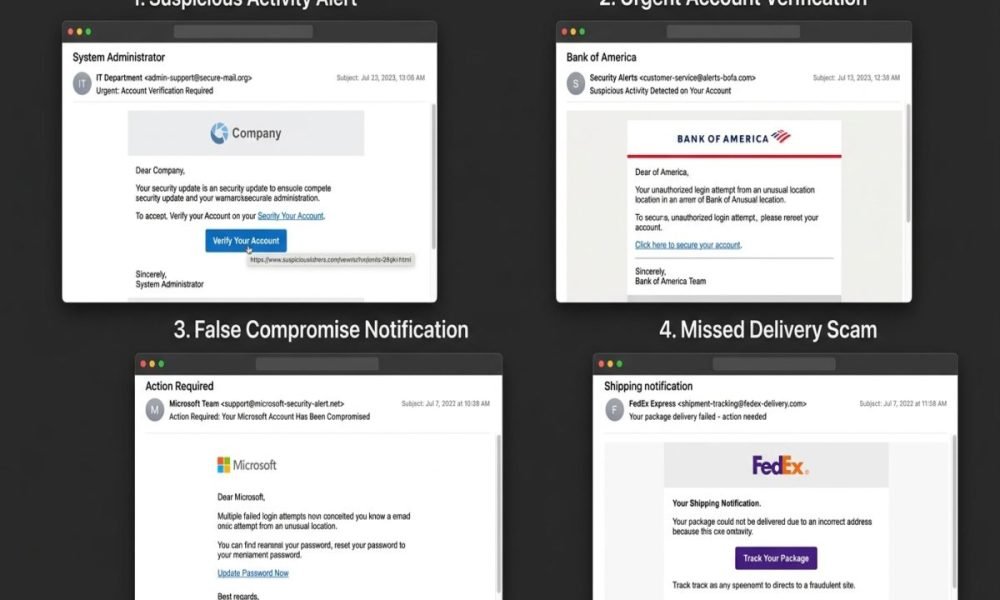
Autonomous agents should not be protected in isolation. Traditional controls remain important. For example, Firewall Configuration can help limit unnecessary network paths, while Phishing Detection can reduce the amount of malicious content entering email-driven workflows. Identity security, endpoint protection, data loss prevention, application security, and continuous monitoring should complement AI Agent Security controls.

Conclusion
Autonomous AI Agents can automate complex workflows, but their ability to act across systems creates security challenges that traditional chatbot defenses do not fully address. Effective Safe AI Agent Deployment requires more than prompt instructions: it requires strong identity controls, least privilege, restricted tools, isolation, validation, continuous monitoring, and human oversight.
For AiSecMaster readers, the most important principle is simple: give an AI agent only the authority it needs, make every important action observable, and keep high-impact decisions under explicit control. As agentic systems become more capable, secure architecture should grow alongside autonomy, not after an incident.
Frequently Asked Questions (FAQs)
Are autonomous AI agents secure by default?
No. Their security depends on architecture, permissions, tools, data access, monitoring, and governance. Autonomy increases the need for explicit security boundaries.
What is the biggest risk of autonomous AI agents?
There is no single universal risk, but prompt injection combined with excessive permissions can be particularly dangerous because malicious input may influence real tool actions.
Should AI agents have administrator access?
Generally, no. Agents should receive only the permissions required for their specific tasks, with stronger controls for sensitive operations.
Can prompt injection affect autonomous agents?
Yes. Malicious instructions can come from users or external content such as websites, documents, and emails. Defense in depth controls should be used to reduce both likelihood and impact.
How can organizations safely deploy AI agents?
Use unique identities, least privilege permissions, limited tools, sandboxing, validation, monitoring, audit logs, and human approval for high-impact actions.





2 Responses