

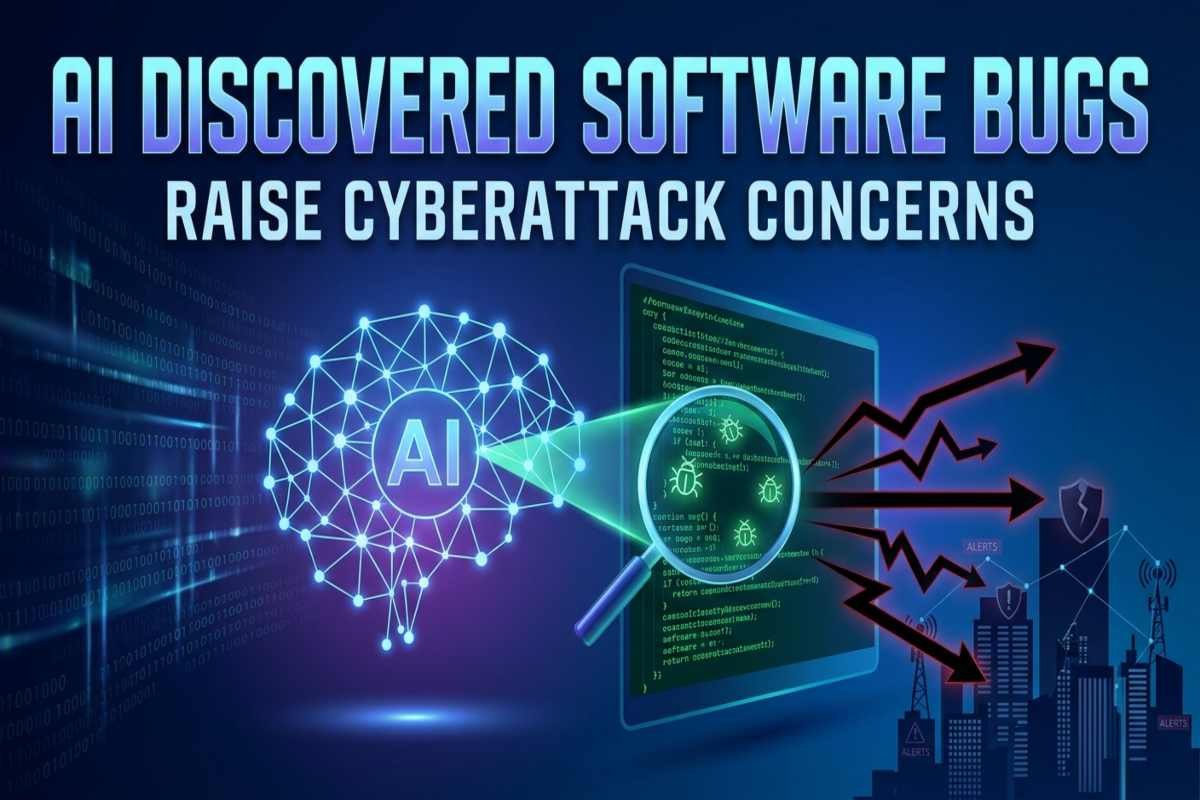
AI powered security research is uncovering serious software vulnerabilities that could increase the risk of cyberattacks if organizations fail to fix them quickly. In October 2026, AI assisted research helped identify critical PHP vulnerabilities that prompted urgent security responses, highlighting how artificial intelligence can strengthen cybersecurity while also increasing pressure on defenders.
AI assisted research helped uncover critical software vulnerabilities in PHP. Attackers may exploit vulnerable systems before organizations deploy security patches. Website operators, businesses, software developers, government agencies, and users of vulnerable applications. AI is accelerating vulnerability discovery, making rapid verification and remediation increasingly important.
What AI Discovered Software Bugs Mean for Cybersecurity
AI discovered software bugs are programming errors or security weaknesses identified or validated with artificial intelligence. These vulnerabilities can expose applications to unauthorized access, data theft, remote code execution, or service disruption, depending on the affected software and the conditions required for exploitation.
The recent PHP incident illustrates the potential impact. According to the Associated Press, two critical vulnerabilities triggered urgent patching efforts and service disruptions affecting some government websites in the United Kingdom, Finland, and Japan. AI agents helped researchers investigate exploitability and validate fixes.
Why Are AI Discovered Vulnerabilities Raising Cyberattack Concerns?
Traditional vulnerability research can require extensive code analysis, specialized expertise, and repeated testing. Modern AI systems can help automate these activities, examine large codebases, and identify weaknesses that developers may have overlooked.
Reuters reported on October 23, 2026, that cybersecurity experts are concerned about shrinking timelines between vulnerability discovery and potential exploitation. However, discovering a vulnerability does not automatically mean attackers can exploit it successfully.
- Faster Discovery: AI can examine software continuously and identify suspicious code patterns.
- Faster Exploitation: Capable models may help attackers develop exploit techniques more quickly.
- Growing Remediation Pressure: Security teams must investigate findings, test fixes, and update affected systems before attackers take advantage of weaknesses.
This creates a race between vulnerability discovery and remediation, especially for internet facing applications and widely used software libraries.
How Could AI Discovered Bugs Lead to Cyberattacks?
The risk depends on the vulnerability, the attacker’s access, and the availability of a reliable exploit. Several attack scenarios are particularly relevant. A vulnerability may allow an attacker to execute unauthorized commands on a vulnerable server. Attackers could exploit weaknesses to access customer records, credentials, or confidential business information. A compromised library or development dependency can expose multiple downstream applications. Effective Supply Chain Planning should include dependency inventories, vulnerability monitoring, and rapid patch deployment.
An attacker could combine vulnerability research with automated reconnaissance and other tools. This creates additional concerns around AI Agent Security, particularly when autonomous systems can interact with production infrastructure. These are potential attack paths, not proof that every AI discovered vulnerability has been exploited.
How Can Organizations Reduce the Risk?
Organizations should treat AI assisted vulnerability discovery as a reason to improve security operations, not simply as another emerging threat.
- Inventory Exposed Systems: Identify PHP installations, application dependencies, internet facing services, and software versions across the organization.
- Apply Verified Security Patches: Follow official vendor advisories and prioritize actively exploited or critical vulnerabilities.
- Test Updates before Deployment: Use staging environments and regression testing to reduce the risk of breaking production applications.
- Monitor Suspicious Activity: Review server logs, authentication events, unusual processes, and unexpected outbound connections.
- Secure Development Pipelines: Combine code reviews, software composition analysis, vulnerability scanning, and controlled deployment procedures.
- Prepare Incident Response Plans: Establish clear procedures for isolation, investigation, recovery, and communication if exploitation is suspected.
Organizations should also review the OWASP LLM Security Risks when AI systems are integrated into development or security workflows. Prompt injection, excessive permissions, and unsafe tool access can introduce separate risks that require appropriate controls.
Will AI Make Cybersecurity Better or Worse?
AI can improve cybersecurity by identifying vulnerabilities earlier, helping developers understand complex bugs, and accelerating remediation. OpenAI’s security research initiatives demonstrate how AI assisted code analysis can support vulnerability discovery and defensive testing.
However, the same capabilities may help malicious actors analyze software and develop attack methods. The outcome will depend on access controls, model safeguards, security expertise, and how quickly organizations fix verified vulnerabilities.
For defenders, AI Threat Intelligence can help prioritize emerging risks, correlate vulnerability reports, and identify systems requiring immediate attention. AI generated findings should still be validated by qualified security professionals before major operational decisions are made. The emerging concern is not simply that AI finds more bugs. It is that organizations may struggle to investigate and fix them at the same pace they are discovered.
What This Means for AI Security in 2026
The latest developments highlight a practical challenge for cybersecurity teams: vulnerability management must become faster, more continuous, and better coordinated. As AI capabilities advance, an Agentic AI Attack could involve multiple automated steps, from identifying exposed systems to investigating weaknesses. Organizations should therefore limit automated tools to authorized environments, enforce least privilege access, and require human approval for high impact actions.
For readers following these developments, AiSecMaster recommends connecting vulnerability research with practical remediation, software supply chain security, and secure AI deployment practices.