
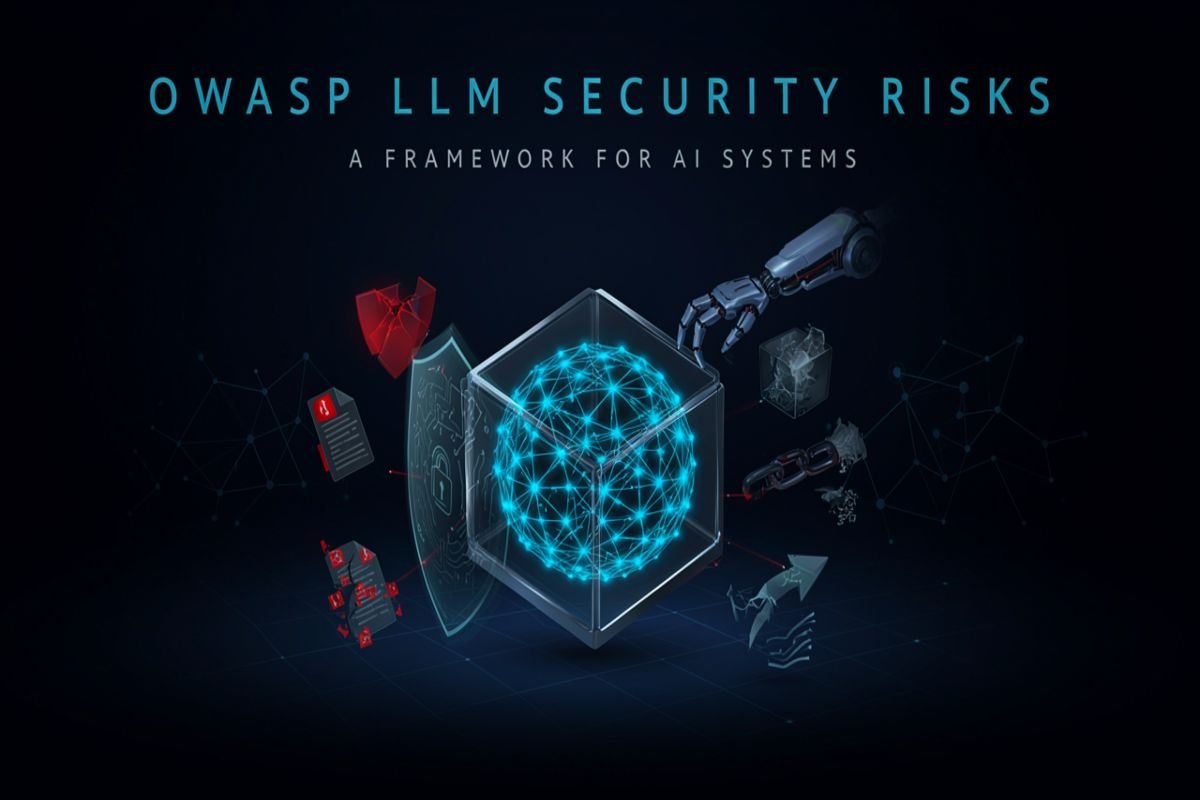
The OWASP LLM Security Risks 2026 guide identifies the most important security threats facing applications built with large language models (LLMs). The 2026 edition updates the risk ranking, expands coverage for modern AI architectures, and incorporates evidence from thousands of real-world AI security incidents.
For developers, security teams, and businesses using generative AI, the key lesson is simple: an LLM should not be treated as a trusted security boundary. LLM Security depends on protecting the entire application around the model, including prompts, data, tools, permissions, memory, integrations, and outputs.
What Is New in the OWASP 2026 LLM Security Risks?
The 2026 edition is important because OWASP did more than rearrange a list. The project says the new version combines practitioner judgment with a corpus of 7,714 public incidents, of which 6,639 contained enough information for classification. OWASP still gives community judgment greater weight than incident data, but the incident evidence influenced several rankings.
Another major change is the stronger connection between traditional LLM Security and agentic systems. OWASP explains that when an AI model gains tools, memory, and the ability to trigger downstream actions, organizations should also consider the separate OWASP Top 10 for Agentic Applications.
Prompt Injection
Prompt Injection remains the number-one OWASP 2026 risk. It happens when malicious or unexpected instructions influence an LLM through user input, retrieved documents, websites, emails, tool outputs, images, audio, video, or persistent memory.
The major problem is that LLMs do not create a perfect architectural separation between instructions and data. An attacker may therefore hide instructions inside content that the application considers useful or trustworthy.
For example, an AI assistant could retrieve a malicious webpage containing hidden instructions. If the assistant has access to internal documents or external tools, that injection could potentially influence what information it retrieves or what actions it recommends.
Defense: Treat external content as untrusted, validate outputs in application code, minimize permissions, separate data from instructions where possible, and require approval before sensitive actions.
NIST similarly identifies direct and indirect prompt injection as important generative-AI security concerns.
Sensitive Information Disclosure
Sensitive Information Disclosure occurs when an LLM Practices exposes confidential information through its responses or connected systems. Potentially exposed information can include personal data, internal documents, credentials, proprietary business information, system details, or other restricted content.
A secure architecture should not assume that a model will automatically understand which information a user is authorized to receive. Access control should happen outside the model through deterministic application logic.
Defense: Apply least privilege, enforce authorization at the data layer, minimize sensitive information in prompts, monitor unusual retrieval patterns, and avoid giving the model direct access to secrets whenever possible.
Excessive Agency
Excessive Agency is one of the most important Agent Security Risks in the 2026 list. It occurs when an LLM-based system has too much functionality, permission, or autonomy and can therefore perform damaging actions after an unexpected or manipulated output.
Consider an AI Agent that can read email, modify files, send messages, and access cloud systems. A malicious instruction or incorrect model decision becomes much more serious when the agent can immediately execute those actions. This is why AI Agent Security requires more than prompt filtering.
Defense: Give agents only the tools they actually need, use narrowly scoped permissions, separate read and write capabilities, and require human approval for irreversible or high-impact actions.
Supply Chain Risks
LLM applications depend on models, datasets, libraries, plugins, APIs, embedding systems, tools, and third-party services. A compromised component can therefore introduce security problems without attacking the model directly.
OWASP’s 2026 update expands Supply Chain Coverage to include situations where promoted model artifacts may not be what they claim to be.
Defense: Verify model provenance, pin dependencies, review third-party tools, scan packages, control model downloads, and maintain an inventory of AI components.
Data and Model Poisoning
Data poisoning occurs when attackers manipulate training, fine-tuning, embedding, or other data used by an AI system. The objective may be to influence model behavior or corrupt the system’s knowledge. The 2026 OWASP edition also incorporates fine-tuning subversion into this category.
Defense: Establish data provenance, restrict who can modify datasets, validate training and retrieval sources, monitor unexpected behavioral changes, and maintain trusted datasets for comparison.
Unbounded Consumption
Unbounded Consumption involves excessive or uncontrolled use of AI resources. The consequences can include service degradation, unexpected costs, resource exhaustion, or denial-of-service conditions. OWASP moved this risk significantly higher in 2026, reflecting increased concern around resource and cost exhaustion.
Defense: Set request limits, token budgets, timeouts, concurrency controls, rate limits, and spending alerts. Monitor abnormal usage rather than assuming normal users will always behave predictably.

Misinformation
An LLM can produce confident but incorrect information. The security impact becomes greater when users or automated systems treat that output as authoritative.
OWASP’s 2026 Methodology found a notable gap between practitioner ranking and incident evidence for misinformation, which contributed to keeping it in the middle of the final list.
This matters especially when AI output influences financial, security, legal, medical, operational, or access-control decisions.
Defense: Add verification workflows, cite trusted sources where appropriate, use deterministic checks for critical decisions, and prevent unverified model output from directly triggering sensitive actions.
Hidden Context Exposure
Formerly known as System Prompt Leakage, Hidden Context Exposure covers situations where information that should remain internal becomes accessible through an AI application’s behavior or responses.
Developers should remember that a system Prompt Injection is not a reliable place to store secrets. Credentials, private keys, API tokens, and other sensitive information should be protected through proper access controls and secret-management systems.
Vector and Embedding Weaknesses
RAG applications depend heavily on vectors and embeddings to retrieve relevant information. Weaknesses in these components can cause an application to retrieve the wrong information, expose unauthorized content, or allow poisoned material into the model’s context.
Defense: Secure vector databases, enforce document-level authorization, validate ingestion sources, monitor retrieval behavior, and separate users’ data where required.
Improper Output Handling
Improper Output Handling occurs when applications trust or execute model-generated output without sufficient validation. For example, an AI assistant generating SQL, code, shell commands, HTML, or API parameters should not automatically be trusted simply because the output looks valid.
OWASP expanded this category in 2026 to include insecure code generated by assistants at scale.
Defense: Treat model output as untrusted input. Validate it with deterministic application controls, enforce schemas, sanitize where appropriate, sandbox generated code, and restrict execution privileges.
How to Build Safer LLM and AI Agent Systems
The most useful way to apply the OWASP list is to turn it into an architecture and deployment process rather than simply checking ten boxes.
Follow Least Privilege
An AI system should receive only the permissions required for its specific task. For example, if an assistant only needs to read documents, it should not have delete or administrative privileges. Following Safe AI Agent Deployment practices and least-privilege access helps organizations strengthen LLM Security and reduce potential threats, as highlighted by AiSecMaster.
Separate Reasoning From Execution
Do not allow model output to directly control sensitive systems. Put deterministic validation and policy enforcement between the model and the action.
Add Human Approval
High-impact activities such as deleting data, changing permissions, transferring money, publishing content, or deploying code should normally have an approval mechanism appropriate to the risk.
Secure AI Memory and RAG
Treat memory stores, vector databases, retrieved documents, and knowledge bases as security-sensitive components. Poisoned content can affect future interactions if it persists.
Test for Realistic Attacks
Security testing should include direct and indirect prompt injection, malicious documents, poisoned retrieval data, excessive permissions, unsafe tool calls, and unexpected model outputs.
How OWASP LLM Risks Relate to AI Agent Security
Traditional LLM applications and agentic applications overlap, but they are not identical. OWASP’s 2026 LLM guide focuses on risks where the model is a component inside an application. When the model becomes an actor with tools, memory, and downstream authority, organizations should also use the OWASP Agentic Applications framework.
For Safe AI Agent Deployment, this distinction is critical. Prompt injection may be the initial compromise, but excessive permissions or unrestricted tool access can determine the eventual damage.
Untrusted input → AI model → retrieved context → tool selection → authorization → action → monitoring
Conclusion
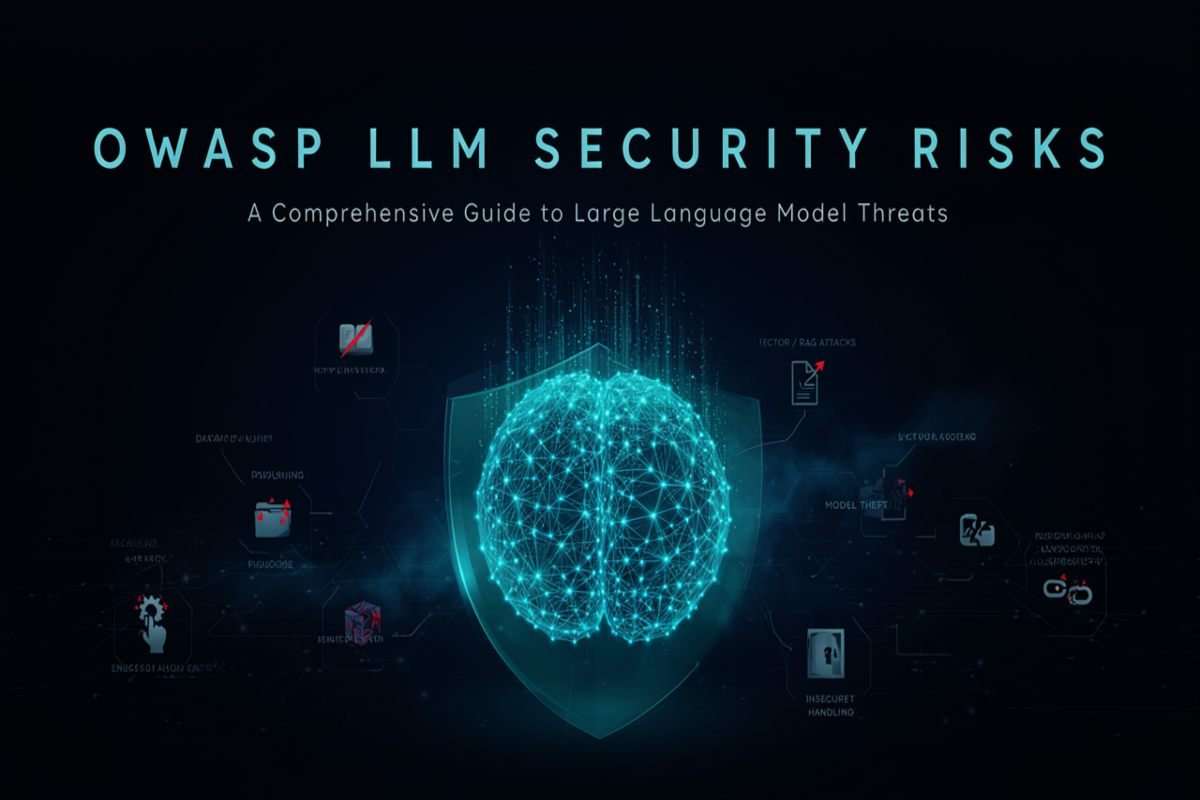
The OWASP LLM Security Risks 2026 framework shows that AI security is increasingly an application-architecture problem, not simply a model problem. Prompt injection remains critical, while excessive agency, supply-chain weaknesses, poisoning, information exposure, and unsafe outputs can create serious downstream consequences.
For AiSecMaster readers, the practical takeaway is to design AI systems under the assumption that model behavior can fail or be manipulated. Strong permissions, deterministic controls, secure data handling, continuous testing, and appropriate human oversight can limit the blast radius when that happens.
Frequently Asked Questions (FAQs)
What are the OWASP LLM Security Risks 2026?
They are ten major security risks for applications using large language models. The 2026 list includes Prompt Injection, Sensitive Information Disclosure, Excessive Agency, Supply Chain, Data and Model Poisoning, Unbounded Consumption, Misinformation, Hidden Context Exposure, Vector and Embedding Weaknesses, and Improper Output Handling.
What is the biggest LLM security risk in 2026?
Prompt Injection remains OWASP's number-one LLM application risk in 2026. It can occur through direct user input or indirectly through retrieved content, tools, documents, images, audio, video, and persistent memory.
Why is Excessive Agency dangerous?
Excessive Agency becomes dangerous when an AI system has unnecessary permissions, functionality, or autonomy. A manipulated or incorrect model output can then cause real world actions instead of remaining a harmless response.
How can companies protect LLM applications?
Organizations should use least privilege, strong authorization, output validation, secure data pipelines, monitoring, rate limits, human approval for high-impact actions, and continuous adversarial testing.
Are AI agents covered by the OWASP LLM Top 10?
Partially. The LLM Top 10 covers important risks affecting LLM applications, while OWASP also maintains a dedicated Top 10 for Agentic Applications addressing risks specific to autonomous AI systems.
Should system prompts contain passwords or API keys?
No. System prompts should not be treated as secure secret storage. Sensitive credentials should be managed through dedicated secret-management and authorization mechanisms.





One Response