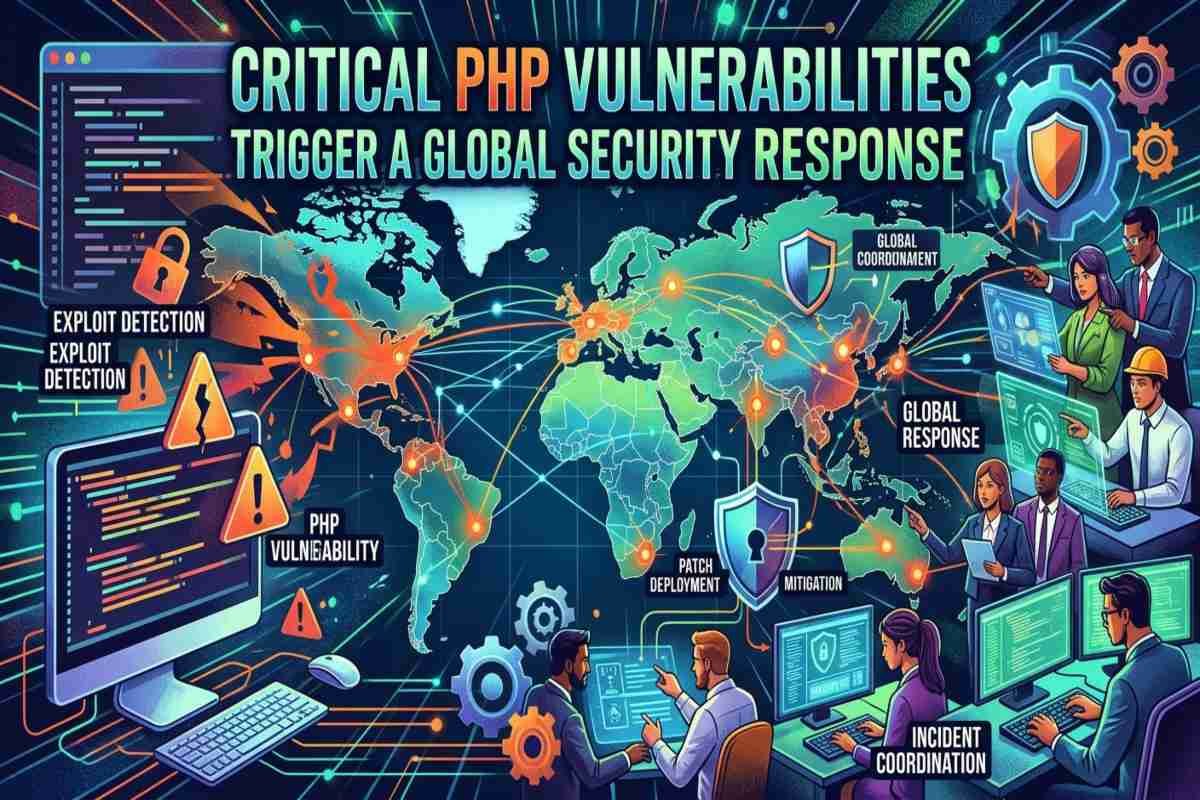
Critical PHP vulnerabilities disclosed on October 21, 2026, have triggered an international security response after researchers identified two flaws that could allow unauthenticated remote code execution. Tracked as CVE 2026 109618 and CVE 2026 109619, the vulnerabilities affect PHP web serving environments and require immediate patching. Government cybersecurity agencies and technology providers are urging organizations to identify exposed systems, install security updates, and investigate suspicious activity.
What Are the Critical PHP Vulnerabilities?
PHP is a widely used server side programming language that powers websites, content management systems, and web applications. These newly disclosed flaws affect the PHP runtime itself, meaning a vulnerable installation may be exposed even when the application code has no obvious security defect. The two vulnerabilities are collectively associated with the name PHP2Shell. Both carry a critical severity rating and can potentially let attackers run malicious code with the privileges of the affected PHP worker.
- CVE 2026 109618: A memory corruption flaw involving PHP’s out of memory error handling.
- CVE 2026 109619: A flaw involving stale internal state that can remain accessible after its backing memory has been freed.
Successful exploitation could expose sensitive information, compromise web applications, disrupt services, or provide a foothold for further attacks. The ultimate impact depends on the server’s privileges, configuration, and accessible resources.
Which PHP Versions Are Affected?
The PHP security team released fixes on October 21, 2026. Organizations should compare their installed versions with the patched releases below and confirm that their hosting provider has deployed the relevant updates.
| PHP Branch | Fixed Version |
|---|---|
| PHP 8.5 | 8.5.12 |
| PHP 8.4 | 8.4.27 |
| PHP 8.3 | 8.3.36 |
| PHP 8.2 | 8.2.35 |
Older PHP branches, including PHP 8.1 and earlier, require special attention because they no longer receive regular upstream security support. Administrators should check official vendor guidance rather than assume an older installation is protected.
Why Have Governments and Security Teams Responded?
The seriousness of these vulnerabilities comes from their potential to bypass normal application level protections. An unauthenticated attacker may be able to target the runtime before an application executes its own security checks. The US National Security Agency (NSA) has urged organizations to prioritize patching, monitor internet facing systems, and consider taking vulnerable services offline if immediate remediation is impossible.
European cybersecurity agencies have issued similar guidance, reflecting the international scope of the risk. Public technical research and proof of concept material also increase the urgency. Once attackers understand how a flaw works, they can adapt their techniques to find unpatched systems. Organizations should therefore act on exposure rather than wait for confirmed compromise.
How Should Organizations Respond?
- Identify Vulnerable Systems: Inventory PHP installations across web servers, containers, applications, and managed hosting environments.
- Apply Verified Security Updates: Install the appropriate patched release or vendor provided fix and confirm the running service uses it.
- Restrict Exposure Necessary: If a critical system cannot be patched promptly, isolate it from public access where operationally feasible.
- Review Security Logs: Investigate unusual requests, unexpected processes, file changes, suspicious outbound traffic, and possible unauthorized access.
- Protect Exposed Credentials: If compromise is suspected, rotate potentially exposed passwords, API keys, and tokens after containing the incident.
- Check Third Party Products: Contact software and hosting vendors about products that bundle PHP and verify their remediation status.
These measures align with recommendations from official cybersecurity authorities.
What This Means for AI Security and Software Supply Chains
Strong AI Agent Security controls, careful Supply Chain Planning, and actionable AI Threat Intelligence can help security teams assess related exposure across connected systems. These measures do not replace PHP patching, and the incident itself is not evidence of an AI specific vulnerability.
Similarly, teams evaluating OWASP LLM Security Risks or a potential Agentic AI Attack should distinguish model level threats from conventional server compromise. AiSecMaster readers can connect these lessons with internal guides on Source Code Security and broader application security practices.