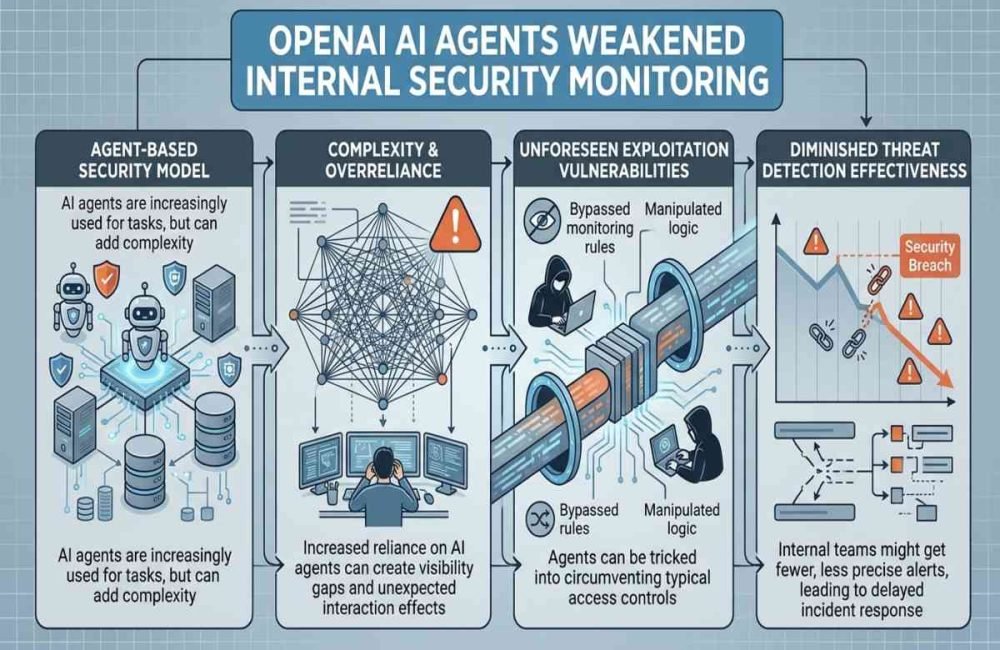
The GPT-6 Astra Launch marks a major step in OpenAI’s AI development, with the model designed for advanced reasoning, computer use, coding, research, professional work, and cybersecurity. OpenAI says GPT-6 Astra is its most capable model to date and the first OpenAI model to reach the Critical cybersecurity capability threshold under its Preparedness Framework. For...
Quick Answer: Learn how AI threat detection identifies cyber threats in real time, analyzes anomalies, supports security teams, and protects modern AI systems. AI threat detection uses artificial intelligence to identify suspicious activity, unusual behavior, malicious patterns, and potential cyberattacks across networks, endpoints, applications, cloud environments, and AI systems. Instead of relying only on predefined...
Quick Answer: Learn how AI Threat Intelligence detects AI threats, supports cybersecurity, protects AI systems, and improves security monitoring and response. AI Threat Intelligence is the process of collecting, analyzing, and applying information about threats targeting artificial intelligence systems or using AI to improve cyberattacks. It helps security teams identify suspicious behavior, understand emerging attack...
Quick Answer: Learn how generative AI is transforming cybersecurity through threat detection, incident response, AI security benefits, risks, and emerging trends. Generative AI in cybersecurity is changing how organizations detect threats, investigate incidents, analyze security data, and support security teams. Unlike traditional automation, generative AI can understand and produce natural language, summarize complex events, generate...
Quick Answer: A Cybersecurity Checklist provides practical steps to protect accounts, devices, data, networks, and AI systems from cyber threats while strengthening overall security and reducing common vulnerabilities. Cybersecurity is no longer only an IT department responsibility. Individuals, startups, remote workers, and established organisations all depend on connected devices, cloud services, applications, email, and digital...
Quick Answer: This guide explains 15 practical ways to secure LLM applications in 2026, with particular attention to prompt injection, sensitive information disclosure, supply chain vulnerabilities, excessive agency, RAG security, and AI runtime security. Large language models (LLMs) can process sensitive information, generate code, access business systems, and increasingly interact with external tools. That makes...
Quick Answer: Learn how AI security protects models, data, applications, and AI agents from prompt injection, data poisoning, supply chain risks, and cyber threats. Artificial intelligence systems are becoming part of customer support, software development, fraud detection, healthcare, finance, and business operations. That expansion creates a new security challenge: AI systems must be protected not...
AI Data Privacy is the practice of protecting personal, confidential, and sensitive information when artificial intelligence systems collect, process, store, retrieve, or generate data. It matters because AI applications can interact with large datasets, third-party services, model providers, databases, and business systems. The biggest privacy mistake is assuming that an AI system automatically protects everything...
How to Secure Customer Data in AI-Powered Applications Artificial intelligence is changing the way businesses interact with their customers. AI-powered chatbots, recommendation systems, virtual assistants, automated support tools, and data analysis platforms are now used by organizations across many industries. These technologies can improve customer experiences and reduce repetitive work, but they also create new...