
Code Injection is an important cybersecurity vulnerability that can affect websites, software applications, APIs, databases, and cloud based systems. It occurs when an application processes untrusted input unsafely, allowing that input to be interpreted as executable code or commands. Along with secure coding practices, Firewall Configuration helps strengthen network defenses and restrict suspicious traffic. Depending on the weakness, attackers may gain unauthorized access to sensitive information, modify important records, or disrupt essential services.
As businesses increasingly depend on connected applications and automated workflows, secure software development has become more important than ever. Understanding Code Injection Vulnerabilities helps developers recognize unsafe coding patterns, identify potential weaknesses, and protect applications before attackers exploit them. A strong security strategy combines secure programming, regular testing, access controls, and continuous monitoring.
What Is Code Injection?
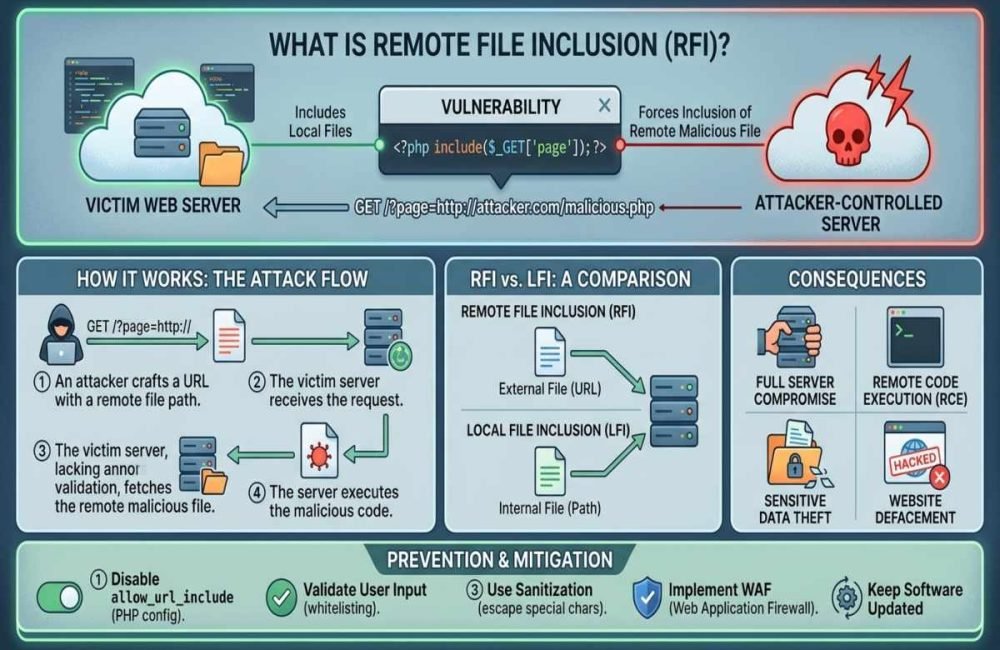
Code Injection occurs when an application allows untrusted input to influence the execution of code or commands. This problem often arises when developers combine user supplied information with executable instructions without applying suitable security controls.
For example, an application may accept information through a form or API and pass it to a database, interpreter, or command processor. If the application fails to separate data from instructions, an attacker may manipulate the input to trigger unintended behavior.Understanding Code Injection Attack Techniques helps security professionals recognize how these weaknesses develop and why they matter. Different attacks target different execution environments, so developers must identify the affected component before choosing an appropriate defense.
Common Types of Code Injection
Code injection can occur in several forms, depending on the technologies an application uses. Each type presents different risks and requires suitable security controls.
- SQL Injection: Occurs when untrusted input changes the intended structure of a database query.
- OS Command Injection: Happens when user controlled data influences commands executed by an operating system.
- Dynamic Code Injection: Occurs when an application evaluates untrusted input as executable programming instructions.
- Template Injection: Develops when user controlled content is interpreted as template instructions rather than ordinary text.
- Script Injection: Can occur when untrusted scripts are executed in an environment that treats them as code.
Developers should understand these categories because Code Injection Security Risks vary according to application permissions, exposed functionality, and the sensitivity of accessible data. A weakness in a low component may have a limited impact, while a similar flaw in a highly privileged service could expose critical business systems.
Causes of Code Injection Vulnerabilities
Code injection weaknesses commonly develop because of insecure programming practices, unsafe execution functions, insufficient input handling, or excessive application permissions. Outdated dependencies and poorly designed integrations can also introduce vulnerabilities into otherwise secure applications. For example, developers may unintentionally allow external data to influence a database query or operating system command. Similarly,Autonomous AI Agents can introduce additional security challenges when they interact with external tools, process untrusted data, or execute automated tasks without proper validation and access controls.
Effective Code Injection Prevention begins during software design rather than after an attack occurs. Development teams should use secure APIs, avoid unnecessary code evaluation, validate data according to its expected format, and separate user input from executable instructions. Regular code reviews can help identify dangerous patterns before software reaches production.
Code Injection Detection Methods
Finding vulnerabilities early helps organizations reduce remediation costs and prevent exploitation. Several testing methods can help developers identify insecure input handling, unsafe execution paths, and vulnerable software components.Static Application Security Testing (SAST) examines source code or compiled representations for potentially unsafe patterns. Dynamic Application Security Testing (DAST) evaluates running applications for observable security weaknesses.
Organizations should combine these tools with manual reviews because automated scanners may miss application specific flaws or produce findings that require further investigation. Effective Code Injection Detection Methods also include reviewing application logs, investigating unexpected execution behavior, and testing fixes in controlled environments.
- Scan source code and dependencies regularly.
- Test applications in authorized development and staging environments.
- Monitor suspicious requests, unexpected errors, and unusual process activity.
- Retest vulnerabilities after fixes are applied.

Code Injection Prevention Best Practices
Secure development practices are essential for protecting applications against injection attacks. Developers should use established libraries and APIs that safely handle user input instead of constructing executable instructions through unsafe string operations. If external commands are necessary, use structured process APIs, restrict executable paths, and validate arguments carefully. Lessons discussed in connection with the Anthropic AI Hacking Incident also highlight the importance of strong security controls, human oversight, and carefully restricting AI systems’ access to sensitive tools and resources.
Reliable Code Injection Mitigation Strategies also include applying least privilege permissions, isolating sensitive processes, maintaining updated dependencies, and enforcing secure configuration standards. Input validation is valuable, but it should complement safe execution methods rather than serve as the only defense.Organizations should integrate security checks into their software development lifecycle.
Code Injection Security Risks for Businesses
These Code Injection Security Risks can lead to financial losses, operational disruption, legal complications, and damage to customer trust. Organizations that handle sensitive information should assess which systems could be affected and how an incident might spread through connected services. Incidents such as the Revolut Data Breach, when discussed in cybersecurity analysis, also highlight the importance of protecting customer information, strengthening access controls, and maintaining effective security monitoring.
For example, a company using digital platforms for Supply Chain Planning may depend on software that processes inventory records, supplier information, orders, and delivery schedules. If a vulnerable application allows unauthorized changes, business decisions and operational workflows could be affected. Secure integrations, access restrictions, monitoring, and recovery plans can reduce these risks.
AI Agent Security and Emerging Threats
Artificial intelligence is introducing new security challenges as applications begin using agents to retrieve information, call external tools, and perform automated tasks. AI Agent Security focuses on ensuring that these systems operate within authorized boundaries and cannot misuse sensitive information or connected resources.
Security teams should study OWASP LLM Security Risks to understand broader threats affecting large language model applications, including prompt injection, insecure output handling, and excessive agency. Appropriate safeguards include restricting tool permissions, validating tool arguments, separating trusted instructions from untrusted content, and requiring human approval for sensitive actions.
Organizations can also use AI Threat Intelligence to follow emerging attack patterns, improve detection rules, and strengthen security assessments. Educational resources such as AiSecMaster may support ongoing learning about application security and AI related threats. Regardless of the tools used, AI generated content should be treated as untrusted until it has passed the required validation and authorization checks.
Code Injection Remediation Best Practices
When a vulnerability is discovered, organizations should investigate its severity, identify affected components, and determine whether unauthorized activity may have occurred. If necessary, temporarily restrict access to the vulnerable functionality while preparing a permanent fix.
Effective Code Injection Remediation Best Practices focus on correcting the underlying cause rather than simply hiding the symptoms. Developers may need to replace unsafe execution functions, introduce parameterized queries, update vulnerable dependencies, or remove unnecessary permissions.After applying a fix, teams should retest the original weakness and run regression tests to ensure that related functionality remains secure.

Conclusion
Code Injection remains a significant cybersecurity concern because unsafe input handling can expose applications, sensitive information, and connected business systems to unauthorized actions. Understanding common vulnerabilities, detecting weaknesses early, and implementing secure coding practices can reduce the likelihood and impact of attacks.
Organizations should combine safe execution methods, regular testing, least privilege permissions, dependency management, and effective incident response. As AI powered applications become more common, they must also protect agent tools and ensure that untrusted instructions cannot bypass authorization controls. A proactive, layered security approach helps businesses maintain safer applications and stronger digital resilience.
Frequently Asked Questions (FAQs)
What is Code Injection in cybersecurity?
Code Injection is a vulnerability that allows untrusted input to be interpreted as executable instructions by an application or interpreter. It may result in unauthorized actions, data exposure, or disruption of services.
What are the common types of Code Injection?
Common types include SQL Injection, OS Command Injection, dynamic code injection, and template injection. Each affects a different execution context and requires appropriate security controls.
How can Code Injection attacks be prevented?
Developers should use parameterized queries, safe APIs, appropriate input validation, and secure coding practices. Least privilege access and regular security testing provide additional protection.
How can developers detect Code Injection Vulnerabilities?
Developers can use static and dynamic security testing, dependency scanning, manual code reviews, and application monitoring. Combining these methods helps identify weaknesses that individual tools may miss.
What is the difference between Code Injection and Prompt Injection?
Code Injection exploits unsafe execution of instructions by an application or interpreter. Prompt Injection attempts to influence an AI model through untrusted instructions and may create additional risks when the model can access external tools.