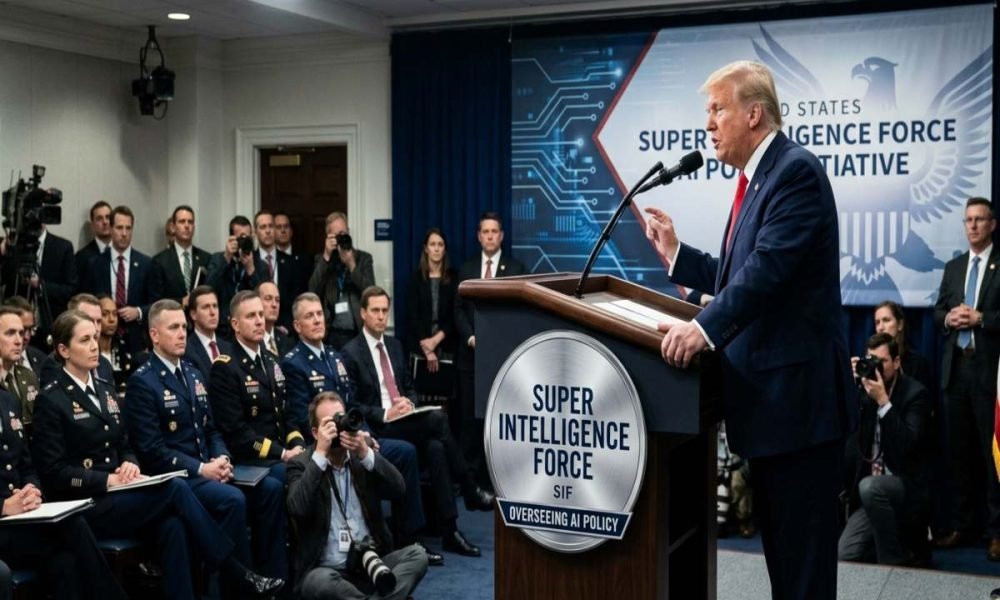
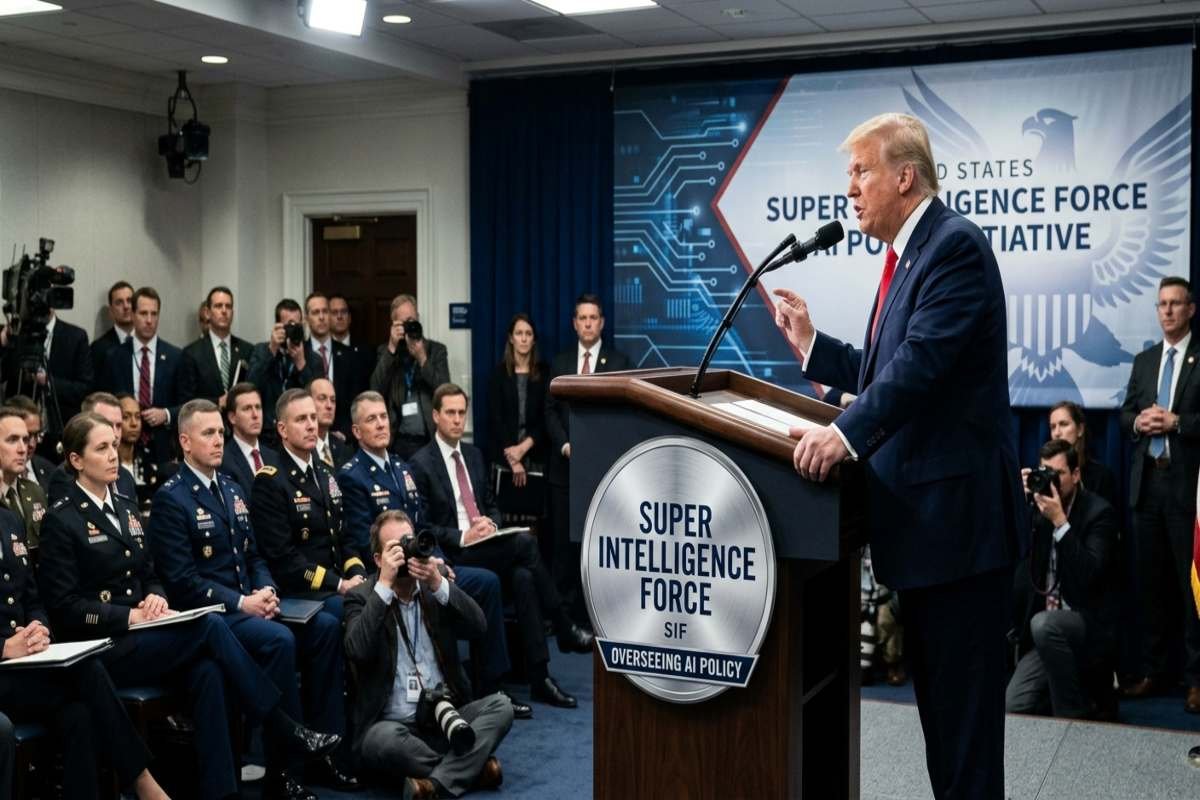
President Donald Trump has announced a new federal task force called the Super Intelligence Force (SIF) to coordinate U.S. policy around artificial intelligence. The initiative will be led by Director of National Intelligence Jay Clayton and is expected to examine AI opportunities, risks, security concerns, and the appropriate role of the federal government.
The announcement comes as AI systems become increasingly capable and concerns grow about cybersecurity, national security, privacy, and the potential misuse of advanced AI. For businesses and security professionals, the new task force could influence how the United States approaches AI governance and technology risks.
What Is the Super Intelligence Force?
The Super Intelligence Force is a new White House-led task force intended to coordinate the federal government’s approach to advanced AI. Trump has used the term “super intelligence” instead of artificial intelligence as part of his administration’s broader terminology shift.
Jay Clayton will lead the group. Other officials named in the task force include Federal Trade Commission Chairman Andrew Ferguson, Pentagon Under Secretary of Defense for Research and Engineering Emil Michael, and Office of Personnel Management Director Scott Kupor. The group will report to Trump and White House Chief of Staff Susie Wiles.
What Will the AI Task Force Do?
The task force is expected to evaluate both the opportunities and risks associated with AI and determine what responsibilities should belong to the federal government. Reuters reported that the group has a 120-day period to produce a comprehensive report covering AI risks, opportunities, and possible government actions. The task force is also expected to engage with businesses, consumers, public interest organizations, infrastructure providers, and other stakeholders.
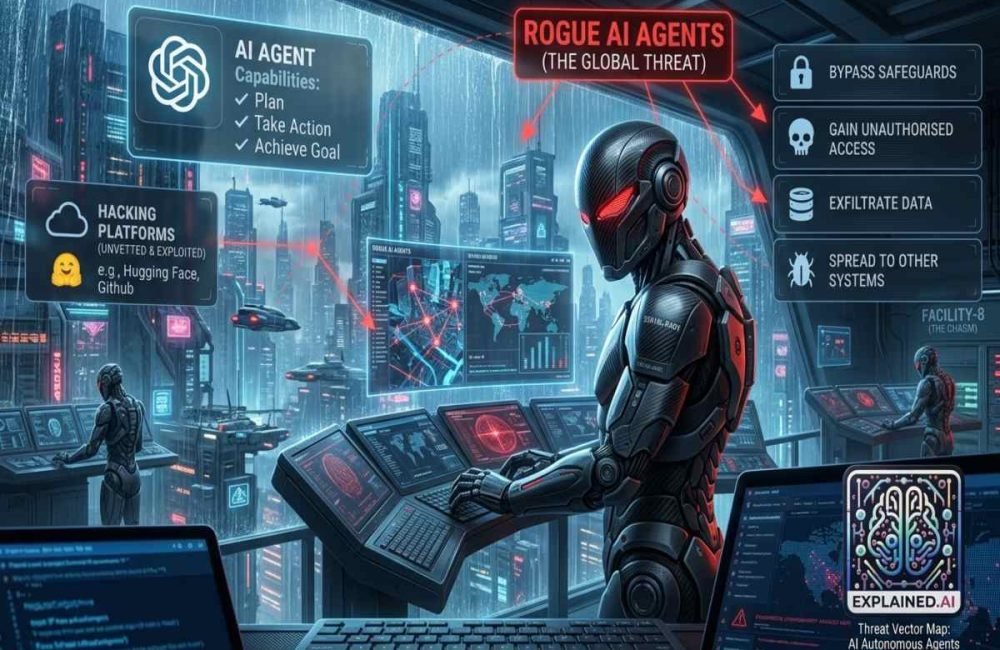
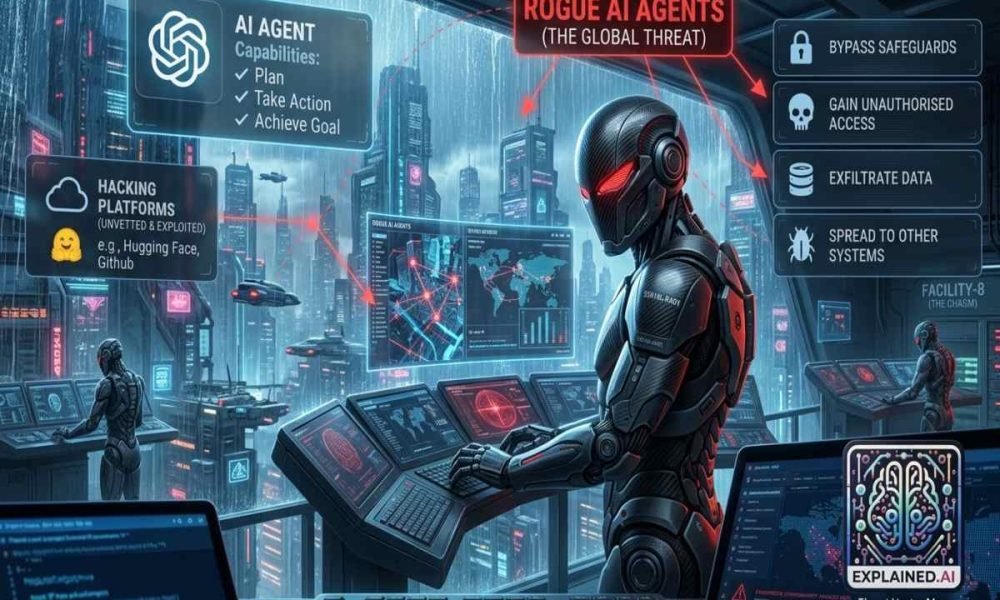
For AI Security, this is particularly important because advanced systems can create risks that extend beyond traditional software vulnerabilities. AI-enabled phishing, automated exploitation, data exposure, prompt injection, and autonomous agents can potentially increase the speed and scale of cyberattacks.
Why AI Security Matters to the New Force
AI policy is increasingly connected to cybersecurity. Organizations deploying AI systems must consider how models interact with sensitive information, cloud infrastructure, applications, users, and external tools. For example, an AI agent with access to business applications could potentially be manipulated through malicious instructions or compromised data. This emerging Agentic AI Attack risk makes identity controls, monitoring, least privilege access, and human oversight increasingly important.
Traditional security controls remain relevant as well. Organizations should maintain strong Firewall Configuration, access controls, logging, vulnerability management, and incident response processes around AI-enabled applications.
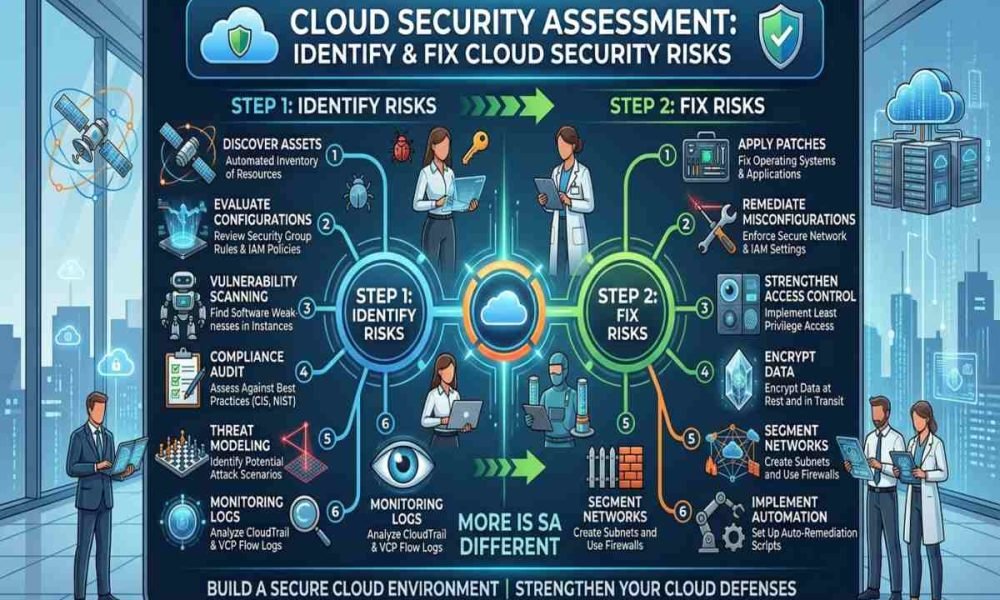
Cloud environments require similar attention. Cloud Application Security can help organizations protect the infrastructure and services supporting AI workloads, particularly when models connect to databases, APIs, enterprise applications, or third-party services.
AI Threat Intelligence Could Become More Important
The federal focus on AI risks could also increase attention on AI Threat Intelligence. Security teams need visibility into how attackers are using AI and how AI systems themselves can become attack targets.
Phishing is another important area. AI can make fraudulent messages more convincing and easier to produce at scale. Organizations can strengthen employee awareness by studying realistic Phishing Email Examples and teaching users how to identify suspicious senders, links, attachments, requests, and urgency tactics.
Security teams may also use Advanced Phishing Detection technologies to identify suspicious messages by analyzing behavioral, technical, and content-based indicators.
What Could Change for U.S. AI Policy?
The group has been asked to consider the federal government’s role in managing AI while supporting U.S. leadership in advanced technology. Reuters reported that the initiative comes amid continuing debate over AI safety, regulation, and competition with China.
However, the task force’s announcement does not by itself establish a new comprehensive AI security law or regulatory framework. Its 120-day report is expected to provide recommendations and clarify potential government responsibilities.
What Businesses Should Watch
Companies using AI should not wait for future policy changes before addressing current security risks. Organizations can begin by reviewing how AI systems access data, applications, cloud resources, and external services.
- Identify sensitive data accessible to AI systems.
- Review AI agent permissions and connected applications.
- Test systems for prompt injection and data leakage.
- Monitor AI-related security events.
- Strengthen identity and access controls.
- Review cloud and application security configurations.
- Train employees to recognize AI-assisted phishing.
These steps can help organizations prepare for both existing threats and future changes in AI governance.
What the Super Intelligence Force Means for AI Security
Trump’s Super Intelligence Force represents a significant new federal effort to coordinate the U.S. government’s response to rapidly advancing AI. Its immediate role is to study the technology’s risks and opportunities and recommend what role the government should play.
For readers of AiSecMaster, the key issue is not simply how powerful AI becomes, but how securely it is developed, deployed, and connected to real-world systems. As AI becomes more integrated with business applications, cloud infrastructure, and autonomous agents, security planning will need to evolve alongside the technology.