
Cloud application security is the practice of protecting cloud hosted applications, APIs, data, identities, and connected services from unauthorized access, vulnerabilities, attacks, and data exposure. Effective protection requires security controls throughout the application lifecycle, from development and deployment to monitoring and incident response.
For organizations using SaaS platforms, cloud native applications, containers, microservices, and public cloud infrastructure, security cannot be treated as a one time configuration task. A stronger approach combines secure development, identity controls, API protection, vulnerability management, monitoring, and practical cloud security management.
Cloud Application Security at a Glance
Cloud applications depend on interconnected components, including application code, APIs, databases, authentication systems, cloud services, third party libraries, and external integrations. A weakness in one component can sometimes create an opportunity to compromise another.
- Protecting application code and dependencies
- Securing APIs and integrations
- Applying least privilege access
- Protecting sensitive information
- Monitoring application activity
- Detecting vulnerabilities and misconfigurations
- Preparing for security incidents
- Integrating security into software development
NIST’s Secure Software Development Framework recommends integrating security practices into software development rather than treating security as something performed only after an application has been built.
What Is Cloud Application Security?
Cloud application security covers the technologies, processes, and controls used to protect applications operating in cloud environments. It includes the application itself as well as APIs, databases, identities, containers, cloud configurations, dependencies, and third party services.
For example, a cloud application might use an API to retrieve customer information from a database. If authorization is incorrectly implemented, an authenticated user could potentially access information belonging to another user. This demonstrates why authentication alone is not enough; authorization must also verify what each user is permitted to access.
Why Cloud Application Security Matters
Cloud applications often communicate with many external and internal services. A single application may connect to identity providers, payment platforms, analytics systems, databases, storage services, APIs, containers, and other cloud resources.
Security is especially important when applications process customer records, financial information, authentication credentials, intellectual property, or other sensitive data. The appropriate controls depend on the application’s architecture, data sensitivity, regulatory obligations, and business requirements. AI cybersecurity can help teams systematically review authentication, API security, cloud configurations, encryption, logging, dependencies, and incident response readiness before and after deployment.
Common Cloud Application Security Threats
1. Cloud Misconfiguration
Misconfiguration can expose applications or supporting resources unnecessarily. Examples include overly permissive access policies, publicly accessible storage, unnecessary services, insecure settings, and poorly configured security controls.
Configurations should be reviewed regularly because cloud environments change frequently. Automated security checks can help identify changes that introduce unnecessary exposure.
2. Insecure APIs
APIs are fundamental to many cloud applications, but they can expose application functions and sensitive data. OWASP’s API Security Top 10 identifies risks including broken object level authorization, broken authentication, unrestricted resource consumption, security misconfiguration, improper inventory management, and unsafe consumption of APIs.
3. Weak Identity and Access Controls
A compromised account can provide direct access to cloud applications and connected resources. Excessive permissions can increase the potential impact by allowing an account to reach systems or information it does not need. Organizations should apply least privilege, use multifactor authentication where appropriate, protect privileged accounts, review permissions, and remove access that is no longer required.
4. Vulnerable Dependencies
Modern cloud applications commonly rely on open source packages, frameworks, containers, libraries, and third party services. A vulnerability in one of these components can become part of the application’s security exposure.
NIST’s SSDF provides practices for reducing software vulnerabilities and addressing their underlying causes throughout the development lifecycle.
5. Sensitive Data Exposure
Cloud applications may process customer information, credentials, business documents, financial information, or other sensitive data. Weak authorization, exposed secrets, insecure APIs, and inadequate encryption can increase the possibility of unauthorized disclosure.
A practical data protection strategy should identify sensitive information, define appropriate access requirements, apply suitable encryption, establish retention rules, and provide monitoring and response procedures.
6. Supply Chain Attacks
Cloud applications frequently depend on external libraries, vendors, APIs, containers, CI/CD systems, and software repositories. Attackers may target these dependencies rather than directly attacking the primary application.
Useful controls include maintaining dependency inventories, using trusted sources, applying integrity checks, protecting build systems, reviewing third party components, and monitoring unexpected software changes.
7. Injection and Input-Based Attacks
Applications that process untrusted input can be exposed to injection vulnerabilities. Depending on the architecture, these can include SQL injection, command injection, cross-site scripting, or other input manipulation attacks.
OWASP’s current Top 10 for web applications identifies injection, broken access control, security misconfiguration, software supply chain failures, and authentication failures among its major application security risk categories.
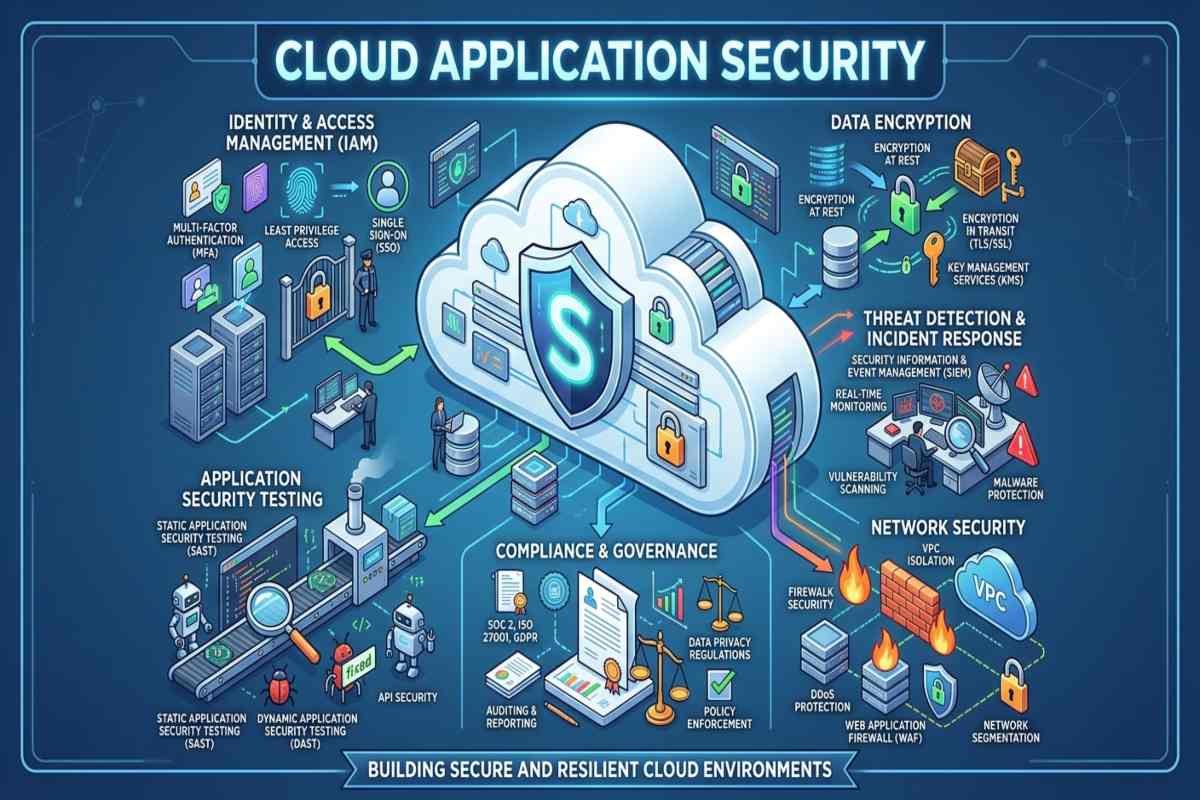
Understanding Cloud Application Security Risks
The impact of a vulnerability depends on the application’s architecture, permissions, data, exposure, and business role. A weakness in a public information portal may have a very different consequence from the same weakness in an application that handles financial transactions.
| Security Risk | Potential Impact |
|---|---|
| Account Compromise | Unauthorized application access |
| API Authorization Flaw | Exposure of another user’s information |
| Misconfiguration | Unintended resource exposure |
| Vulnerable Dependency | Exploitation of application components |
| Exposed Credentials | Access to connected cloud resources |
| Data Exposure | Unauthorized disclosure |
| Supply-Chain Compromise | Unauthorized software changes |
Cloud Application Security Best Practices
Use Strong Identity Controls
Require appropriate authentication, enforce least privilege authorization, and separate administrative accounts from ordinary application accounts. Review permissions regularly because access requirements change as applications, employees, services, and cloud resources evolve.
Secure APIs From Development to Production
API security should begin during design rather than after deployment. Document endpoints, verify authorization at appropriate levels, protect authentication tokens, validate inputs, control resource consumption, and monitor unusual API activity.
Build Security Into Software Development
Security testing should occur throughout the software development lifecycle. Code review, dependency scanning, static analysis, dynamic testing, and secure deployment practices can help identify weaknesses earlier.
NIST’s SSDF is designed to integrate secure development practices into existing development processes and organizes recommendations around preparing the organization, protecting software, producing well-secured software, and responding to vulnerabilities.
Monitor Cloud Applications Continuously
Monitoring can help identify suspicious authentication activity, unexpected configuration changes, abnormal API requests, unusual data access, and other indicators of compromise.
Logs should be useful, protected against unauthorized modification, and connected to a defined response process. Monitoring has greater value when teams know who investigates an alert and what actions should follow.
Protect Secrets and Credentials
API keys, passwords, tokens, certificates, and other secrets should not be hard-coded into application source code or stored in publicly accessible locations. Use appropriate secrets management mechanisms and rotate credentials when exposure is suspected.
Manage Vulnerabilities and Dependencies
Maintain visibility into application components and prioritize vulnerabilities based on factors such as exposure, exploitability, affected assets, and business impact. Risk-based remediation helps security teams focus resources on weaknesses that matter most to the specific application.
Cloud Security Management and Application Protection
Application security should operate as part of a broader cloud security management strategy. This can connect identity management, configuration security, vulnerability management, data protection, monitoring, and incident response. The connection is important because application weaknesses rarely exist in isolation. For example, a vulnerable application combined with excessive cloud permissions and exposed credentials can create a substantially broader security exposure.
Use a Cybersecurity Audit Approach
Before major releases or significant architecture changes, security teams can perform structured reviews of application code, APIs, access controls, dependencies, configurations, secrets, logging, and incident response readiness. A cybersecurity audit checklist can make these reviews more consistent and help teams document findings, remediation owners, evidence, and follow-up actions.
AI-Powered Cloud Application Security
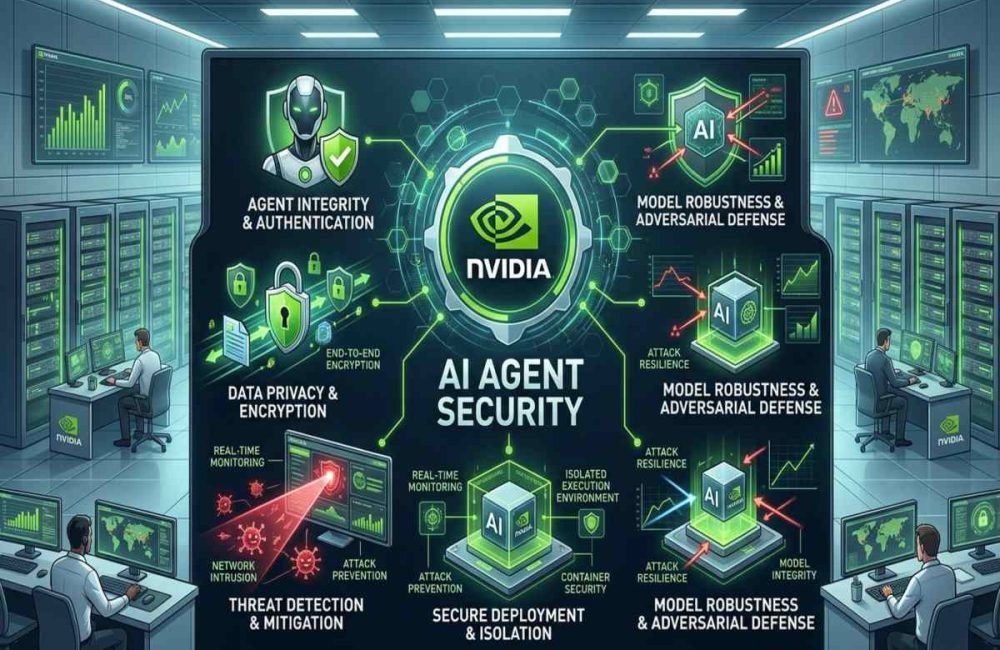
AI-enabled cloud applications introduce additional considerations because they may process prompts, model outputs, uploaded documents, embeddings, user data, and external tools. Security teams should consider risks such as prompt injection, sensitive information disclosure, unsafe model or tool integrations, excessive permissions, and untrusted external content.
For applications that use AI to analyze security events, AI threat detection can complement conventional monitoring by helping teams identify unusual activity and prioritize potentially suspicious events. It should complement established security controls rather than replace them.
Generative AI and Cloud Security
Generative AI in cybersecurity can support activities such as alert summarization, investigation assistance, security documentation, threat analysis, and knowledge retrieval. However, AI systems themselves require appropriate permissions, data controls, validation, monitoring, and human oversight. NIST has also published an SSDF community profile specifically addressing secure software development practices for generative AI and dual-use foundation models.
Organizations deploying LLM-based cloud applications should apply LLM security best practices, including limiting model permissions, protecting sensitive inputs, validating external content, securing connected tools, and monitoring model interactions.
A Practical Cloud Application Protection Checklist
- Identify sensitive data handled by the application.
- Inventory APIs, dependencies, cloud resources, and third-party integrations.
- Enforce appropriate authentication and least privilege authorization.
- Review application and cloud configurations regularly.
- Protect credentials, tokens, and other secrets.
- Encrypt sensitive information appropriately.
- Scan dependencies for known vulnerabilities.
- Test APIs and application logic for security weaknesses.
- Monitor authentication, API activity, logs, and configuration changes.
- Maintain and test an incident response process.
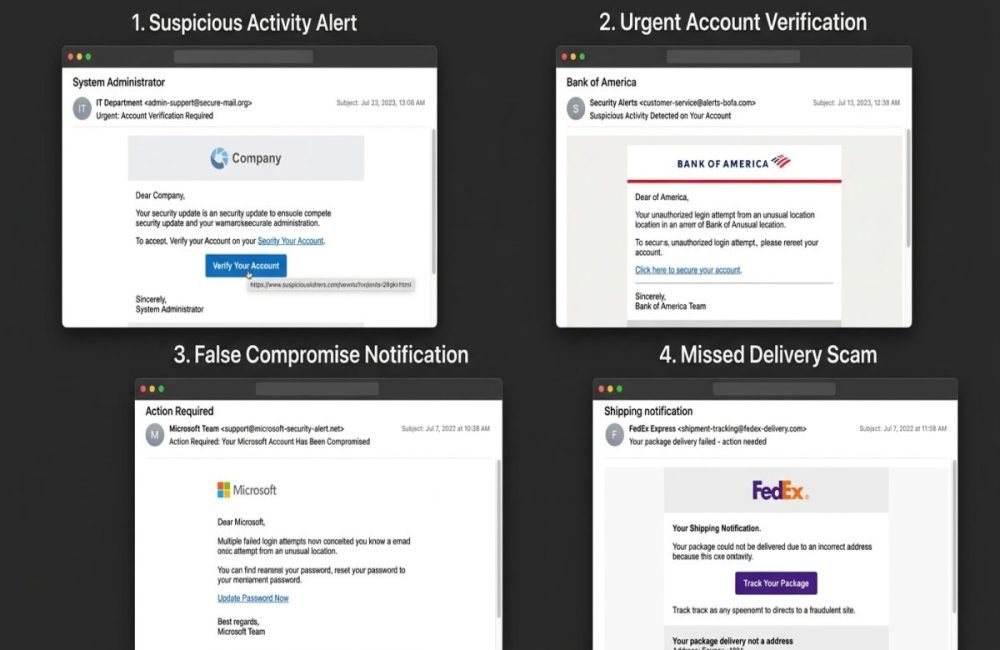
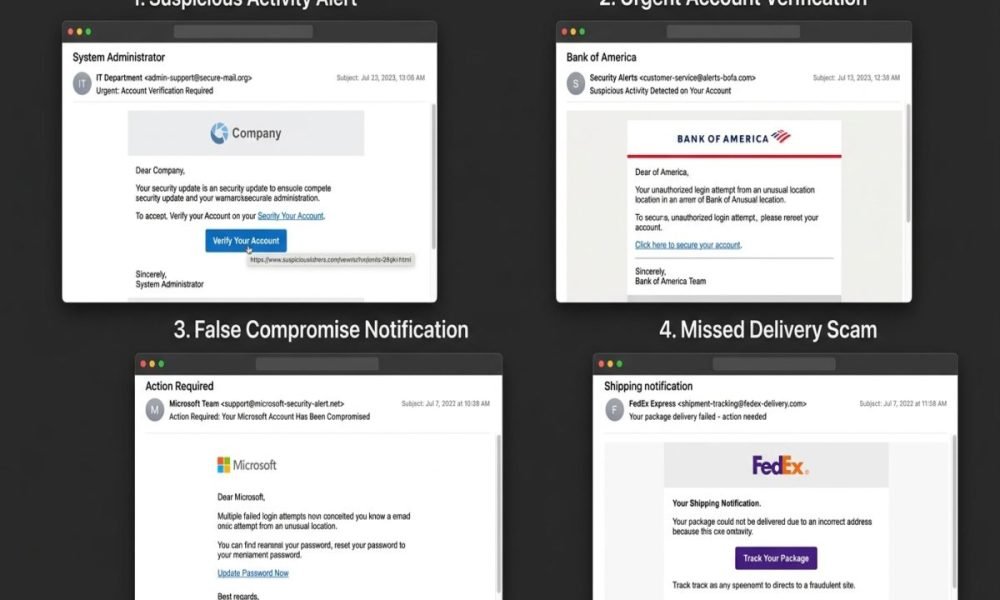
Security teams should also consider identity-related threats. Advanced phishing detection can complement strong authentication controls when attackers attempt to obtain credentials or session access through deceptive communications.
Threat Intelligence and Cloud Applications
Security teams can use AI threat intelligence alongside traditional threat intelligence processes to organize security information, identify relevant attack patterns, and support analysis of emerging threats affecting cloud applications.
Threat intelligence should remain connected to the organization’s actual environment. Information about a vulnerability or attack technique becomes more useful when teams can determine whether their applications, dependencies, identities, or cloud services are exposed.

Conclusion
Effective cloud application security requires more than protecting application code. Organizations need a connected approach covering identity, APIs, dependencies, configurations, sensitive data, cloud resources, monitoring, and incident response. The practical starting point is to understand the application’s attack surface, identify the most important risks, and integrate security into development and cloud operations. Strong Cloud Security Best Practices combined with continuous Cloud Application Protection can help organizations build more resilient cloud applications.
For AiSecMaster readers, the key takeaway is simple: cloud application security should be treated as an ongoing process. As applications, APIs, dependencies, and AI capabilities change, security controls and monitoring should evolve with them.
Frequently Asked Questions (FAQs)
What is cloud application security?
Cloud application security is the practice of protecting cloud-based applications, APIs, data, identities, dependencies, and connected services from vulnerabilities, unauthorized access, attacks, and data exposure.
What are the most common cloud application security threats?
Common threats include cloud misconfiguration, insecure APIs, weak access controls, vulnerable dependencies, exposed credentials, sensitive data exposure, supply chain attacks, and injection vulnerabilities.
How can organizations protect cloud applications?
Organizations can improve protection through strong identity controls, least privilege, secure APIs, vulnerability management, encryption, secrets management, continuous monitoring, secure development practices, and tested incident response.
Why are APIs important to cloud application security?
APIs frequently connect cloud applications to users, databases, internal services, and third-party systems. OWASP's API Security Top 10 provides guidance on risks such as broken authorization, authentication failures, security misconfiguration, and improper API inventory management.
Does cloud application security include AI applications?
Yes. AI applications hosted in the cloud still require standard application security controls. They may also require additional protections for prompt injection, sensitive information exposure, unsafe tool use, model-related risks, and excessive AI permissions.


One Response