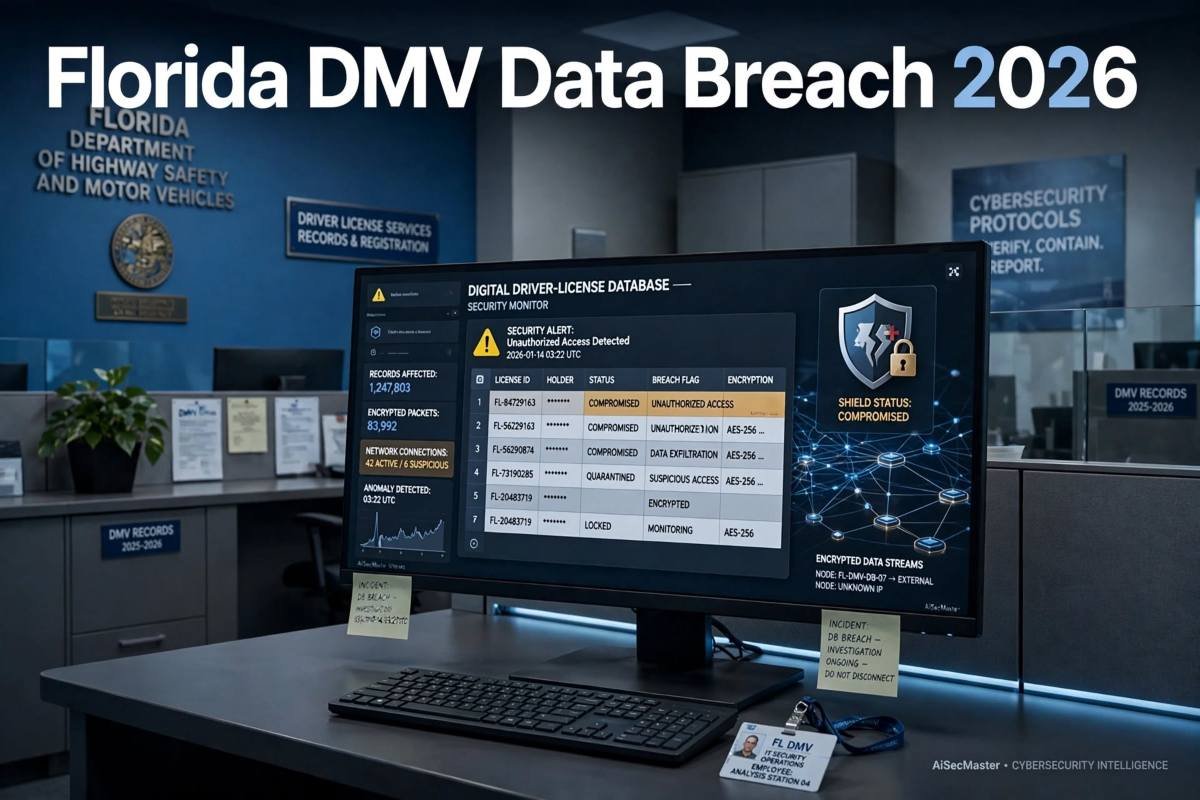
The Florida DMV Data Breach 2026 involves unauthorized access to Florida’s Driver and Vehicle Information Database (DAVID), a system used by authorized government and law enforcement personnel. Florida Highway Safety and Motor Vehicles (FLHSMV) said it discovered the incident on September 4, 2026, and later confirmed that a criminal actor used compromised credentials associated with a Plant City Police Department user.
The investigation found that the credentials had been improperly stored on the employee’s personal electronic device. FLHSMV said the incident was quickly mitigated and that there was no continuing unauthorized access when the breach was publicly confirmed.
The incident matters because DMV related systems can contain sensitive personal information. However, the exact number of affected records and complete scope of exposed information have not been officially confirmed. A group identifying itself as ShinyHunters claimed it obtained about 200,000 driver records, but that figure should be treated as an unverified claim rather than an official breach count.
What Happened in the Florida DMV Data Breach?
FLHSMV said a criminal actor gained access by taking advantage of credentials belonging to a single Plant City Police Department user. According to the department, those credentials were improperly stored on the employee’s personal device.
The incident demonstrates that a data breach does not always begin with a direct attack against a database or application. A compromised identity can provide another route into a protected environment.
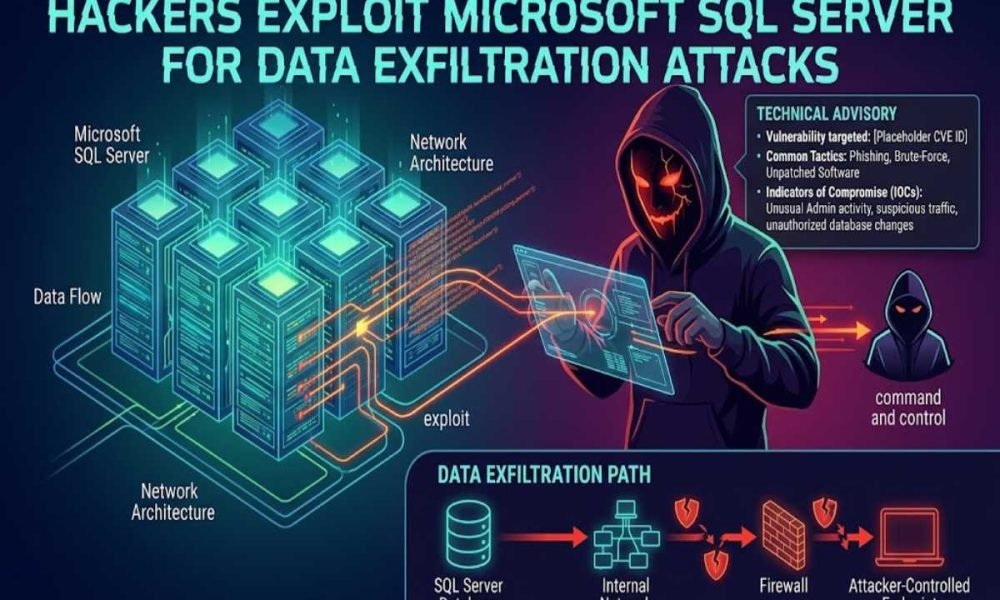
Personal Device → Compromised Credentials → Legitimate Account → DAVID Access → Unauthorized Activity
This is particularly relevant to organizations that manage government, healthcare, financial, or other sensitive information.
How Was the Florida DMV Database Accessed?
FLHSMV’s investigation found that the credentials belonged to a Plant City Police Department user and had been stored on a personal electronic device. Reporting also described this as a security risk because personal devices may not have the same controls as managed government systems. This creates an important lesson for security for system access: protecting a database alone is not enough. Organizations must also secure the identities, devices, credentials, and applications that can reach sensitive systems.
Threat actor reporting has included additional claims about how the attackers obtained access. However, these claims have not been independently established by Florida officials and should not be presented as confirmed technical findings. From an ai security perspective, this highlights the importance of verifying breach intelligence before drawing conclusions about attack methods, compromised credentials, or system weaknesses.
How Many Records Were Exposed?
ShinyHunters claimed that it obtained approximately 200,000 driver records, and reporting said the alleged data included driver’s license information, Social Security numbers, and home addresses. However, these details came from the threat actor’s claims rather than a confirmed FLHSMV assessment. For accurate cybersecurity reporting, it is useful to separate the information into two categories.
Confirmed:
- The DAVID database was breached.
- A criminal actor accessed the system.
- Compromised credentials were involved.
- The credentials belonged to a Plant City Police Department user.
- The credentials were stored on a personal device.
Not officially confirmed:
- The final number of affected records.
- The complete list of information accessed.
- Whether every record claimed by the threat actor was actually obtained.
This approach helps readers understand what is known without overstating an active investigation.
What Data May Be at Risk?
The complete scope of information accessed remains under investigation. Reports about the threat actor’s claim have referenced driver license information, Social Security numbers, and home addresses. If such information was actually obtained, it could potentially create risks involving identity theft, impersonation, targeted phishing, and social engineering.
However, readers should not assume that every type of information held by Florida DMV systems was exposed. The most responsible approach is to wait for official notifications or additional forensic findings before treating specific categories of information as confirmed.
Why Is the Florida DMV Breach Important?
Government databases are attractive targets because they can contain information that is useful for identifying or impersonating individuals. Similar concerns can be seen in discussions surrounding the anthropic ai hacking incident , where data security and unauthorized access highlight the broader need for stronger controls around sensitive information and digital systems.
- Identity theft
- Phishing and impersonation
- Social engineering
- Fraudulent account recovery
- Targeted scams
- Credential theft
- Identity verification abuse
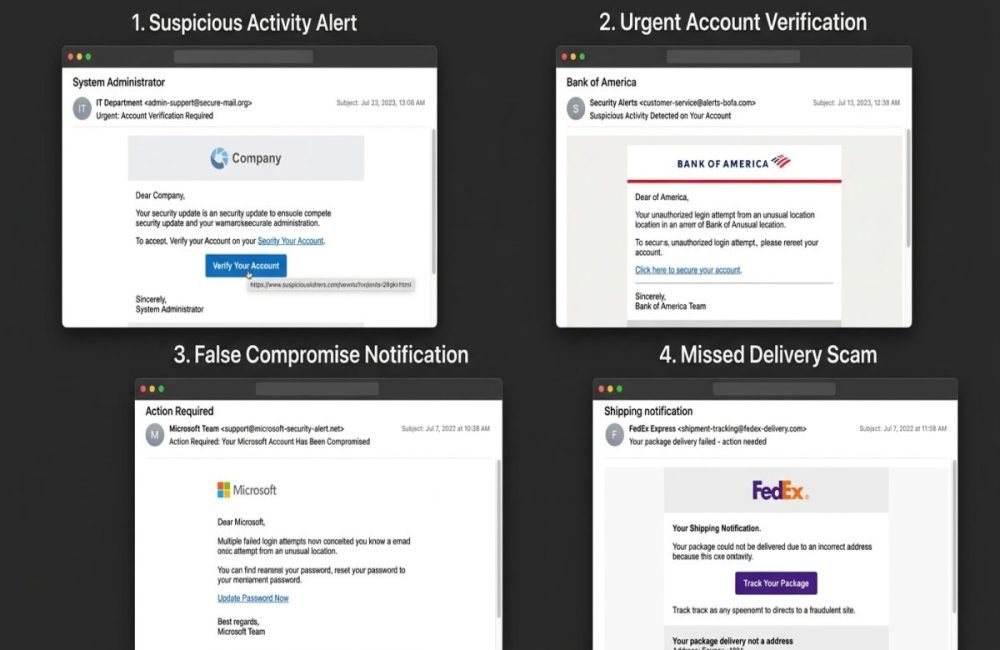
For example, a criminal who possesses legitimate looking personal details could create a more convincing phishing message.
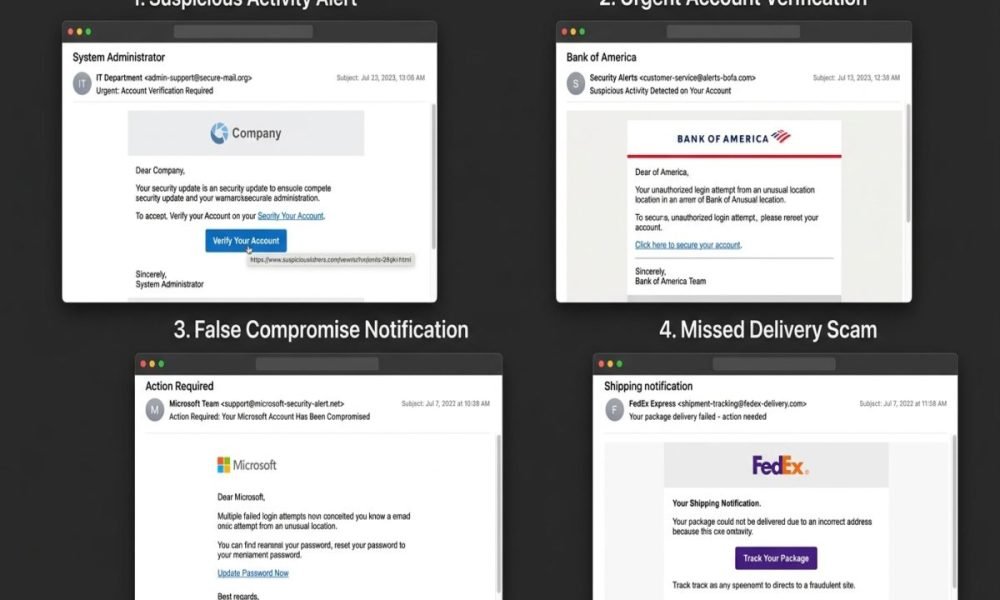
This is where phishing detection becomes important. Users should be cautious about unexpected emails, text messages, or phone calls claiming to come from the DMV and requesting personal information.
Personal Devices and Credential Security
One of the most significant security lessons from the Florida incident is the role of personal devices.
When employees store work credentials on unmanaged devices, organizations may have less visibility into:
- Malware infections
- Credential stealing software
- Browser based attacks
- Unauthorized applications
- Device configuration
- Security updates
- Suspicious account activity
Organizations should therefore establish clear policies for handling credentials and accessing sensitive systems.
For high value systems, credentials should be protected through managed identity platforms, approved password management solutions, strong authentication, and appropriate endpoint controls.
How Organizations Can Prevent Similar Breaches
The Florida DMV incident provides several practical security lessons that businesses and government agencies can apply.
1. Use Multi Factor Authentication
MFA provides an additional authentication layer when passwords or credentials are compromised.
2. Enforce Least Privilege Access
Users should receive only the permissions required for their specific responsibilities. Broad database access increases potential damage if an account is compromised, making ai security master security practices such as least-privilege access, credential protection, and continuous monitoring important for reducing unauthorized access risks.
3. Secure Personal Devices
Organizations should prevent sensitive credentials from being stored on unmanaged devices unless those devices meet defined security requirements.
4. Monitor Account Activity
Security teams should watch for unusual login locations, devices, access times, and database queries.
5. Rotate Compromised Credentials
When credentials are suspected of being stolen, organizations should immediately disable or rotate them and investigate previous activity.
6. Use Security Scanners and Endpoint Monitoring
Regular security scanners can help identify weaknesses across applications, devices, and infrastructure. Endpoint monitoring can also detect suspicious processes or credential theft behavior.
7. Maintain an Incident Response Plan
Organizations need predefined procedures for isolating compromised accounts, investigating affected systems, notifying stakeholders, and restoring secure operations.
Could AI Security Tools Help?
AI can support cybersecurity teams by helping identify unusual activity, prioritize alerts, analyze large volumes of security data, and detect suspicious behavior. However, organizations should not assume that AI automatically solves identity or data security problems.
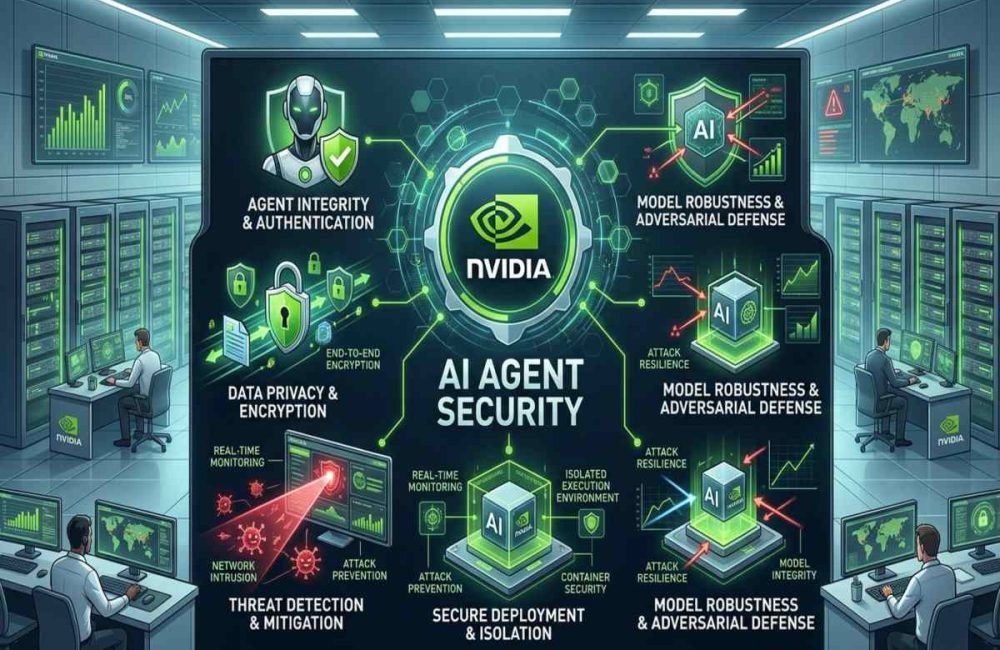
When AI systems process sensitive information, organizations also need strong AI data protection controls. Data minimization, access restrictions, logging, encryption, and human oversight remain important. Similarly, ai privacy should be considered when organizations use AI based security scanners or automated monitoring tools. Security data may itself contain sensitive information, so organizations need to understand where that information is processed and who can access it.
What Should Florida Residents Do?
People who are concerned about the incident should be alert for suspicious communications that reference driver’s licenses or DMV services.
- Avoid clicking unexpected DMV related links.
- Verify requests through official government channels.
- Enable MFA on important accounts.
- Monitor financial and online accounts.
- Watch for unexpected password reset notifications.
- Be cautious when someone asks for identity documents or Social Security information.
- Consider credit monitoring or credit freeze options when appropriate.
A data breach can also increase the effectiveness of social engineering attacks because criminals may use legitimate personal information to make fraudulent messages appear authentic.
Florida DMV Breach vs. Other Cybersecurity Threats
The Florida incident also fits into a broader cybersecurity picture. Traditional data breaches often focus on stealing personal or financial information. Meanwhile, modern threats increasingly involve identity compromise, cloud platforms, third party systems, AI applications, and automated attacks.
For example, organizations researching the revolut data breach can compare how different incidents involve different attack paths and types of exposed information.
Similarly, organizations working with AI systems should consider LLM Security and AI specific risks separately from traditional database security. The key lesson is that cybersecurity needs multiple layers rather than reliance on one technology.
What Businesses Can Learn From the Florida DMV Breach
The most important lesson is to simply protect the access path, not just the database. An organization may invest heavily in firewalls, encryption, security scanners, and network monitoring, but compromised credentials can still create serious risk.
- MFA enabled
- Least privilege permissions
- Managed devices
- Secure credential storage
- Regular access reviews
- Endpoint protection
- Login monitoring
- Database activity monitoring
- Incident response procedures
- Employee security training
These controls can reduce the likelihood that one compromised account becomes a pathway into sensitive information.
Final Takeaway
The Florida DMV Data Breach 2026 demonstrates why modern cybersecurity must protect identities and access credentials as carefully as the systems and databases they connect to. FLHSMV confirmed that a criminal actor accessed the DAVID system using credentials associated with a Plant City Police Department user, and investigators determined that those credentials had been stored on a personal electronic device.
The reported 200,000 record figure should not be presented as a confirmed total, because it originated from a threat actor claim. As the investigation develops, additional information may clarify the scope of the incident. For businesses and government agencies, the practical takeaway is clear: combine strong identity controls, MFA, least privilege, managed devices, monitoring, and incident response. Protecting sensitive data means protecting every pathway that can access it.
Frequently Asked Questions (FAQs)
What is the Florida DMV Data Breach 2026?
The Florida DMV Data Breach 2026 is an unauthorized access incident involving Florida's DAVID driver and vehicle information system. FLHSMV said compromised credentials associated with a Plant City Police Department user were used by a criminal actor.
When was the Florida DMV breach discovered?
FLHSMV said it learned about the breach on September 4, 2026, and quickly took steps to mitigate the incident.
How many Florida DMV records were stolen?
The official number has not been confirmed. ShinyHunters claimed it obtained about 200,000 driver records, but that figure remains a threat actor claim rather than an official affected record count.
How did hackers access the DMV database?
According to FLHSMV, a criminal actor used compromised credentials belonging to a Plant City Police Department user. The credentials had been stored on the employee's personal electronic device.
Is the Florida DMV breach still ongoing?
FLHSMV said the incident was quickly mitigated and that there had been no further breach at the time of its public confirmation. The investigation into the incident continued.