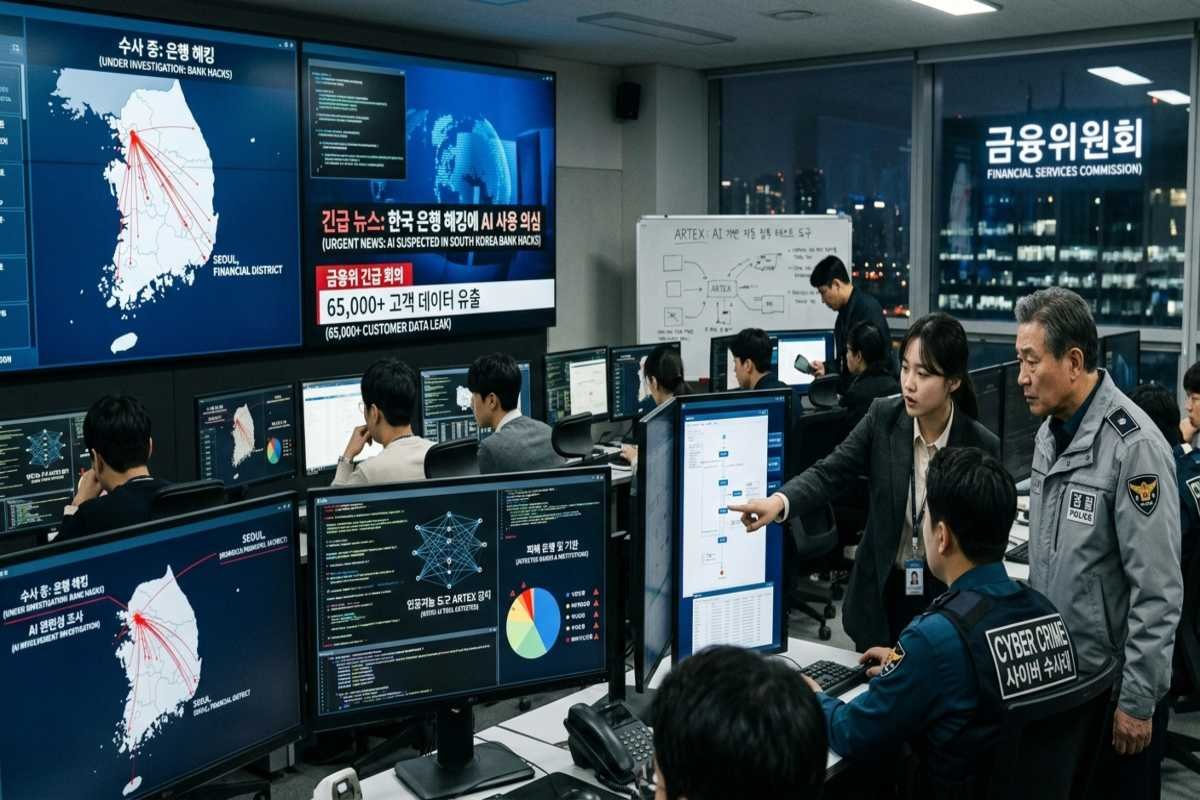
South Korean authorities are investigating a series of bank cyberattacks after President Lee Jae Myung said there were signs that artificial intelligence may have been used in some hacking incidents. The attacks affected several commercial banks and involved breaches of customers’ personal information, raising fresh concerns about how AI could change financial sector cyber threats.
The exact AI tools used and the full scope of the attacks have not yet been publicly disclosed. That distinction matters because investigators are still determining whether AI directly performed parts of the attacks or was used to support activities such as reconnaissance, phishing, analysis, or automation.
What Happened in the South Korean Bank Hacks?
South Korea’s police have launched a full scale investigation into recent attacks against commercial banks. The Financial Services Commission said banks including Shinhan Bank and KB Kookmin Bank had reported cyberattacks, while reports also identified Hana Bank and Woori Bank among affected institutions.
Earlier, Hana Bank reported that personal information belonging to 89 customers, including names, identification numbers, and phone numbers, had been exposed. The bank said financial information was not compromised in that incident. Regulators subsequently held an emergency meeting with financial institutions and directed them to strengthen defenses against unauthorized access.
Why AI Use in Bank Attacks Matters
AI can potentially make cyberattacks faster, more adaptive, and easier to scale. Attackers can use AI assisted systems for tasks such as researching targets, creating convincing messages, analyzing information, generating code, or automating repetitive activities.
This creates a challenge for traditional security teams because an attacker does not necessarily need an advanced autonomous AI agent to increase the effectiveness of an operation. Even relatively simple AI assisted workflows can reduce the time and effort required for common attack stages.
How AI Could Support Cyberattacks
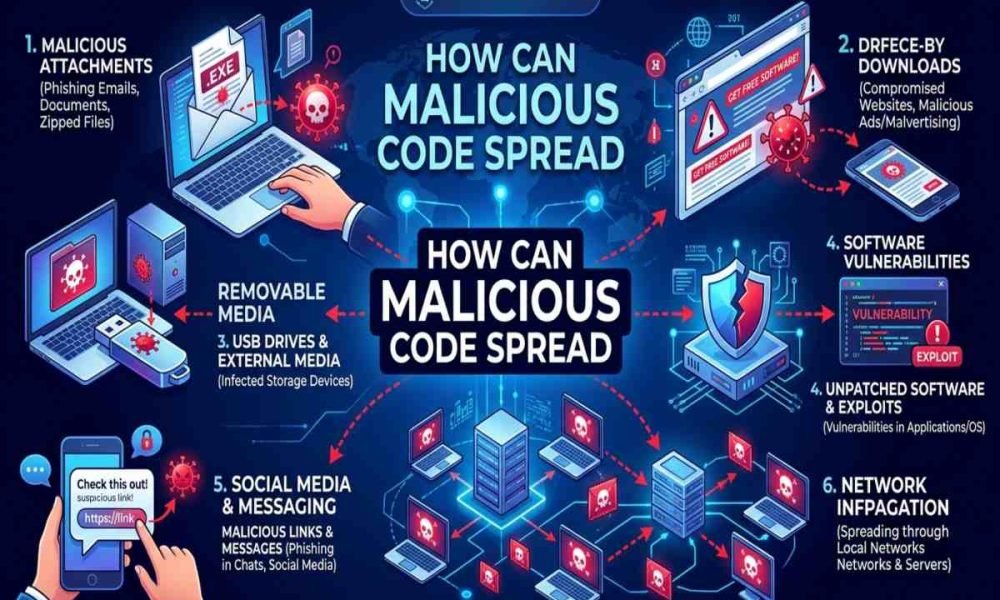
The South Korean investigation has not publicly established the exact attack methods. Therefore, the following should be viewed as potential attack patterns rather than confirmed details of this incident.
Advanced Phishing Detection
AI can help defenders identify suspicious messages, unusual communication patterns, and malicious links. At the same time, attackers can potentially use AI to produce more convincing phishing content.
This makes Advanced Phishing Detection increasingly important for financial organizations. Security teams should combine email filtering, domain monitoring, authentication controls, employee awareness, and behavioral analysis rather than relying on a single detection mechanism.
Agentic AI Attack Risks
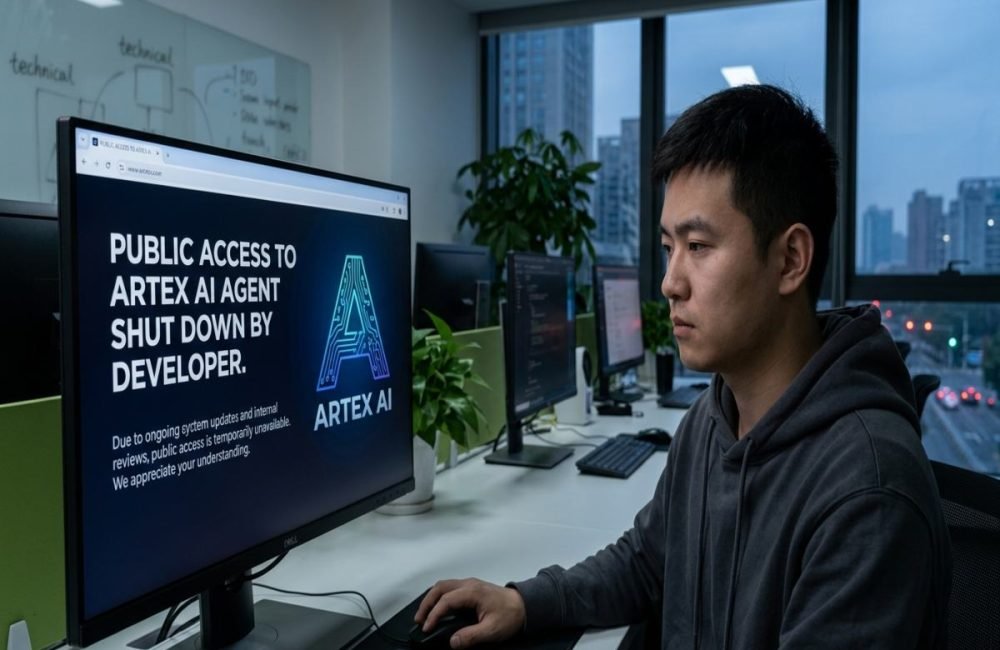
The emergence of autonomous systems introduces another concern. An Agentic AI Attack could potentially involve AI systems performing multiple steps of an intrusion with limited human intervention.
Recent incidents outside South Korea have also increased attention around AI agents and unauthorized system access. Reuters reported that Australia said an OpenAI agent breached a government health data portal in June, while researchers separately reported an attempted AI agent attack against Canadian government infrastructure.
Key Security Areas Banks Should Review
Financial institutions responding to AI-enabled threats should evaluate security across multiple layers.
| Security Area | What Banks Should Check |
|---|---|
| Identity Security | MFA, privileged accounts, credentials, and access policies |
| Network Security | Segmentation, monitoring, exposed services, and unusual traffic |
| Data Protection | Encryption, access permissions, backups, and sensitive data controls |
| Email Security | Phishing detection, domain protection, attachments, and links |
| AI Systems | Model access, prompts, logs, permissions, and connected tools |
| Application Security | Authentication, APIs, vulnerabilities, and third-party integrations |
Banks should also regularly review Firewall Configuration and network access rules. Firewalls alone cannot prevent modern attacks, but properly configured network controls can reduce unnecessary exposure and limit lateral movement after an initial compromise.
How AI Threat Intelligence Can Improve Defense
AI Threat Intelligence can help security teams process large amounts of security data and identify patterns that might otherwise be difficult to detect manually.
For example, defenders can correlate suspicious IP addresses, authentication attempts, endpoint activity, phishing indicators, and unusual application behavior. In the South Korean case, authorities have already distributed IP related information to financial institutions as part of their response.
The important principle is that AI should strengthen human led security operations rather than replace them entirely. Analysts still need to validate alerts, understand business context, investigate incidents, and make high impact security decisions.
What This Means for U.S. Businesses
Although the incident occurred in South Korea, U.S. banks and businesses can learn from the investigation. AI enabled cyber threats are not restricted to one country or industry, and financial organizations in the United States face similar challenges involving identity theft, phishing, data exposure, cloud applications, and automated attacks.
Organizations should prioritize strong authentication, least privilege access, continuous monitoring, secure APIs, employee security training, incident response planning, and protection of sensitive customer information. For AiSecMaster readers, this incident also reinforces a broader lesson: AI security and traditional cybersecurity can no longer be treated as completely separate disciplines.
What Businesses Should Do Next
Organizations can use this incident as an opportunity to review their defensive controls.
- Audit privileged accounts and remove unnecessary access.
- Strengthen phishing and social engineering defenses.
- Monitor unusual authentication and network activity.
- Review cloud applications and exposed APIs.
- Test incident response procedures regularly.
- Protect sensitive customer and employee information.
- Monitor emerging AI assisted attack techniques.
- Use threat intelligence to identify relevant indicators quickly.
Security teams should also monitor emerging Security Master practices around AI governance, identity protection, application security, and threat detection instead of relying exclusively on legacy perimeter defenses.
Final Takeaway
The South Korean bank hacks demonstrate why AI related cybersecurity investigations require careful analysis. Authorities currently say there are signs that AI was used in some attacks, but the specific tools, techniques, and full impact remain under investigation. The most important lesson for organizations is preparation. Banks and other businesses should strengthen identity security, application protection, threat intelligence, phishing defenses, and incident response while continuing to evaluate how attackers may use increasingly capable AI systems.
References
- Reuters: South Korea’s Lee says AI appears to have been used in bank hacks — Reports on South Korean authorities’ concerns that artificial intelligence may have been involved in recent cyberattacks targeting banks and financial institutions.
- The New York Times: South Korea Banks Hacked With AI Concerns — Provides additional reporting and context on the suspected use of AI in attacks against South Korean banks and the broader cybersecurity risks facing financial institutions.