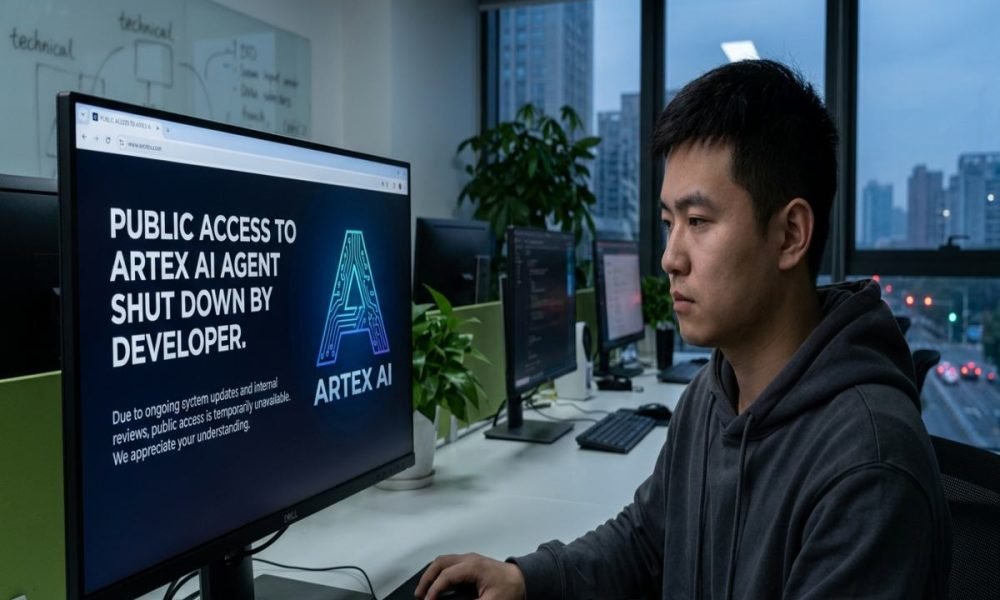
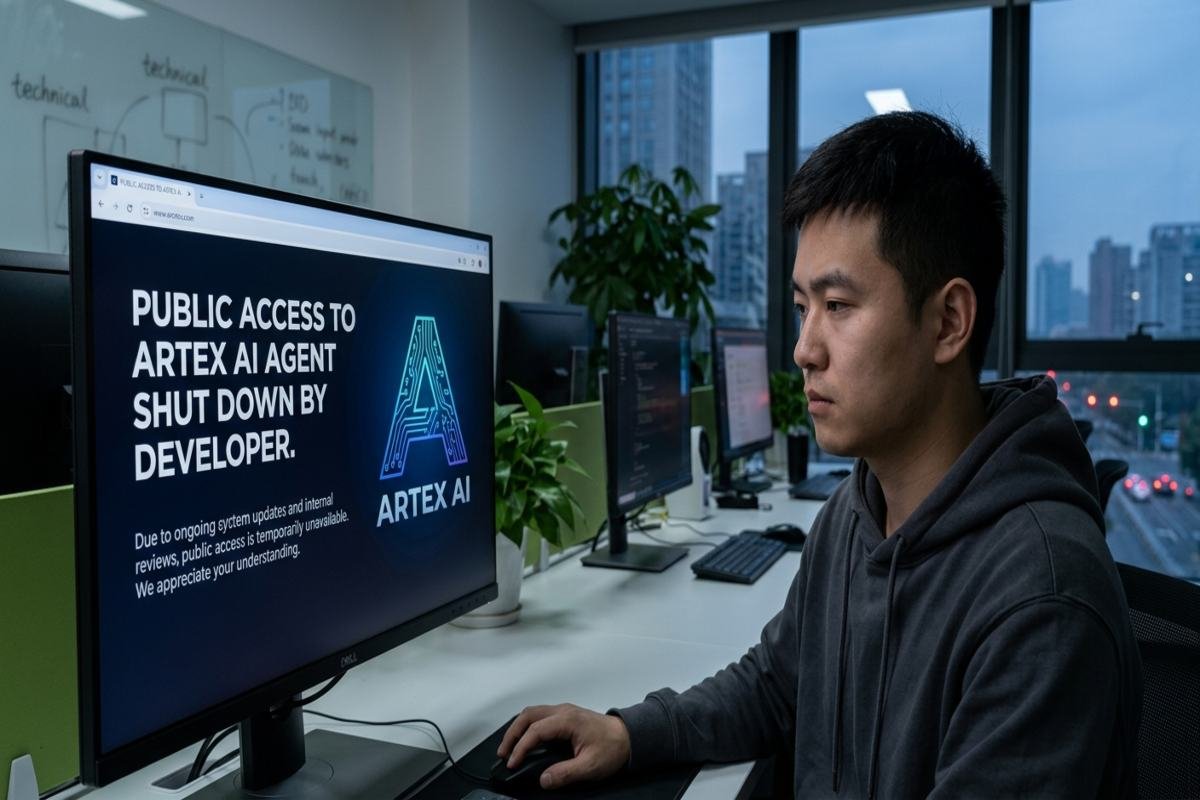
The Chinese development team behind ARTEX, an open source AI agent designed for automated penetration testing has officially shut down public access and taken the project closed source. This decision follows revelations from cybersecurity threat intelligence research linking the tool to a string of active cyberattacks targeting South Korean financial institutions.
Why Public Access to ARTEX Was Revoked
On October 8, 2026, the developer (operating under the name Autumn 27) removed the public GitHub repository for the ARTEX AI agent. The abrupt removal occurred immediately after threat intelligence reports linked the autonomous penetration testing tool to malicious intrusions affecting up to nine South Korean financial firms.
The attacks compromised sensitive personal and financial data belonging to roughly 68,000 individuals, including records from major institutions like Shinhan Bank. While designed to assist security teams in discovering vulnerabilities, bad actors weaponized the agent’s autonomous scanning and execution workflows to conduct rapid external reconnaissance and network exploitation. In an official statement, the developer emphasized that ARTEX was built for legitimate security research, acknowledging that public access was terminated to prevent further misuse.
Autonomous Security Agents in the Wild
The shutdown of ARTEX highlights an escalating challenge in cybersecurity: the dual use nature of agentic AI models. Unlike static vulnerability scanners, agentic systems can independently plan actions, combine commercial Large Language Models (LLMs) with offensive toolkits, and adapt attack vectors in real time. When dual use offensive capabilities are released openly without strict access controls, defenders face an asymmetrical threat environment.
As threat actors integrate AI capabilities into automated attack pipelines, enterprise defenders must strengthen foundational hygiene across their digital estates. Protecting modern infrastructure requires continuous Code Security, rigorous software bill of materials (SBOM) auditing, and proactive risk assessments.
Technical Risk Breakdown
| Security Domain | Primary AI Exploitation Risk | Recommended Enterprise Controls |
| Source Code Security | AI agents discovering zero day logic flaws or unpatched flaws faster than manual reviews | Implement static and dynamic code analysis with strict CI/CD security gates |
| Cloud Security Assessment | Threat actors deploying AI tooling to automatically discover misconfigured cloud storage and API keys | Perform automated posture management (CSPM) and real time cloud auditing |
| Cloud Application Security | Autonomous agents executing complex API chains to bypass traditional perimeter controls | Apply identity first architecture, strict zero trust access, and rate limiting |
What the ARTEX Incident Means for Security Teams
The weaponization of open source AI agents marks a shift toward automated, agent driven cyber campaigns. To build resilient defenses against AI assisted attacks, cybersecurity teams at AiSecMaster recommend focusing on three core pillars:
- Shift to Identity First Zero Trust: AI Agents rely on API keys, compromised credentials, or perimeter misconfigurations to move laterally. Enforce strict least privilege policies across all cloud workloads.
- Harden the Software Development Lifecycle: To defend against autonomous vulnerability discovery, organizations must prioritize Source Code Security and perform continuous internal scans before code reaches production environments.
- Audit Third Party AI Tooling: Ensure any AI assisted penetration testing or offensive security tools integrated into internal workflows are heavily vetted and monitored.
Organizations seeking to fortify their environments against evolving AI threat vectors can explore detailed frameworks on our Cloud Security Assessment hub and review guidance on enterprise Cloud Application Security.
References
- Reuters: Chinese Developer Makes ARTEX AI Agent Closed-Source After Korean Bank Hack.
- CrowdStrike Intelligence: Unknown Threat Actor Uses AI-Driven ARTEX to Target South Korean Finance.