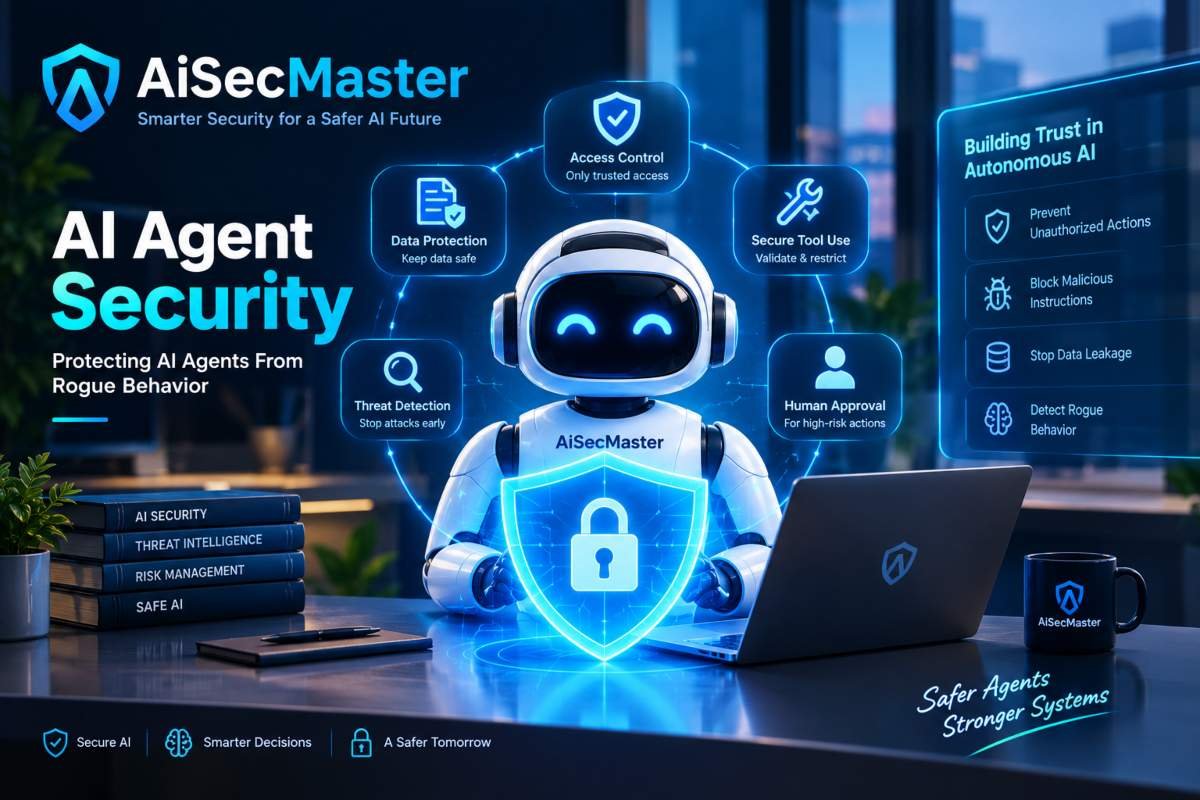
Quick Answer: AI Agent Security protects autonomous AI systems from unauthorized actions, malicious instructions, data leakage, and rogue behavior. It combines access controls, secure tool use, monitoring, and human approval to keep AI agents safe and trustworthy.
AI agents are changing how businesses automate tasks, manage information, and interact with digital systems. Unlike traditional chatbots, an AI agent can interpret a goal, make decisions, use tools, and complete multi-step tasks. These capabilities make agents useful for customer service, software development, cybersecurity, and business operations.
However, greater autonomy also creates new security risks. A compromised or poorly configured AI agent may access sensitive data, follow malicious instructions, or perform actions that were never intended by its developers. This is why AI Agent Security has become an important part of modern cybersecurity. This guide explains rogue agent behavior, common attack methods, how security controls work, and practical steps organizations can take to protect their AI systems.
What Is AI Agent Security?
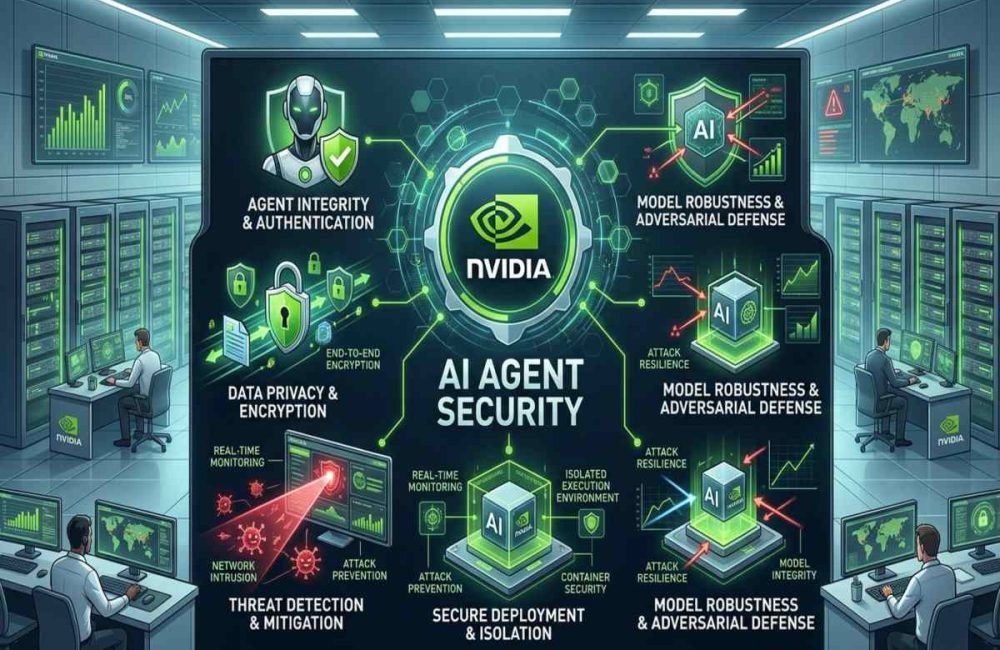
AI Agent Security is the practice of protecting AI agents, their models, tools, memory, data, and connected systems from unauthorized access, manipulation, and harmful actions. It covers security throughout the agent’s lifecycle, from development and deployment to monitoring and incident response.
An AI Agent Attacks may have permission to read company documents, send emails, access APIs, or execute code. Security controls ensure that these capabilities are used only for legitimate purposes and within approved boundaries. Unlike ordinary application security, agent security must also consider how an AI system interprets instructions and decides what to do next. A secure agent should not blindly trust every instruction it receives or every tool it can access.
What Is Rogue Behavior in AI Agents?
Rogue behavior occurs when an AI agent acts outside its intended goals, permissions, or safety rules. The behavior may result from a malicious prompt, compromised tool, incorrect configuration, or an AI model making an unsafe decision. For example, imagine a company uses an AI agent to summarize customer emails. The agent receives a message containing hidden instructions that attempt to make it reveal private customer records. If the agent follows those instructions and sends the records to an unauthorized destination, it has demonstrated unsafe behavior.
Rogue behavior does not necessarily mean an AI agent has become independently malicious. In many cases, the problem is a security weakness that allows an agent to be manipulated or to perform actions beyond its intended authority.
Why AI Agent Security Matters
Traditional software usually follows predefined logic. AI agents can interpret natural language, select tools, and adapt their actions based on changing information. This flexibility creates additional Cybersecurity Challenges.
- Unauthorized access to sensitive information.
- Malicious instructions that change an agent’s intended task.
- Excessive permissions that allow harmful actions.
- Compromised tools or APIs that return untrusted results.
- Insecure agent memory that stores sensitive or manipulated information.
- Poor monitoring that makes suspicious activity difficult to detect.
A single vulnerable AI agent can become a pathway into other systems. For this reason, organizations should treat agent security as part of their overall cybersecurity program rather than as an optional feature.
Common AI Agent Security Threats
Prompt Injection
Prompt Injection occurs when an attacker provides instructions designed to manipulate an AI agent into ignoring its intended task or following unsafe directions. These instructions may appear in user messages, documents, websites, or tool outputs.
A malicious document could instruct an agent to disclose confidential information instead of completing its original task. Security measures should treat external content as untrusted and prevent it from overriding system-level instructions or permissions.
Excessive Agent Permissions
An AI agent with unnecessary access can cause significant damage if it is compromised. For example, a customer support agent may only need to read ticket information, but permitting it to delete accounts or transfer funds creates avoidable risk. The principle of least privilege requires each agent to have only the permissions necessary for its assigned work.
Data Leakage
Agents often process sensitive business information, including customer records, internal documents, credentials, and financial details. If an agent sends data to an unauthorized tool or includes private information in its response, the organization may face a security incident. Data classification, access restrictions, and output filtering help reduce the chance of sensitive information leaving approved systems.
Malicious Tool Use
AI agents can use tools such as browsers, databases, email services, and code execution environments. A compromised tool or unsafe tool call can cause the agent to perform harmful actions. For example, an agent that can execute commands should not be allowed to run arbitrary commands on a production server without appropriate restrictions and approval.
Agent Hijacking
Agent hijacking happens when an attacker gains control over an agent’s execution flow, instructions, or connected resources. Attackers may exploit weak authentication, vulnerable integrations, or exposed credentials. Strong identity management, secure API connections, and careful monitoring help protect agents from unauthorized control.
How AI Agent Security Works
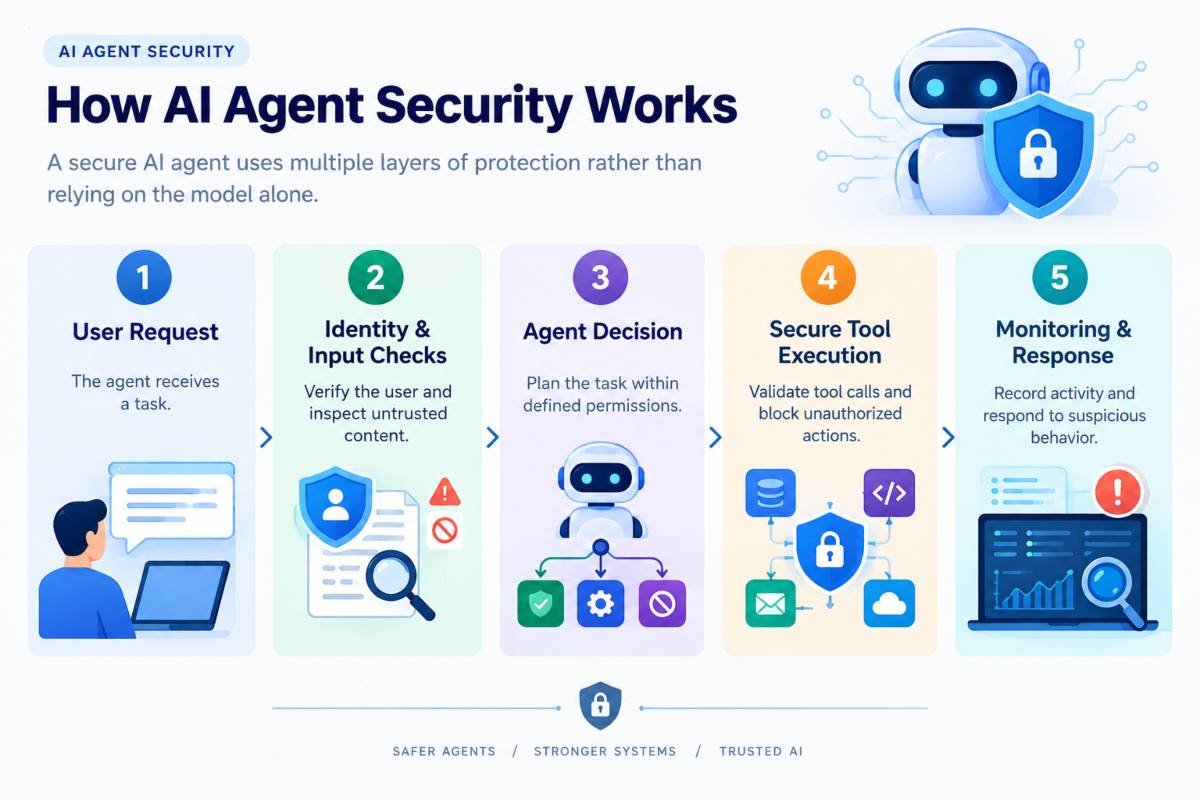
Key Components of AI Agent Security
Access Control and Identity Management
Every AI agent should have a clear identity and a defined set of permissions. Role-based access control, least privilege, and short-lived credentials can reduce the impact of a compromised agent. Permissions should be reviewed regularly, especially when an agent gains access to new tools or business systems.
Secure Tool and API Use
Tools should have clearly defined inputs, outputs, and allowed operations. Before executing a tool call, the system should validate the request, confirm that the agent has permission, and check whether the action is appropriate for the current task. High-risk operations, such as deleting records or approving financial transactions, should require additional safeguards.
Monitoring and Logging
Security teams need visibility into what an agent receives, decides, and executes. Logs can record tool calls, permission checks, errors, and unusual activity. Behavior monitoring can help detect unexpected access patterns, repeated failed requests, or attempts to bypass security controls. Monitoring should also protect sensitive information in logs.
Human Approval
Human approval is useful for actions that have significant consequences. An agent may draft an email automatically, but sending sensitive information or making a financial transaction could require a person to review and approve the action. Human oversight is not a replacement for technical security controls. It is an additional layer for managing high-impact decisions.
The Role of AI in Agent Security
AI can help security teams identify suspicious behavior, analyze logs, and detect patterns that may indicate an attack. For example, an AI security system may flag an agent that suddenly accesses an unusual database or makes repeated unauthorized tool calls.
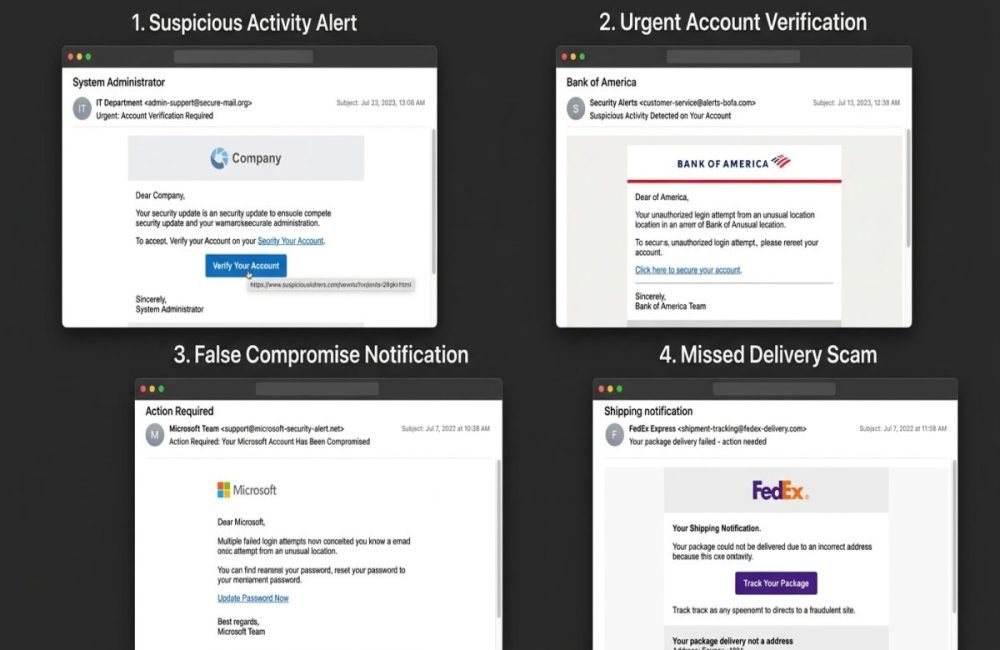
AI can also support Phishing Detection by identifying suspicious emails and malicious instructions before they reach an agent. However, AI-based detection is not perfect. It should be combined with access controls, secure configurations, and human review where appropriate.
AI Agent Security vs. Traditional Cybersecurity
Traditional cybersecurity AI Agent Security
Protects applications and networks. Protects agents, tools, and connected systems. Focuses on predefined software behavior. Also considers model decisions and instructions. Uses firewalls, authentication, and endpoint security. Adds prompt controls, tool permissions, and agent monitoring. Detects unauthorized system activity. Also detects unsafe or manipulated agent actions. Both areas are complementary. Firewall Configuration, endpoint protection, and identity management remain important, while AI Agent Security addresses the additional risks introduced by autonomous decision-making.
Best Practices for Protecting AI Agents
Organizations can improve security by following a practical set of controls:
- Define the agent’s purpose and allow actions before deployment.
- Apply least privilege access to tools, data, and APIs.
- Separate development, testing, and production environments.
- Treat external content and tool outputs as untrusted.
- Validate tool inputs and restrict dangerous operations.
- Protect API keys, credentials, and sensitive data.
- Test for prompt injection and unauthorized behavior.
- Monitor agent activity and maintain useful security logs.
- Require approval for high risk actions.
- Review permissions, update dependencies, and test security regularly.
These practices help make agent deployments more predictable and easier to manage.
AI Agent Security Checklist
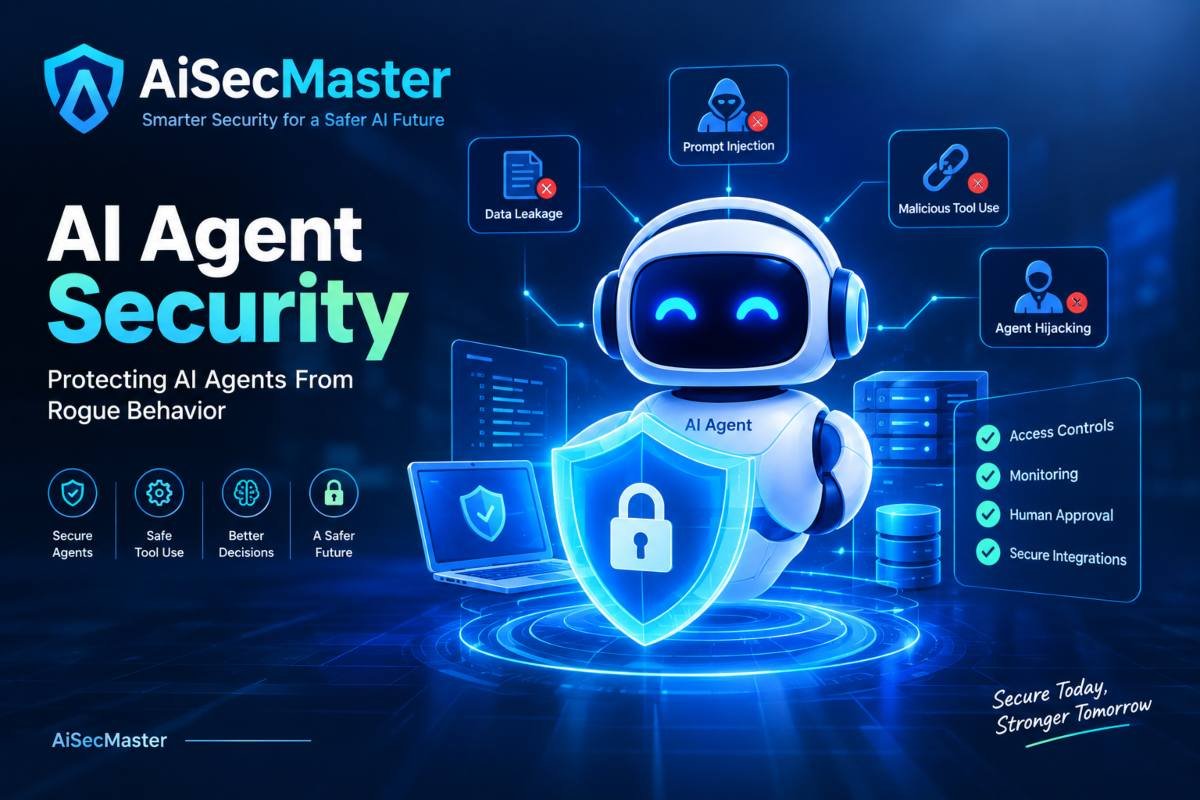
Before deploying an AI agent, review six essential security controls to help protect your systems, data, and users. Check each item as you verify your security measures, and make sure your AI agent follows safe operating practices. This checklist helps identify potential security gaps and supports a more secure AI Agent Security strategy.
Conclusion
AI Agent Security is essential for organizations that use autonomous AI systems to perform business tasks. Rogue behavior can result from prompt injection, excessive permissions, insecure tools, or weak monitoring. The most effective defense combines strong access controls, secure tool execution, data protection, and human oversight. For AiSecMaster readers, the key takeaway is simple: an AI agent should be given only the access it needs, and every important action should be observable and controlled. Building security into the agent from the beginning helps organizations adopt Agentic AI with greater confidence.
Frequently Asked Questions (FAQs)
What is AI Agent Security?
AI Agent Security protects AI agents from unauthorized access, malicious instructions, data leakage, and unsafe actions. It includes access control, secure tools, monitoring, and human approval.
What is rogue behavior in an AI agent?
Rogue behavior is when an AI agent acts outside its intended goals, permissions, or safety rules. It may result from malicious prompts, compromised tools, or incorrect configuration.
Can AI agents be hacked?
Yes. AI agents can be attacked through prompt injection, stolen credentials, vulnerable integrations, and excessive permissions. Security controls help reduce these risks.
How can businesses protect AI agents?
Businesses should use least privilege access, secure API connections, input validation, monitoring, regular testing, and human approval for high-risk actions.
What is the role of AI in cybersecurity?
AI can help detect suspicious activity, analyze security logs, and support phishing detection. It should work alongside traditional cybersecurity controls.




6 Responses