
Cloud security management is the process of protecting cloud-based applications, data, identities, infrastructure, and workloads through continuous security controls, monitoring, risk management, and governance. For U.S. organizations using public, private, hybrid, or multi-cloud environments, effective Cloud Security Management requires more than configuring a firewall or enabling encryption; it requires coordinated control over identity, data, workloads, applications, and third-party services.
NIST emphasizes that organizations remain accountable for the security and privacy of their cloud environments even when infrastructure or services are operated by a cloud provider. Cloud environments are dynamic. New workloads, identities, APIs, integrations, and applications can appear quickly, which means security teams need continuous visibility rather than occasional configuration reviews.
What Is Cloud Security Management?
Cloud Security Management combines policies, technologies, processes, and security practices used to protect cloud resources throughout their lifecycle. Unlike traditional data center security, cloud security often operates across distributed infrastructure and services. An organization may manage cloud storage, virtual machines, containers, serverless functions, databases, APIs, SaaS applications, and identity systems simultaneously.
- Who can access cloud resources?
- What data and workloads are being protected?
- Where are those resources located?
- How are suspicious activities detected?
- What happens when a security incident occurs?
Why Cloud Security Management Matters
Cloud adoption can improve scalability and operational flexibility, but it can also create security challenges when organizations lose visibility or apply inconsistent controls. Common problems include excessive permissions, exposed storage, insecure APIs, compromised credentials, vulnerable workloads, misconfigured network controls, and insufficient logging.
The shared responsibility nature of cloud computing also makes ownership important. A provider may secure portions of the underlying infrastructure, while the customer remains responsible for many aspects of its applications, identities, configurations, and data. NIST specifically advises organizations to understand their cloud environment, evaluate security and privacy requirements, and maintain accountability over deployed data and applications.
Cloud Security Management at a Glance
| Area | What to Manage | Primary Goal |
|---|---|---|
| Identity | Users, roles, credentials, service accounts | Prevent unauthorized access |
| Data | Storage, databases, backups, encryption | Protect sensitive information |
| Workloads | VMs, containers, servers, applications | Reduce attack surface |
| Network | APIs, traffic, segmentation, endpoints | Limit unauthorized communication |
| Monitoring | Logs, alerts, security events | Detect threats quickly |
| Governance | Policies, compliance, configuration | Maintain consistent controls |
| AI Security | Models, agents, prompts, AI data | Reduce AI-specific risks |
Common Cloud Security Risks
Misconfiguration
Misconfiguration remains a major cloud security concern because cloud environments contain numerous settings that can affect access, exposure, and AI agent security . Incorrect permissions, exposed storage, or poorly configured APIs can create vulnerabilities that attackers may exploit.
- Publicly accessible storage
- Overly permissive identity policies
- Unrestricted network ports
- Weak authentication settings
- Insecure API configurations
- Missing encryption controls
- Excessive administrative privileges
Security teams should continuously review cloud configurations rather than relying only on the settings established during initial deployment.
Identity and Access Risks
Cloud accounts can provide direct access to valuable resources. A stolen administrator credential or improperly configured service account may therefore create significant exposure.
Organizations should apply least privilege, strong authentication, role-based access controls, privileged access management, and regular permission reviews. Unused accounts and credentials should also be removed or disabled.
Data Exposure and Privacy
Cloud systems may contain customer records, financial information, intellectual property, authentication data, business documents, and AI-related information. AI Privacy becomes particularly important when cloud-hosted AI applications process sensitive prompts, documents, customer information, or proprietary data.
Strong AI data protection should include appropriate access controls, encryption, data classification, retention policies, and monitoring of how information enters and leaves AI-enabled systems.
Insecure APIs
APIs connect applications, cloud services, databases, and external platforms. Poorly protected APIs can expose sensitive functionality or data.
Organizations should authenticate API requests, authorize actions according to least privilege, validate inputs, protect secrets, monitor abnormal activity, and regularly test externally exposed interfaces.
Supply Chain Risk
Modern cloud environments depend on software libraries, container images, managed services, APIs, vendors, and third-party integrations. This creates a broader supply chain security problem. Supply chain planning should therefore consider cybersecurity requirements alongside availability, cost, and operational requirements.
This is particularly important for organizations using AI components because third-party models, datasets, plugins, libraries, and AI services can introduce additional security dependencies. NIST’s broader risk management guidance also recognizes supply chain risk management as part of an integrated cybersecurity and risk management approach.
Cloud Security Management Tools
Organizations typically use multiple tools rather than relying on a single security product.
Cloud Security Posture Management
CSPM tools identify cloud misconfigurations, policy violations, exposed resources, and compliance issues. They can help security teams continuously evaluate whether cloud environments follow defined security policies.
Cloud Workload Protection
Cloud workload security tools protect virtual machines, containers, Kubernetes environments, serverless workloads, and applications. Typical capabilities include vulnerability detection, runtime monitoring, malware detection, and workload behavior analysis.
Identity and Access Management
IAM platforms control authentication and authorization across cloud resources.
- Multi-factor authentication
- Role-based access
- Privileged access management
- Conditional access
- Identity lifecycle management
- Service account controls
Cloud Native Logging and Monitoring
Centralized logging helps security teams investigate authentication events, configuration changes, API activity, network behavior, and suspicious actions. For organizations following practical AiSecMaster security guidance, logs become significantly more useful when combined with automated alerting and effective incident response processes. This approach helps teams detect unusual activity faster and respond to potential cloud security threats more efficiently.
Security Information and Event Management
SIEM platforms can aggregate security events from cloud infrastructure, endpoints, applications, identity systems, and other sources. This provides security teams with a broader view of activity across an organization.
Cloud Detection and Response
Detection and response capabilities help identify suspicious behavior and support investigation and containment. Organizations may combine cloud native security services with endpoint, identity, network, and SIEM technologies to create a more complete monitoring strategy.

Cloud Security and AI
AI is increasingly integrated into cloud applications, which creates an overlap between cloud security and AI security. An organization may host large language models, AI APIs, retrieval systems, vector databases, and autonomous workflows in cloud environments. These systems introduce additional security considerations.
The OWASP LLM Security Risks project identifies risks including prompt injection, sensitive information disclosure, supply chain vulnerabilities, data and model poisoning, improper output handling, excessive agency, vector and embedding weaknesses, misinformation, and unbounded consumption in its 2025 list.
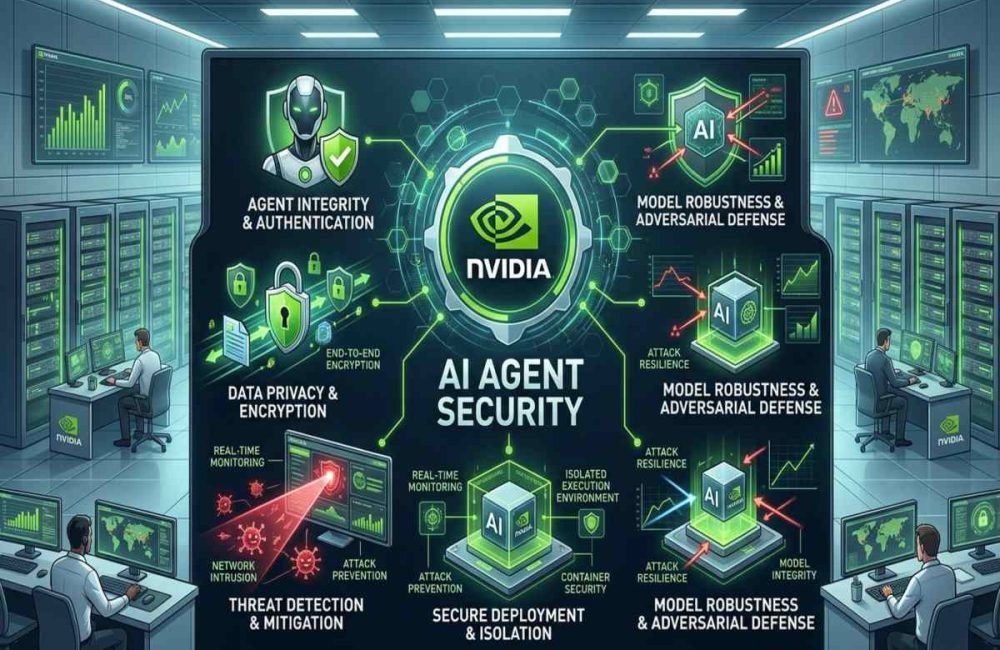
Protecting Autonomous AI Agents
Their security requirements can differ from those of a conventional chatbot because an agent may be capable of taking actions rather than simply generating text. Autonomous AI agents can interact with tools, APIs, databases, and external services.
- Limit agent permissions
- Separate read and write access
- Protect API credentials
- Validate tool requests
- Monitor agent activity
- Require approval for high-risk actions
- Log important decisions and tool calls
- Test for prompt injection and unauthorized behavior
NIST’s AI Risk Management Framework provides a voluntary approach for managing AI risks throughout design, development, deployment, use, and evaluation.
AI Threat Intelligence in Cloud Security
AI-generated security conclusions should be validated before high-impact actions are taken. Security teams should maintain human oversight, especially when automated systems can modify infrastructure, revoke access, delete data, or trigger incident response actions. AI threat intelligence can support security teams by helping analyze large volumes of security information, identify patterns, prioritize alerts, and assist analysts with investigations. However,
NIST identifies security and resilience as important characteristics of trustworthy AI and notes that AI systems also face traditional confidentiality, integrity, and availability risks.
Cloud Security Strategy: A Practical Framework
A practical cloud security strategy can be organized into seven stages.
Discover
Create an inventory of cloud accounts, applications, identities, workloads, databases, APIs, and third-party services.
Classify
Identify sensitive information and classify resources according to business importance and security requirements.
Control Access
Implement least privilege, strong authentication, role separation, and regular access reviews.
Secure Configurations
Establish secure configuration baselines and continuously check for deviations.
Monitor
Collect relevant logs and security telemetry. Establish alerts for suspicious authentication, configuration, API, and workload activity.
Respond
Create documented incident response procedures for compromised credentials, exposed data, malicious workloads, and unauthorized cloud activity.
Improve
Regularly test controls, review incidents, update policies, and reassess emerging risks. This continuous approach is more effective than treating cloud security as a one-time deployment task.
Cloud Security Checklist
- Enable strong authentication and MFA.
- Apply least-privilege access.
- Review privileged accounts regularly.
- Encrypt sensitive data appropriately.
- Protect API keys and credentials.
- Monitor cloud configuration changes.
- Centralize important security logs.
- Scan workloads for vulnerabilities.
- Secure containers and dependencies.
- Review third-party integrations.
- Test incident response procedures.
- Monitor AI applications and agent permissions.
- Evaluate AI privacy and data handling practices.
- Review cloud security policies as infrastructure changes.
Cloud Security and Management for Supply Chain
Cloud infrastructure increasingly supports procurement, logistics, manufacturing, inventory, customer operations, and other interconnected business processes. As a result, management for supply chain operations should include cybersecurity requirements. For example, a supply chain application connected to a cloud database may depend on external vendors, APIs, identity providers, and software libraries.
A security weakness in one component can affect other connected systems. Organizations should therefore evaluate vendors, third-party access, software dependencies, API connections, data flows, and recovery requirements as part of both security and operational planning.
Common Cloud Security Mistakes
Organizations can weaken their cloud security by relying entirely on the cloud provider and assuming that the provider is responsible for every aspect of security. Although cloud providers offer extensive security capabilities, customers remain responsible for areas such as configurations, identities, applications, and data. Giving users excessive privileges can also increase the potential impact of a compromised account, while ignoring security logging can make it difficult for teams to understand what happened during an incident.
Another common mistake is treating AI security as separate from cloud security, even though AI applications often rely on cloud storage, APIs, databases, identities, and infrastructure. Finally, organizations should regularly reassess their security posture because a previously secure environment can become exposed after a new integration, application, permission, or workload is introduced.

Conclusion
Effective Cloud Security Management requires continuous visibility, strong identity controls, secure configurations, data protection, monitoring, incident response, and responsible third-party management. As organizations increasingly combine cloud infrastructure with AI applications, LLM Security, AI privacy, AI data protection, and autonomous AI agents should become part of the overall security discussion rather than isolated concerns.
For AiSecMaster readers, the practical takeaway is simple: build cloud security as a continuous risk management process. Discover what exists, control who can access it, monitor what happens, protect sensitive data, and regularly reassess the environment as technologies and business requirements change.
Frequently Asked Questions (FAQs)
What is cloud security management?
Cloud security management is the coordinated process of protecting cloud infrastructure, applications, identities, data, workloads, and services through security policies, access controls, monitoring, risk management, and incident response.
What are the biggest cloud security risks?
Common risks include misconfiguration, excessive permissions, compromised credentials, insecure APIs, exposed data, vulnerable workloads, inadequate monitoring, and third-party or supply-chain weaknesses.
What tools are used for cloud security?
Common categories include CSPM, cloud workload protection, IAM, SIEM, vulnerability scanners, cloud native monitoring, API security, and cloud detection and response technologies.
How does AI affect cloud security?
AI introduces additional considerations involving model security, sensitive data, prompt injection, excessive agency, AI supply chains, data poisoning, and AI-enabled applications or agents operating inside cloud environments.
How can companies improve cloud security?
Companies can improve cloud security by establishing asset visibility, enforcing least privilege, protecting sensitive data, continuously checking configurations, monitoring activity, securing APIs and workloads, testing incident response, and regularly reassessing third-party and AI-related risks.



2 Responses