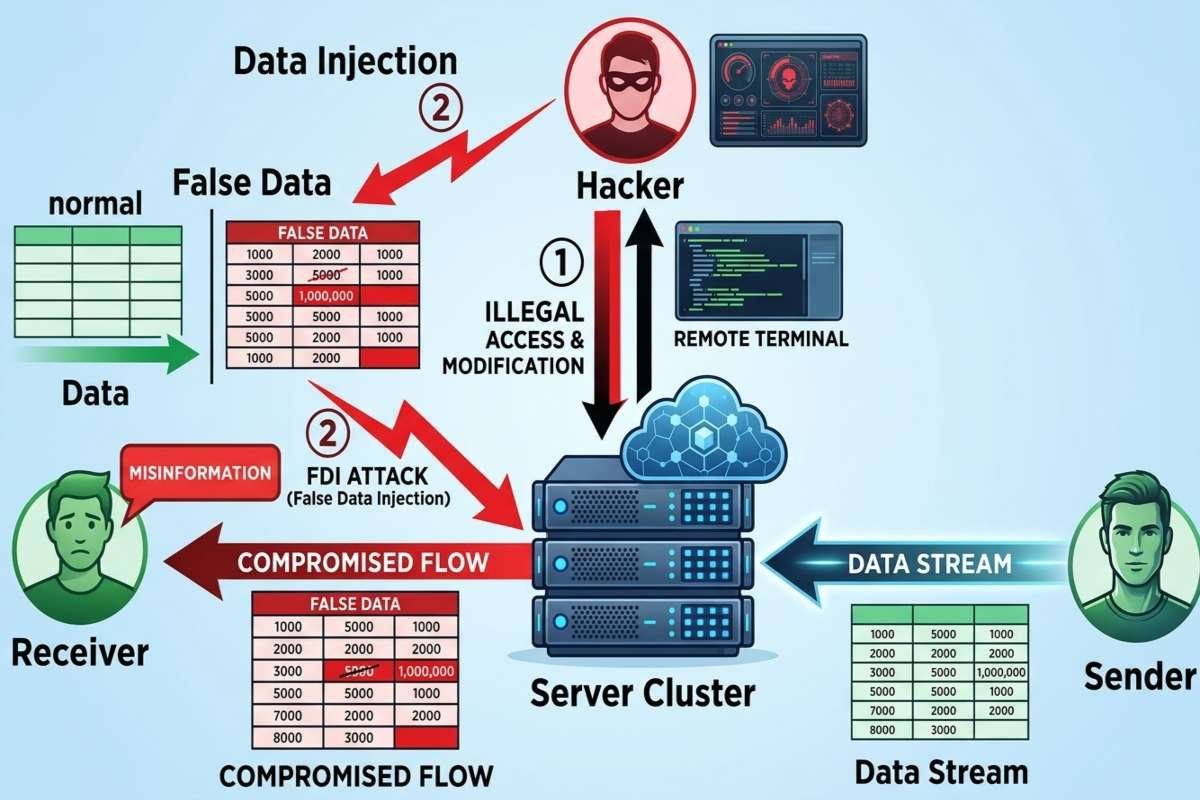
Data injection is a cybersecurity attack in which malicious or manipulated input causes an application to process data in an unintended way. Depending on the vulnerability, attackers may access sensitive information, modify database records, execute unauthorized commands, or manipulate application behavior. Understanding data injection attacks, their common types, and effective prevention methods helps developers build more secure software.
What Is a Data Injection Attack?
A Data Injection Attack occurs when an application fails to handle untrusted input safely, allowing that input to influence commands, queries, or other operations. This often happens when software combines user provided data with executable instructions without using appropriate security controls.
For example, an online store may use a search field to retrieve product information from a database. If the application constructs its database query unsafely, specially crafted input could change the intended query behavior. The actual impact depends on the vulnerability and the permissions available to the application.
How Does Data Injection Work?
- Input Submission: An attacker provides unexpected input through a form, URL parameter, API request, cookie, or uploaded file.
- Unsafe Processing: The application fails to validate or safely handle the submitted data.
- Interpreter Interaction: The application passes the input to a database, command shell, parser, or another component.
- Unexpected Execution: The receiving component interprets the input differently from the developer’s intention.
- Security Impact: Depending on the weakness, an attacker may access information, modify records, or perform unauthorized operations.
The central problem is usually the way software processes untrusted input, rather than the input’s appearance alone. Secure applications separate data from executable instructions and apply appropriate access controls.
What Are the Common Types of Data Injection Attacks?
Different injection techniques target different technologies. Identifying the affected component helps security teams select the right defenses.
| Attack Type | How It Works | Potential Risk |
|---|---|---|
| SQL Injection | Manipulates unsafe database queries | Unauthorized data access or modification |
| XML Injection | Alters XML content or structure | Data manipulation or unexpected processing |
| Command Injection | Influences operating system commands | Unauthorized command execution |
| LDAP Injection | Manipulates directory service queries | Unauthorized directory access |
| Template Injection | Exploits unsafe template expression processing | Information disclosure or code execution in vulnerable configurations |
| Prompt Injection | Attempts to manipulate AI model instructions | Unsafe outputs or actions through connected tools |
SQL Injection
SQL injection occurs when an application incorporates untrusted input into database queries unsafely. An attacker may manipulate the intended query, potentially exposing confidential records or changing stored information.
Prevention: Use parameterized queries or prepared statements, restrict database permissions, and avoid constructing SQL statements through string concatenation.
XML Injection
An XML Injection Attack occurs when improperly handled input changes the structure or content of an XML document. This can affect how an application interprets or processes the document.
XML injection is distinct from XML External Entity (XXE) attacks, although both can involve weaknesses in XML processing. XXE specifically concerns unsafe handling of external entities and may expose files or enable unintended server side requests.
Prevention: Use secure XML parsers, validate expected document structures, and disable unnecessary external entity processing.
OS Command Injection
OS Command Injection happens when an application passes user controlled input to an operating system command in an unsafe way. A vulnerable file processing or system administration function could allow input to alter the intended command.
Prevention: Prefer built in libraries over shell commands, use safe process execution APIs, avoid unnecessary shell interpretation, and limit application privileges.
AI Prompt Injection
AI applications face a related but different risk: prompt injection. An attacker may place malicious instructions in a user prompt, uploaded document, email, or retrieved webpage to influence an AI model. Unlike SQL or command injection, prompt injection primarily targets how an AI model interprets instructions and context. OWASP identifies prompt injection as a significant risk for large language model applications.
Explore LLM Security Best Practices to understand how developers can reduce risks in AI powered systems.
What Are the Risks of Data Injection?
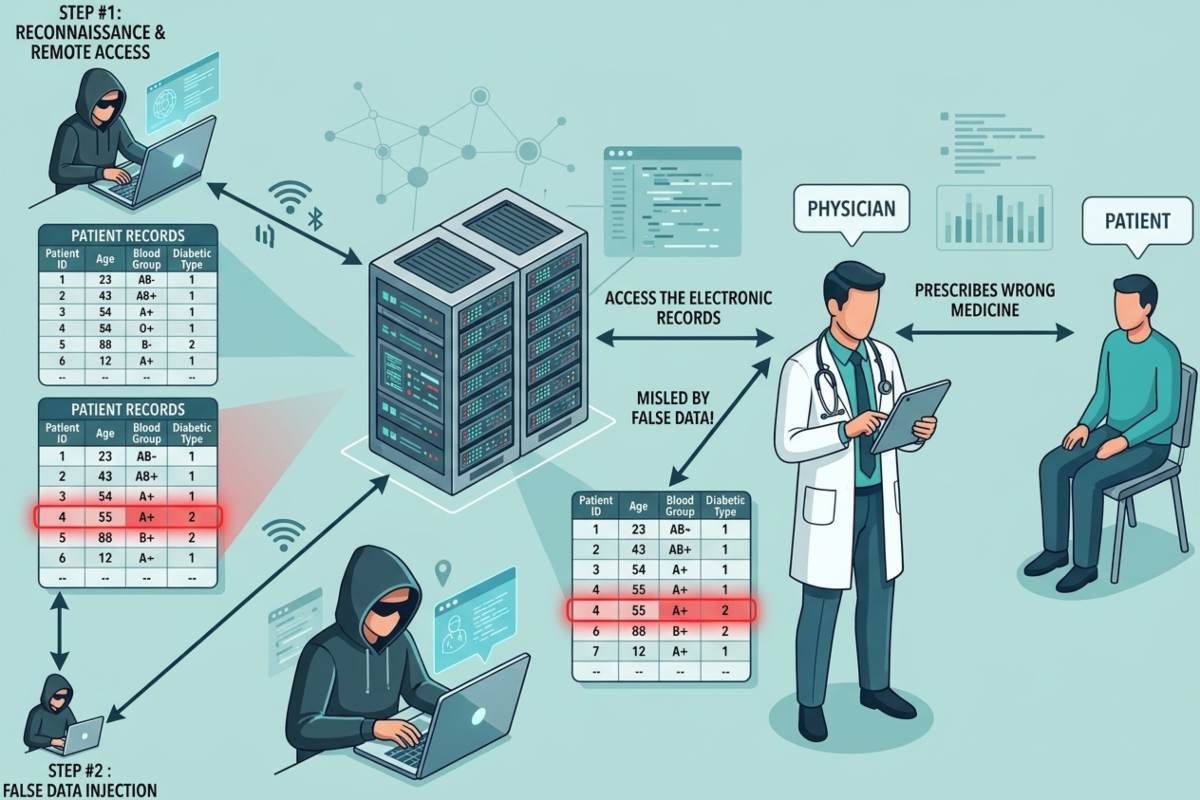
Successful injection attacks can compromise the confidentiality, integrity, or availability of systems.
- Data Exposure: Sensitive customer records, business information, or credentials may become accessible.
- Unauthorized Changes: Attackers may modify database records or application data.
- System Compromise: Command injection may permit unauthorized operations under the application’s privileges.
- Service Disruption: Malicious input can interfere with normal application behavior.
- Financial and Reputational Damage: Organizations may incur investigation costs, operational losses, and loss of customer trust.
- AI Security Failures: Prompt injection may influence model outputs or unsafe actions when AI systems have excessive access.
Not every injection vulnerability produces the same outcome. Security teams should assess exploitability, system exposure, business impact, and the sensitivity of affected information when prioritizing remediation.
How to Prevent Data Injection Attacks
Effective Data Injection Prevention requires secure development practices, appropriate permissions, and ongoing testing.
Validate Input Carefully
Define acceptable input formats for each field. A numeric identifier, filename, email address, and free text message need different validation rules.
Allowlist validation is useful when valid values or formats can be clearly defined. However, validation alone is not enough to prevent every injection vulnerability.
Separate Data From Instructions
Use parameterized database queries and safe APIs that keep untrusted values separate from executable instructions. Avoid constructing database queries or operating system commands through unsafe string concatenation. For command execution, prefer dedicated libraries and structured argument handling over passing user controlled strings through a shell.
Apply Least Privilege Permissions
Give each application component only the permissions necessary for its role. Database accounts should not receive unnecessary administrative privileges, and web applications should not run with unrestricted system access. AI applications also need restricted permissions for files, APIs, and external tools. Require human approval for sensitive or high impact actions when appropriate.
Secure XML and Other Structured Data
Use trusted parsers and enforce expected schemas for structured documents. Disable unnecessary external entity processing and avoid evaluating untrusted expressions as executable instructions. For AI applications, treat external documents and retrieved webpages as untrusted content rather than automatically following instructions embedded within them.
Review Code and Test Applications
Include injection testing in the software development lifecycle. Review code paths that send external input to databases, shells, XML parsers, templates, and AI tools. Static analysis, dynamic testing, dependency scanning, and authorized security assessments can help identify weaknesses before deployment.
Learn more about Source Code Security to understand how secure development and code review help reduce application vulnerabilities.
Monitor and Respond to Suspicious Activity
Monitor application logs for unusual database errors, unexpected process execution, abnormal access patterns, and suspicious requests. Protect logs from tampering and avoid recording passwords, access tokens, or unnecessary sensitive data.
Keep software updated, investigate relevant alerts, and maintain tested backups and incident response procedures. Monitoring can help detect attacks, but it does not replace fixing the underlying vulnerability.
Data Injection Prevention Checklist
- Identify external input sources, including forms, APIs, and uploaded files.
- Use parameterized queries for database operations.
- Avoid unsafe shell command construction.
- Validate input according to expected formats and business rules.
- Configure XML parsers and template engines securely.
- Restrict database and operating system permissions.
- Limit AI tools’ access to sensitive information.
- Test for injection vulnerabilities during development.
- Monitor suspicious activity and protect security logs.
- Retest vulnerabilities after remediation.
Prioritize weaknesses based on their exposure, exploitability, potential impact, and the sensitivity of affected assets.
Conclusion
Data injection remains an important application security concern because unsafe input processing can expose information, change records, or trigger unauthorized operations. Developers can reduce these risks by separating data from executable instructions, restricting permissions, testing vulnerable components, and monitoring suspicious activity.
For organizations developing traditional software or AI powered applications, secure input handling should be a core part of the development process rather than a response introduced only after an incident.
Frequently Asked Questions (FAQs)
What is data injection in cybersecurity?
Data injection is an attack that exploits unsafe input processing to influence application behavior. Depending on the vulnerability, it can affect database queries, operating system commands, structured documents, or AI powered workflows.
What is a common example of a data injection attack?
SQL injection is a well known example. It occurs when unsafe handling of user input allows an attacker to change the intended behavior of a database query.
Is data injection the same as prompt injection?
No. Traditional injection attacks exploit how software interprets input, such as SQL queries or operating system commands. Prompt injection attempts to influence an AI model through malicious instructions in prompts or external content.
Can data injection attacks be completely prevented?
No single security measure guarantees complete protection. Parameterized queries, safe APIs, input validation, least privilege, secure configuration, and regular testing work together to reduce risk.
What is the difference between data injection and data poisoning?
Data injection generally concerns malicious input that influences application processing. Data poisoning involves manipulating training data or other data used by a machine learning system to influence its behavior. The terms describe different security problems, although some scenarios may overlap.